7 easy tips to cut your insurance costs

Cutting insurance costs

Insurance costs too much. Brokers and insurance companies often rely on your not knowing the details of the industry or use all sorts of fancy jargon just to get your account on their books. And it can feel like you’re paying for nothing. But you’re paying for security and peace of mind. But just because it can be frustrating and confusing, doesn’t mean it can’t be tackled. Here are 7 tips for playing insurance smart to save.

1. Understand your Premium

Insurance carriers use one of three factors when assessing your premium: gross sales, subcontractor costs or payroll. Be aware which of these your carrier is using, because it can make a big different. The general rule of thumb is: the higher the factor, the higher the premium. Each carrier takes a different approach to calculating your premium, so the price can vary widely between carriers.

Consider: Your gross sales are (hopefully) higher than your payroll. So, if your premium is rated by gross sales but a majority of your business risk comes from subcontractor work, you’re probably overpaying for my policy.

For example, kitchen remodeler has been paying $4,700 for a general liability policy with a premium calculated by gross sales. Turns out that the company subcontracts about 90% of their operations. More often than not, that subcontractor needs his own insurance and won’t be able to file a claim about his work against the remodeler’s insurance. This means that payroll rather than sales is a more accurate (and less expensive!) factor for their insurance policy.

2. Manage your Deductible

A quick way to reduce costs is to increase your deductible. The deductible is the amount you will pay out of pocket before your carrier will pay any expenses for a claim. Typically, the higher the deductible, the lower the premium. If you go this route, be sure to set aside sufficient savings, so that you have the funds to pay down those deductibles, should a claim occur.

A good way to decide on the deductible amount is by taking a look at your cash flow statement or bank account. Consider how much money you could pay for a deductible on a possible insurance claim without putting you into financial strain. You should maintain this amount consistently in your bank account without spending it, so that it’s there if you need it.

3. Consider Pay-As-You-Go to Avoid Overpaying

The vast majority of insurance companies sell annual insurance policies that require payment in advance, which can actually end up costing you more. Some carriers are starting to offer flexible on-demand insurance products. Some major carriers, like The Hartford, CNA and Travelers, now offer pay-as-you-go workers’ compensation.

Premiums are calculated every pay period instead of being estimated at the beginning of the year, so payments are adjusted as employment changes occur, eliminating surprise payments at year-end audits. Accounting software solutions such as Intuit Quickbooks offer direct integration with such programs making the purchase process very easy.

Similarly, general liability insurance is available on-demand too nowadays. For instance, Atlas General Insurance provides subcontractors with insurance project-by-project instead of the more expensive annual premiums. You can buy insurance just for projects and clients that require it and then turn the insurance off when the project ends.

All in all, you could save between 30-60% on your insurance costs. This may be a better alternative if you are not required to have insurance all year round. Check with your broker or carrier if they offer these products. If not, you may want to consider switching.

4. Eliminate Unnecessary Coverage

Your business changes over time. As you add more clients, you also add insurance to fit their requirements. But some policies may overlap or duplicate coverage. For example, you don’t need to insure hired autos and non-owned autos under your general liability policy if those vehicles are covered by your commercial auto policy.

There are a couple quick and simple questions to ask… Do I still own all of the vehicles or equipment listed on the policy? Have I purchased any items that aren’t listed in the policy? Also, are the drivers on my commercial auto policy currently employed by my company?

If you have experienced some employee turnover, your insurer may be charging you unnecessarily for someone you no longer employ. Ask your broker to walk you through your policy(ies) to identify overlapping or duplicate policies.

5. Avoid Unexpected Price Increases

Whether you’re a subcontractor, general contractor or property manager, the simplest way to prevent an unexpected premium increase boils down to three basic actions: maintaining updated certificates of insurance (COIs), estimating job costs and submitting accurate business data.

Maintain updated COIs

The importance of maintaining valid COIs cannot be overstated. Failing to do so can often result in unplanned expenses. If, at the end of your policy period, your contractors insurance company looks at your books and finds subcontracted work without a corresponding COI, they will add the amount of subcontracted work to your payroll or gross sales resulting in an additional premium charge for your general liability policy. One surefire way to maintain updated COIs is to use online certificate management tools that notify you about missing COIs and expiration dates.

Accurately estimate job costs

Successful contractors take the cost of insurance into account when bidding for jobs.

If you’re audited by your insurance company and they increase your premium, your bids don’t include this extra cost. The result is that your profits decrease and you don’t make as much money as you thought you would. Or worse yet, you l may lose money on the project itself.

We recommend taking a methodical approach to estimating job costs and payroll when signing up for your insurance policy. That way, you will be able to offer competitive bids and avoid overpaying for your annual insurance premium. If you’re not comfortable estimating yearly payroll or job costs, consider on-demand insurance that covers short-term and more predictable projects.

Submit good business data

Carriers have the right to audit your books in relation to COIs; they can look at your end of year gross sales or payroll to determine if they were higher than originally reported. Since these are determining factors when it comes to your premium, misreporting them can result in the unfortunate surprise of a premium increase.

One of the easiest ways to assure your business data is accurate is to use a program like Intuit Quickbooks, Freshbooks or Wave that can help to project gross sales and payroll. While the numbers generated may not be 100% exact, they’re based on historical insights, proven algorithms and smart software modeling.

6. Prevent Claims

Claims take place when a potential risk comes to fruition. Therefore, the best way to prevent claims is to follow safe practices that reduce the chance of a bad outcome. Good training programs along with safety plans are reliable ways to achieve this goal. Having a plan and/or program in place eliminates hazards that lead to accidents, injuries and lawsuits, reduces loss and in some cases can lower your workers’ compensation and general liability premiums.

However, a safety plan will be effective only if it is enforced consistently. Consider getting an On-Site Consultation from the Occupational Safety and Health Administration (OSHA). These consultations will help you find out about potential hazards in the workplace, improve programs that are already in place, and even qualify for a one-year exemption from routine OSHA inspections. And best of all, the programs are free!

On top of that, many insurers offer safety programs for subcontractors (often called “loss control” services). These programs are also free of charge. If you take advantage of these programs your insurer may be willing to reduce your rates or even reward you. If you agree to provide employees with a defensive driving program, your carrier may cut you a break on your commercial auto insurance. The end result? Your employees are safer and your premiums are lower. And less risk means fewer claims that your carrier has to pay. It’s a win-win-win.

7. Cater your Policy to the Demands of your Clients

Whether your clients are general contractors, property managers or homeowners, chances are you will run into a situation where your insurance policy doesn’t meet their requirements. This is often a complex issue: you can’t go without insurance, but purchasing higher limits means either reducing your profits or increasing your bid. Plus, insufficient insurance can limit your ability to go after new clients.

So, what do you do? Before you shell out any money, check with your client to see if there’s any flexibility on the limits. Maybe your initial bid was so competitive that your client would rather relax their insurance requirements than pursue a more expensive subcontractor. However, if your client is firm on their insurance requirements, ask your carrier about a project-based policy. Project-based policies allow you to get the required insurance limits for a specific circumstance, and are a much more affordable solution than an overall increase of your annual policy limits.


Staying Warm on the Job

Paver in snow

Everyone has to be aware of the risks when spending time outdoors in the winter, and no one more than tradesmen. Working outside all day makes you more vulnerable than most to trench foot, hypothermia and frostbite. If your hands are cold, your grip and focus can be affected,   endangering you and those around you. But just as likely, it’s just plain uncomfortable to freeze your butt off all day.

In order to avoid these problems, you should be proactive and adjust your work schedule to compensate for the cold. Here are a few things to consider when planning for the weather.

Hydration

It might seem like a problem more frequently associated with heat, but staying hydrated in the winter is just as critical. Cold weather doesn’t stop you from exerting yourself and sweating, which has to be replaced by drinking water. In cold weather, the air you breathe is drier, so your lungs have to work harder to humidify and warm that air.

Staying hydrated keeps up your energy level, endurance, muscle strength and even your mood. Specifically in winter, staying hydrated can keep you warm by improving circulation.

The problem is that you can be dehydrated without feeling thirsty. So make it a habit to drink. Always have a bottle or thermos by your side and drink at least every 20 minutes. Hot beverages count and can help to keep you warm. Herbal (i.e. non-caffeinated) tea or even hot water with lemon are great options. Remember to drink more if you’re also drinking coffee, tea or soda, since they tend to dehydrate you.

Sun Protection

While you may not feel it as much, the sun still shines in winter (and UV penetrates clouds). Of course, the higher your latitude, the less of an issue the sun is, especially in winter. But you can still get a sunburn on exposed skin and suffer from skin cancer in the long run. Covering your skin is the easiest protection. In winter, this is mainly for your head, for the more hair-challenged among us, and the back of your neck.

You should apply sweat-proof sunscreen in the morning and reapply 1-2 times throughout the day, depending on your exposure. Consider a brimmed hat, bandana and sunglasses. If you are working hard and get warm during the day, stripping down exposes your skin. You can also purchase clothing with built in UV protection at outdoor and sporting stores. These clothes are often lightweight and breathable, so you shouldn’t feel burdened by them.

Know the signs of cold stress

There are three levels of cold stress (from mildest to most serious): trench foot, hypothermia and frostbite. Frostbite isn’t a real risk since you most likely wouldn’t be working in weather cold enough to frostbite you, so let’s skip that.

Hypothermia is also relatively rare if you’re active, but it’s possible even if the air temperature is as high as 50 degrees, especially if you get wet. Hypothermia is basically the slow freezing of your body. Once the body drops below 95 degrees, you can start to exhibit symptoms of mild hypothermia, including shivering and numbness in the extremities.

If steps aren’t taken to warm you, the hypothermia will worsen, which will be reflected in impaired coordination and/or speech, confused behavior and impaired judgement. In severe cases, shivering and the feeling of cold will stop, confused behavior and impaired judgement will worsen, including a glassy stare, slowed breathing and eventual unconsciousness.

If someone is exhibiting symptoms, you should call 911 and take immediate steps to warm them, gently. Move the person to shelter, remove any wet clothing and warm them with blankets and dry clothes, especially their head and neck. If hot water bottles or heating pads are available, place them in the armpits, around the groin and on the back of the next. If they are alert, have them sip a hot liquid.

Trench foot is a more common issue, especially among construction workers. It can occur in temperatures as high as 60 degrees if conditions are wet. Symptoms include redness, swelling, numbness and blisters. If symptoms develop, remove wet shoes and socks and air dry your feet in a warm area. Keep your legs elevated and avoid walking. Seek medical attention as soon as possible.

Dress for the weather

To avoid these afflictions, it is absolutely vital to dress for the weather. Most importantly, protect your feet. A good winter boot should be waterproof, insulated and have good traction to prevent slipping on ice or snow. For a full breakdown of how to pick the right boots, check out our blog post on the subject. In that post, you can also find details on socks and liners to keep your feet warm and dry.

Next up, your hands. You may choose to work barehanded. You can’t always wear gloves. If that is the case, you should keep some mittens in your pockets to slip on when you’re not using your hands. If you can wear gloves while you work, there are lots of great options. You should go for something that is waterproof and insulated, but as fitted and thin as you can, to keep your dexterity and grip.

The Ergodyne Proflex 817WP is waterproof and has Thinsulate insulation to keep you warm, without a lot of bulk. The glove has suede palm and fingertip reinforcement and thumb and forefinger touchscreen capability. It even has a soft patch on the thumb to wipe your brow.

As with your hands and feet, the most important thing you can do to keep yourself warm and safe is wearing the right clothes. Let’s start from skin up.

If you are working in frigid conditions or tend to sweat a lot, a base layer is extra effective at drawing sweat away from you and pushing it to your socks to get evaporated away. This means you stay drier and more comfortable, especially in extreme weather conditions. Silk and thin wool are great options, as are technical synthetics.

According to your comfort and need, add mid-layers that act as insulation. Opt for wool and synthetics, in place of cotton, since they insulate better and wick sweat away.

On top of it all, you’ll need a shell that is wind and waterproof to protect you from the elements. Consider something from Carhartt, which is really tailored to workmen and their needs. You could go for the insulated, waterproof Shoreline Jacket with its soft interior and tough shell. Alternatively, you can go for something technically designed for hikers and outdoor sports enthusiasts, like the Burton Dunmore. Burton designs for snowboarders so there jackets are roomy and can take some abuse.

One last tip. If you have never used warmers, give them a try. You can keep them in your pocket to use before lunch or slip them in your boots before you even start your day. Grabber is a popular and reliable brand. There are different shapes and strengths for every need. They’re pretty great. If you’re the boss, be a hero and provide some on extra cold days to keep your crew (more) comfortable.

Change the way you work

When the temperature decreases, it isn’t weak to be affected, it’s human. You aren’t doing yourself or your client any favors by pushing yourself and ending up sick or injured. Work smart, take breaks to warm yours hands in front of a heater, stay hydrated. Be safe.

The Best Work Boot for You: A Complete Guide

Putting on boots

Let’s start with a disclaimer: everything I am about to say is totally dependent on your tastes and preferences. There’s no such as the perfect work boot, because every foot, every job, every worksite is different.
Each job has its own demands. If you’re a handyman doing odd jobs in customers’ homes, then a pair of sneakers can be enough. If you do remodeling, a non-marking sole is key, to avoid damaging the existing floors in a client’s home. Roofers should prioritize grip and ankle support. I can’t tell you exactly what boot is right for you, because it’s just not that simple.
What we can do is look at the different variables and give you a good starting point for a variety of types of boots and offer a few of many potential options that might suit you. We’re going to talk about seasonal considerations, toe options and options to improve comfort and fit.

Height

Boots come in a few different ankle heights. Your choice may depend on comfort, support and/or protection against the elements or the job.
Low cut models can be cooler in hot months. They also may be more comfortable if you are often kneeling during the day.
Mid-cuts (up to 6” shaft, measuring from the arch) offer a bit more support in the ankle. If you have a history of ankle issues or are standing much of the day, but also need flexibility in the ankle, these can be great.
High-cut boots (8” shaft or higher) provide ankle support through long days. If you are on your feet all day and do a lot of heavy lifting, these can help your feet survive the day. In the winter they add a little extra warmth and protection against the elements.

Toe

There are three options for boot toes: soft toe, steel toe and the newer composite toe.

Soft Toe

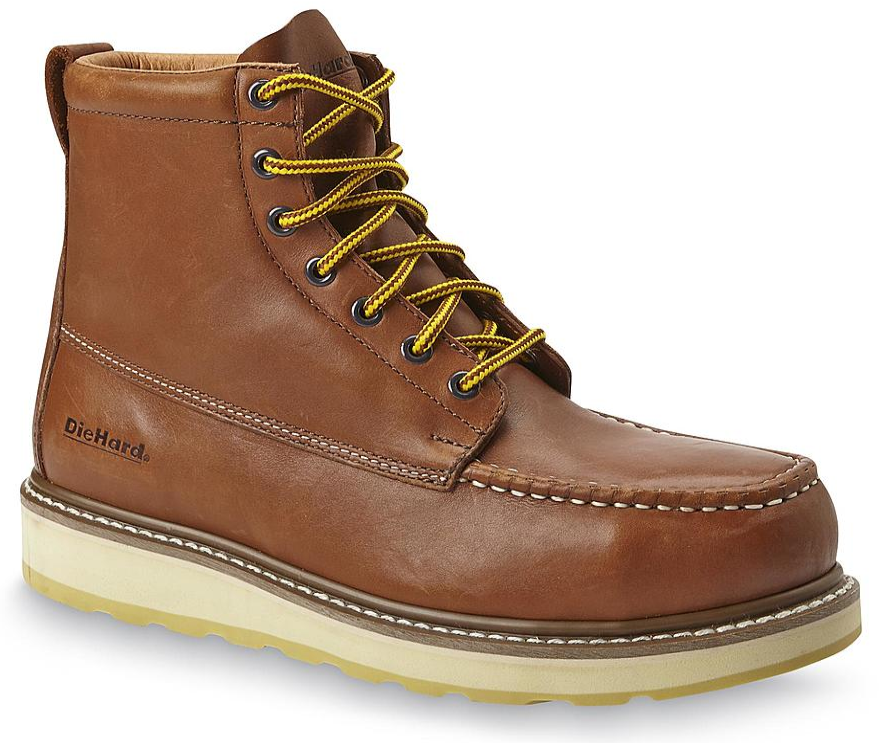
A soft toe is only appropriate if you are at no risk of your foot being crushed or pierced. Also make sure that your worksite doesn’t require a safety toe boot. A good example of a comfortable soft toe shoe is the Sears DieHard. Some contractors report that the grip isn’t very good, so I would recommend the SureTrack version, to give yourself a little more traction. These have the 6” rise, but you can also get a higher ankle for more support or an Oxford, if you’re in homes or your shop.

Sears DieHard Boot

Sears DieHard Men’s Boot

If a safety toe is required or just a generally good idea, there are several factors to consider.

Steel Toe

A steel toe is the old classic. As far as straight impact resistance, the steel toe can handle more. If you’re in a highly hazardous environment, steel is the way to go.
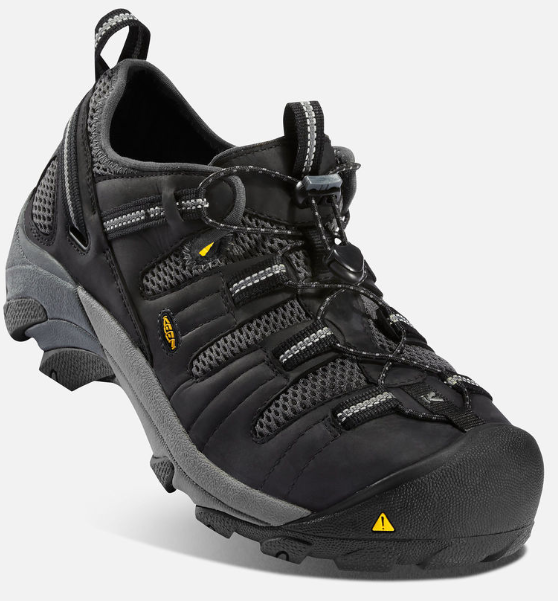
Not all steel toes are clunky, old-school boots. KEEN, which mostly makes hiking shoes, has a great waterproof steel toe work boot, the Flint. This one comes in ankle-height of 6” rise. If you work in a warm climate, you could consider the appropriately-named Atlanta, which has a bit more mesh outer, but is still waterproof. Both have an asymetrical steel toe that is enveloped by an integrated rubber toe (no glue means longer-lasting). In case you have broader feet than average, KEEN is known to have roomy shoes, width-wise, and a wide version if you need it.

KEEN Atlanta Cool Steel Toe Boot

KEEN Atlanta Cool Steel Toe Boot

You can disregard the old myth about steel toe boots taking your toes with them in the unlikely event that they do get crushed; Mythbusters (an incredibly scientific institution, to be sure) tested it and proved it false. That said, the likelihood of a composite toe taking a hit that shatters it is extremely low.

Composite Toe

Composite toes are made of a mix of materials like Kevlar, carbon fiber, plastic and/or fiberglass. For most job sites, composite is more than enough protection and it has additional benefits. Composite toes are lighter than steel, which makes them more comfortable and easier to wear all day, day after day.
Plus, metal conducts heat, meaning steel toes suck the heat out of your feet in the winter and horribly insulate them in the summer. Composite toes, being non-metal, won’t have this issue. Another benefit to a non-metal toe is for electricians or those on a site with live wires, since it will have much better electrical resistance that the highly conductive steel-toed boot.

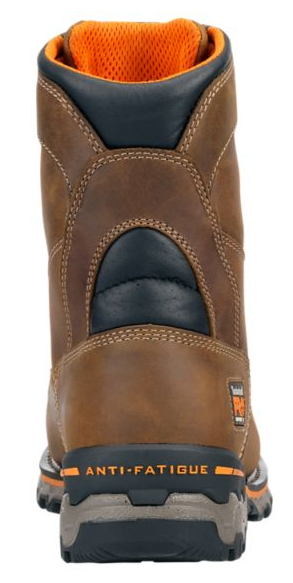
Timberland Boondock Composite Toe Boots

Timberland Boondock Composite Toe Boots

Timberland makes a great composite toe called the Boondock, which comes in 6” and 8” rise and a regular and insulated versions. In addition to being composite (which isn’t conductive), these boots make electricians and contractors working around live wires even safer with additional protection against electrical hazards built right into the sole. The sole is combination welt and cement and has deep lugs for extra traction. These are great winter boots. All are treated waterproof leather and an additional waterproof membrane. As with any leather work boot, be sure to treat the leather regularly to maximize the lifespan of your boots.

Season

If you live in Texas, winter weather is probably a minor consideration, but in Boston or Chicago, the difference between winter and summer is astounding. It means you’ll almost certainly need two sets of boots: 3-season and winter. In some places, you may even want a third pair for wet, warm weather.

Traction/Grip

Working outdoors in winter weather is uncomfortable and often comes with significant risk. It’s unlikely that frostbite or similar cold-related trauma will be an issue, especially if you are moving around all day. However, with winter comes snow and ice; if you work on open sites or outdoors, especially on rooftop, having a grippy sole is critical for your safety.

Waterproofing

Waterproofing can come in a few different forms. The first, the oldest, the classic is leather. Leather can also be treated specially to give it additional water resistance. The other way is synthetics that are specially treated to be waterproof; sometimes this waterproofing will be merely a membrane between the outer shell and inner padding of the shoe. Gore-Tex is the best known version. A combo of both is often best.
Waterproofing isn’t just for winter. All year long, depending on your location, you may experience wet weather and need protection without superheating your feet. The KEEN Atlanta discussed above is a great example of 3-season waterproof option.

Insulation

What does make a waterproof boot an explicitly winter boot is insulation. The latest version of the Columbia Bugaboot includes what they call Omni-Heat technology. In addition to the standard 200g insulation, the boots are lined with breathable thermal-reflective lining that retains warmth as low as -25°F. The leather and nylon construction with seam-sealed waterproofing is good enough to hike Everest, so it should cut it on site.

Fit

Inserts

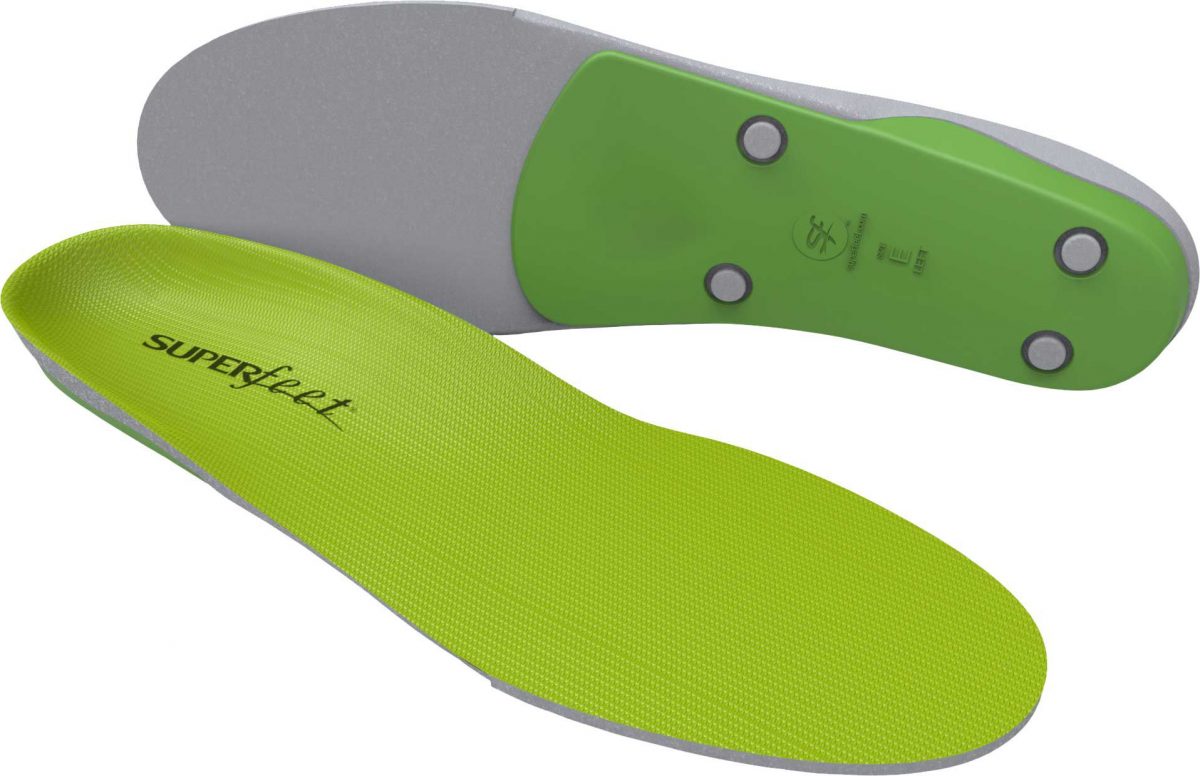
While not associated directly with your shoe choice, you should also consider getting inserts. Whether it’s Superfeet, Dr Scholl’s or custom orthopedics, inserts can make a huge difference on your feet, knees and back if you work on your feet all day. If you want to use inserts, be sure that you buy boots with room for them. It can help to get boots with removable inserts, since the usual thin piece of foam doesn’t generally offer much additional support anyway.

Superfeet Inserts

Superfeet Inserts

Socks

Having comfortable feet all day starts with the right socks. Socks provide cushioning, but the right sock can also improve your circulation and wick away sweat. Everyone from runners and hikers to survivalists preppers will tell you that “cotton is rotten.” Cotton absorbs moisture (such as sweat) and holds onto it. This does two gross things. First, it makes your socks heavy, wet and uncomfortable. Second, it grows bacteria which makes your feet smelly and can lead to infection.
The solution? Technical synthetics or wool. These socks will pull moisture away from your skin and disperse it across its surface, which allows it to evaporate faster, keeping your foot dry and comfy.
On the synthetic side, I would have to recommend REI Coolmax hiking socks. There’s both midweight and ultralight and they come in ankle and crew height, so you can get whatever you need. If you prefer wool, there’s nothing like Smartwool. Ethically sourced and of the highest quality Merino sheep, they neither itch nor smell. Which a range from ultra light to extra heavy weight and micro to over-the-calf height, Smartwool socks can be worn all year round and with any shoe.

Liner

Smartwool, REI and countless others also carry what are called liner socks. These are socks inside your socks. If you are working in frigid conditions or tend to sweat a lot, liner socks are extra effective at drawing sweat away from you and pushing it to your socks to get evaporated away. This means your feet stay drier and more comfortable, especially in extreme weather conditions.

Alternating Days

If you work in wet conditions or you sweat a lot, you might want to consider getting two sets of boots and alternating. Ensuring that your boots are dry in the morning when you put them on is a big help in avoiding discomfort, smell and issues like athlete’s foot.