5 Pitfalls to Avoid with AI in Insurance Compliance

Lesson 1: Don’t Confuse Tooltip AI with Trustworthy AI

In a rush to join the AI conversation, some platforms have shipped lightweight features that mimic intelligence but deliver little substance. For example, we’ve seen interfaces where a user clicks a small icon next to a COI field to receive AI-generated commentary on that field. At a glance, it appears helpful—the AI explains what “general liability” means or flags that a date is expired.

But these features rarely integrate into the platform’s core compliance logic. They don’t actually assess whether a vendor meets requirements across the board. They don’t recommend actions. They don’t notify stakeholders when policies lapse.

These tooltip-like experiences give the illusion of intelligence but ultimately ask the user to do the hard interpretive work. They create a false sense of coverage.

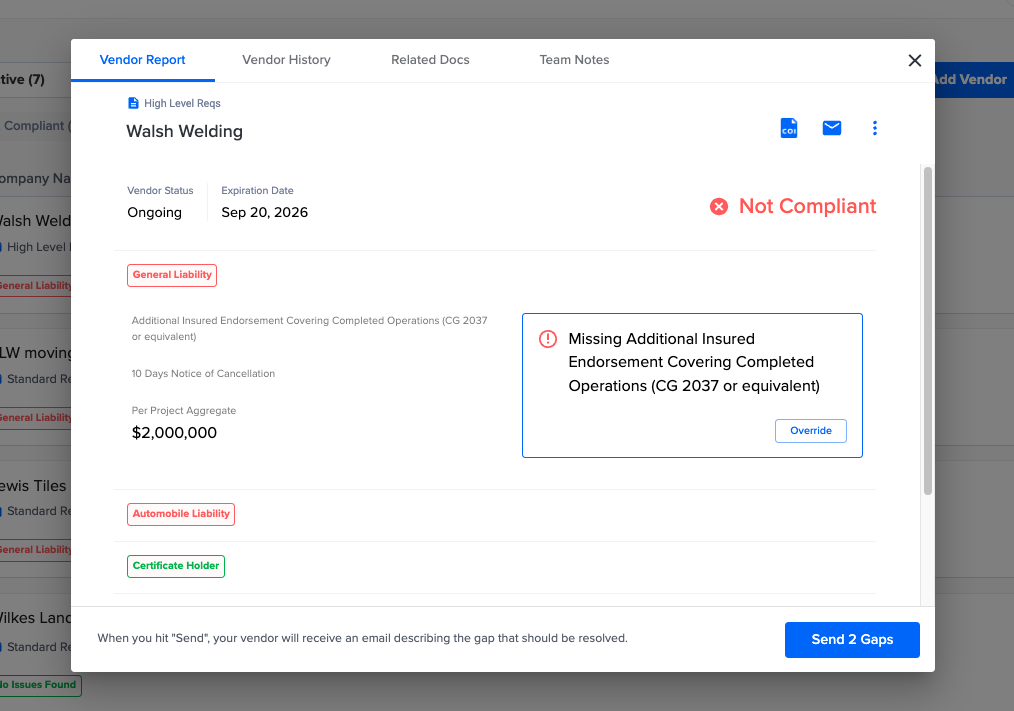
What to do instead: Embed AI at the heart of the insurance operations engine. It should power the extraction, structuring, validation, and auditing of COI data. It should compare insurance policies against project requirements in real time. And it should escalate intelligently when something is missing or wrong.

When used well, AI isn’t just a helper. It’s a second brain. But only if it’s doing the work that actually matters.
jones-screenshot-two

Note: Ready to explore how Jones can streamline your COI management process? Talk to our team of experts today!

Let’s Chat!

Lesson 2: Don’t Hand Off Complexity in the Name of PLG

The rise of product-led growth (PLG) has inspired many platforms to build self-serve onboarding flows. The idea is simple: let users sign up and configure the platform themselves without having to talk to sales.

But compliance isn’t a simple problem. We’ve seen onboarding flows that ask users to define insurance requirements, set up audit logic, and even classify vendors—all before they’ve seen value from the product. One platform launched a “streamlined” sign-up experience, only to quietly pull it after users struggled to understand what they were being asked to do.

This self-serve friction is more than a UX problem. It puts the burden of accuracy on the very people trying to offload it. In a field where a missed checkbox can lead to real-world liability, asking clients to configure insurance workflows themselves is irresponsible.

What to do instead: Design product-led experiences around outcomes, not configuration. Use AI to intelligently pre-fill requirements based on project type. Offer templates that reduce the risk of human error. And guide users with clear explanations, rather than dumping them into a dashboard.

Self-serve should not mean self-support. In compliance, the goal isn’t just usability—it’s confidence.

Lesson 3: Don’t Forget That Brokers Are Partners—Design for Them

There’s a perception in the compliance world that brokers are gatekeepers or friction points. But this view misses the bigger picture.

Brokers are a critical link in the insurance data supply chain. They are responsible for issuing and maintaining accurate certificates, and they carry professional liability (E&O) exposure if they provide bad data. That means their incentives are aligned with compliance platforms and clients alike: they want the data to be right.

The real issue isn’t misalignment—it’s enablement. Most compliance platforms don’t design for broker adoption. They expect brokers to navigate clunky portals or one-off email workflows. Unsurprisingly, engagement is low.

What to do instead: Build lightweight, broker-friendly interfaces that make it easy to upload, update, and verify policies directly from their preferred operating system. Offer integrations that minimize double-entry. Allow brokers to see which policies are still in review and where gaps exist.

Compliance is a team sport. If you want accurate, up-to-date insurance data, design for the people who own it.

Lesson 4: Don’t Rely on Legacy Systems to Become Your System of Record

Many platforms today try to build bridges to legacy insurance systems—carrier portals, broker databases, and static policy PDFs. The thinking is: if we can just plug in, we can synchronize data at scale.

But these systems weren’t built for structured, real-time verification. They weren’t designed for interoperability. In some cases, the “integration” amounts to scraping PDFs or emailing policy admins for updates. This introduces latency and fragility into the very foundation of compliance.

What to do instead: Become the source of truth. Build a system of record that ingests insurance data directly from vendors and brokers, structures it, verifies it, and maintains it over time. Offer a digital profile that follows the vendor across projects.

When the industry moves to digital insurance (and it will), only the platforms that own the structured, verified data will matter.
Lesson 5: Don’t Treat Trust Like a Feature—It’s the Foundation

In this category, the end user isn’t just looking for a tool. They’re looking for confidence. They want to know: Are we covered? Did we miss anything? Can I trust this system when something goes wrong?

We’ve seen AI features that promise the moon but crumble under edge cases. We’ve seen platforms optimize for growth at the expense of reliability. But the most dangerous thing a compliance platform can do is fail quietly.

What to do instead: Make trust your north star. Build transparent audit trails. Create AI systems that show their work. Offer human-in-the-loop safeguards and escalation paths. And most importantly, be willing to guarantee outcomes.

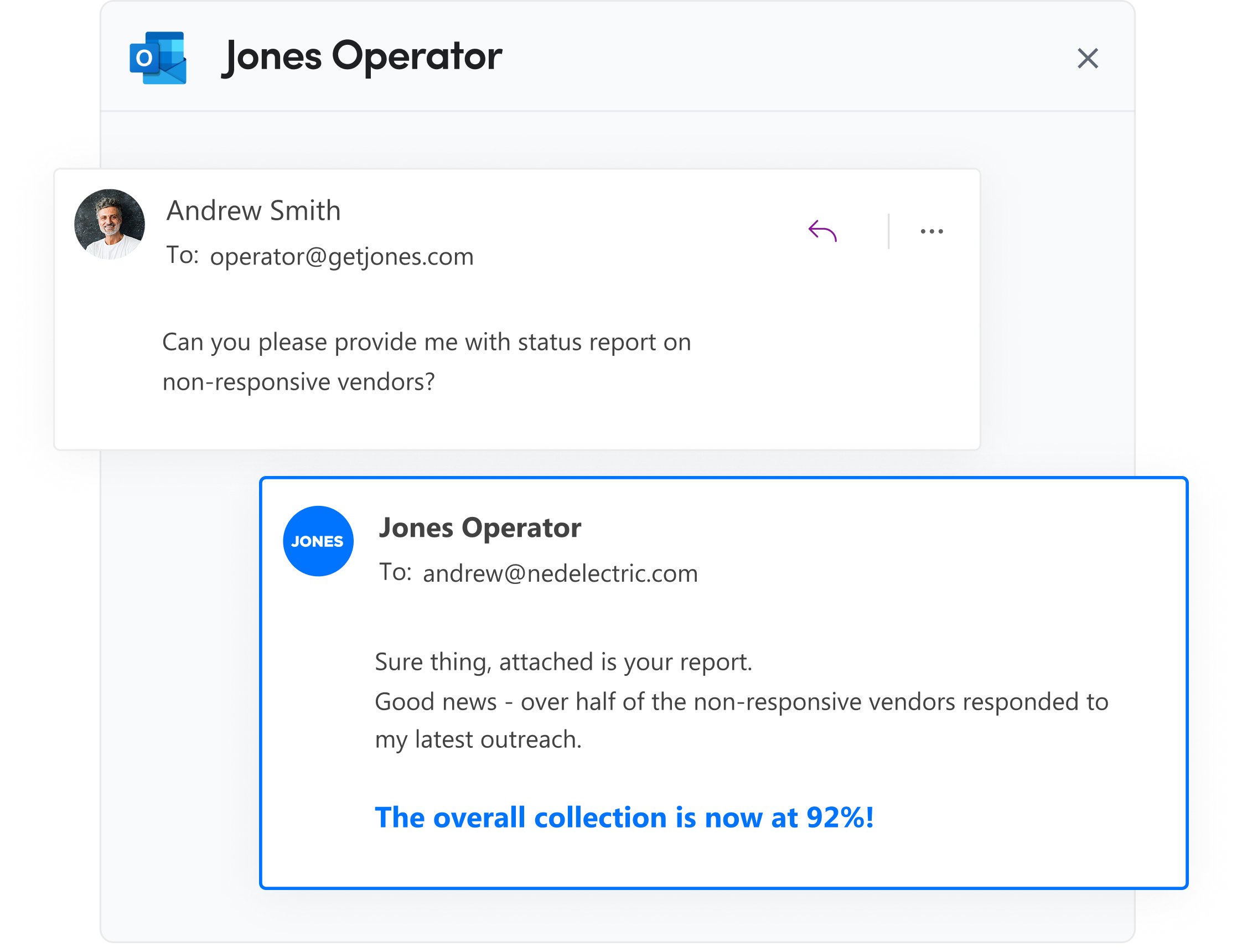
Shameless plug: Our new Jones Operator offering does exactly that. We don’t just process COIs—we take accountability for making sure our clients stay compliant, and we guarantee the outcomes (or your money back!). Because in the world of insurance, the cost of getting it wrong is too high to settle for half measures.
Final Word: Building the Right Way

Insurance operations is not just a workflow problem. It’s a risk problem. It’s a trust problem. And as AI transforms how we work, we must remember that transformation without accountability is just noise.

If you’re building AI in this space, we hope these lessons help you skip some of the pain. And if you’re buying AI-driven compliance tools, ask the hard questions: Does this system stand behind its work? Will it still perform under pressure? Can I trust it when it matters most?

Because at the end of the day, that’s what compliance is really about: not doing the work, but knowing it’s done right.

Tired of Reviewing COIs and Endorsements Manually?

Jones automates the collection and review of COIs for property management companies, owner-operators, and general contractors across the US. Reach out to us via the form below to find out more about how Jones can help your organization manage your insurance documents.
Key Workflows in Construction Compliance for 2025

The Hidden Risk: Why Construction Insurance Compliance Is Broken

You already know the basics: every subcontractor must carry insurance. You request a COI. You file it. You move on.

But here’s the problem: a COI isn’t legally binding. It’s a marketing flyer, not a contract. It might summarize coverage, but it doesn’t confirm it. It certainly doesn’t verify endorsements or catch exclusions. And unless someone is reading the underlying policies — carefully, consistently, and with expertise — you’re flying blind.

In most firms, this falls to:

  • Project coordinators juggling inboxes and Excel sheets
  • Admins who don’t understand what Additional Insured actually means
  • Risk managers who only see issues when it’s too late

The result? Over 70% of COIs submitted are initially non-compliant. Some lack required endorsements. Others list incorrect coverage amounts. Many have already expired.

And when there’s a claim? A judge won’t care that a COI looked okay. If your contract required specific coverage and it wasn’t there, the liability can fall on you.

Compliance isn’t busywork. It’s your legal firewall. And that’s why construction teams are moving beyond spreadsheets and toward platforms purpose-built to manage risk.

Note: Ready to explore how Jones can improve your COI management process? Talk to our team of experts today!

Let’s Chat!

Why Construction Compliance Platforms Are Now Essential

Subcontractor risk has changed. Project owners are demanding tighter oversight. Insurance policies have become more restrictive. And compliance mistakes now have real financial consequences.

Yet many contractors still manage COIs and insurance compliance with outdated tools:

  • Spreadsheets that aren’t updated in real time
  • Email chains that get buried
  • PDFs sitting in inboxes with no verification

These old workflows can’t scale. They leave gaps in risk transfer, delay vendor onboarding, and expose your firm to uninsured claims.

A construction compliance platform solves this by:

  • Automating COI requests and renewals
  • Verifying insurance coverage at the policy level
  • Notifying stakeholders of non-compliance in real time
  • Centralizing compliance across projects and vendors

It’s more than document collection, It’s contractor risk intelligence.

What Is a Construction Compliance Platform?

A construction compliance platform is a specialized software solution that automates the process of collecting, verifying, and managing insurance compliance for contractors, subcontractors, and vendors.

It isn’t just document storage. It’s a proactive system that enforces your insurance requirements, notifies vendors and project teams when something’s wrong, and ensures that no one sets foot on site without valid, compliant coverage.

The top platforms typically include:

  • Secure COI upload portals for vendors
  • Automated renewal tracking and alerts
  • Endorsement-level policy verification
  • Smart workflows that escalate non-compliance
  • Real-time dashboards across all projects
  • Integrations with tools like Procore, CMiC, Sage, and MRI Software

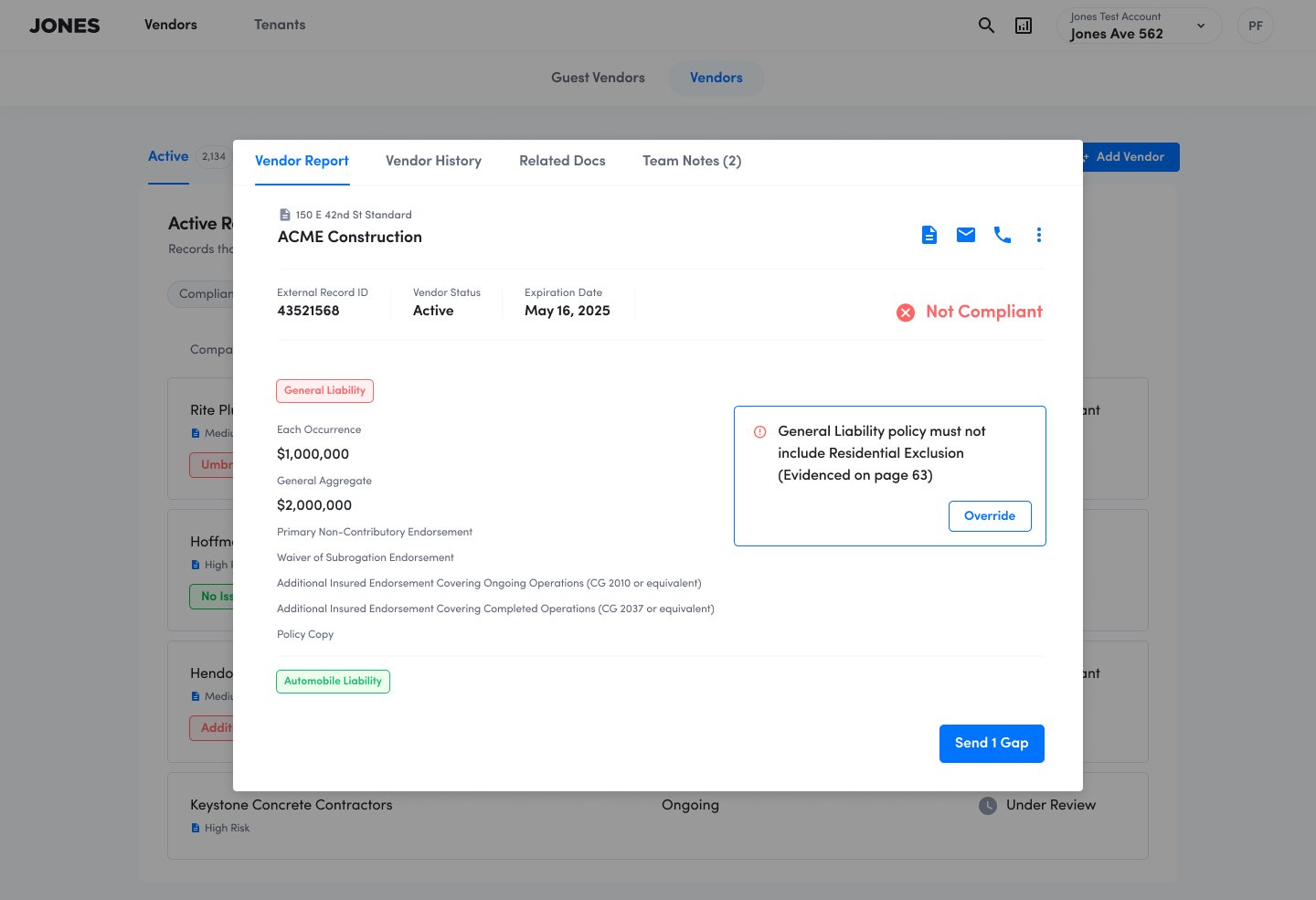
But the best platforms don’t stop there. They don’t just track COIs. They verify them. They analyze the policy details behind the certificate and surface gaps before risk lands on your desk.

This is the difference between insurance compliance as admin and insurance compliance as protection.

Manual vs. Automated Construction Compliance: The Cost of Doing Nothing

If you’ve ever had to dig through email chains looking for a COI that turned out to be expired, you’ve already experienced the cost of manual compliance.

Let’s look at what happens when firms stay stuck in the old way:

  • Delayed onboarding: Vendors can’t start until the office confirms insurance. When the process is manual, timelines slip.
  • Uninsured exposure: A vendor’s COI might be in the system, but the underlying policy expired last week. No one checked.
  • Endorsement gaps: Your contract requires a Waiver of Subrogation, but the vendor didn’t include it. You didn’t catch it. Now it’s your problem.
  • Project delays: If a certificate goes missing or coverage lapses mid-project, your team has to pull that vendor off-site.
  • Legal liability: If a vendor’s insurance fails to respond to a claim, and your documentation doesn’t prove you verified the right coverage, your firm could end up paying.

On the flip side, automated construction compliance platforms:

  • Send COI requests as soon as a vendor is added
  • Flag missing endorsements or incorrect coverage amounts instantly
  • Monitor expiration dates across your entire portfolio
  • Maintain a defensible audit trail that protects you if a claim occurs

Automation doesn’t just save time. It saves job sites, reputations, and margins.

Must-Have Features in a Top Construction Compliance Platform

1. Automated COI Requests and Renewals

The system should initiate COI collection automatically when a vendor is onboarded and follow up until the correct certificate is received. You should never have to chase paperwork again.

2. Policy-Level Verification

It’s not enough to collect a COI. The platform should validate items like:

  • Is the Additional Insured endorsement attached?
  • Is Contractural Liability and Privity language evident?
  • Is the Waiver of Subrogation language present?
  • Are Primary and Noncontributory clauses included?
  • Are there exclusions that make the coverage worthless for this scope of work?

Top platforms like Jones combine machine learning with human insurance experts to ensure nothing slips through the cracks. Here you can learn more about how Jones reviews COIs and endorsements for compliance, including items such as Excess Follows Form Endorsements, Evidence of Additional Insured, or Contractual Privity Language.

3. Custom Insurance Requirement Templates

You need flexibility. The system should let you define different coverage requirements and compliance rules by trade (e.g., roofers vs electricians), project type, or risk category.

4. Compliance Dashboards and Risk Flags

Visibility is power. You need to see:

  • Which vendors are compliant
  • Which ones are expiring soon
  • Where your risk is concentrated across jobs
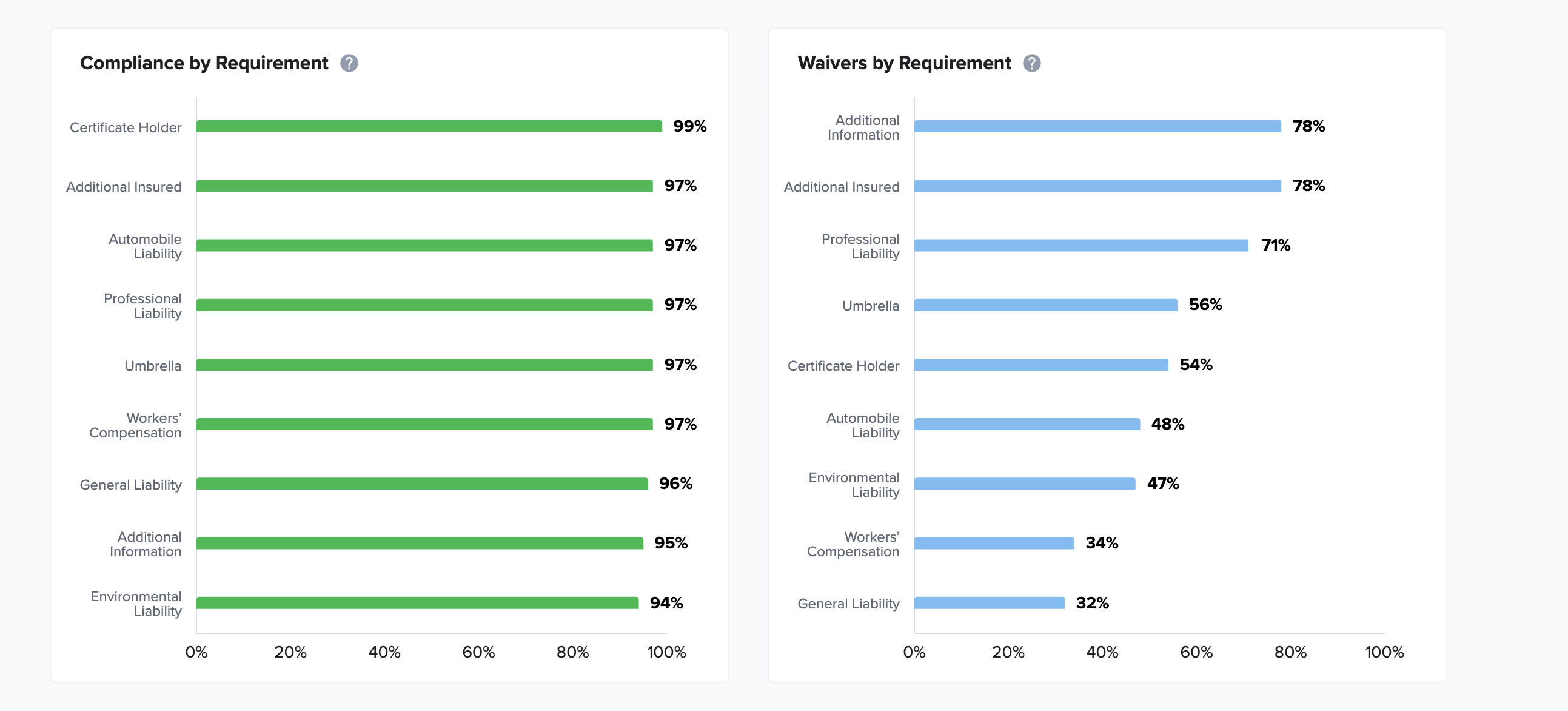
  • What deficiencies in coverage are waived most often

Dashboards should be filterable by project, date, vendor, and compliance status. They should update in real time and surface critical risks without making you dig.

Jones compliance charts

5. Audit Trail and Documentation History

In the event of a claim, you need proof that you did your due diligence. The platform should log:

  • Every upload
  • Every deficiency
  • Every resolution
  • Every communication with vendors

That history can be the difference between a dismissed lawsuit and a six-figure loss.

6. Vendor Experience

Compliance only works if vendors actually submit what you need. Look for platforms that provide:

  • Branded, no-login required submission portals
  • Clear checklists and instructions that explain insurance
  • Easy resubmission workflows if something is flagged

If it’s hard for vendors, it becomes hard for you.

7. Construction Software Integrations

Your compliance platform shouldn’t live in a silo. Look for integrations with:

When these systems talk to each other, your team saves hours and gets better data.

8. Expert Support and Risk Sharing

The best platforms don’t just provide software. They provide people. Insurance experts. Support teams. In some cases, like Jones, they even back their reviews with liability coverage. That’s peace of mind that software alone can’t provide.

Why Jones Leads the Field in Construction Compliance

Jones isn’t just another COI tracker. It’s a full-stack construction compliance platform that powers some of the biggest names in construction and commercial real estate.

What makes Jones different:

  • COI + policy verification: Every submission is checked for endorsements, coverage limits, exclusions, and formatting errors
  • 99.7% accuracy rate: Guaranteed by our Risk & Compliance team
  • Dashboards built for risk teams: Not just storage — active insight
  • Best-in-class vendor portals: Designed to make submission easy, fast, and correct
  • Native integrations: Works seamlessly with Procore, CMiC, MRI, Sage, and more
  • Audit readiness baked in: Every action is logged, time-stamped, and reportable
  • Risk mitigation partnership: Jones assumes liability for verification errors in many cases

Clients like JLL, SavCon, and Bulley & Andrews use Jones because they can’t afford the gaps other systems miss.

Final Thoughts: The Future of Construction Compliance Is Automated

Compliance isn’t paperwork. It’s protection. And in construction, where liability travels fast and blame is passed even faster, you can’t afford to get it wrong.

The top construction compliance platforms of 2025 don’t just digitize COIs. They verify them. Track them. Enforce them. And protect you from the silent risks hiding in bad paperwork.

Jones leads the way because it goes deeper than forms. It goes all the way to the policy.

Tired of Reviewing COIs, Endorsements, and Policies Manually?

Jones automates the collection and review of COIs for property management companies, owner-operators, and general contractors across the US. Reach out to us via the form below to find out more about how Jones can help your organization manage your insurance documents.