What is an additional insured?

General contractors (when you’re working as a subcontractor), property managers and homeowners who are clients often request to be added as the additional insured under your liability policy. Additional insured status is given by adding an endorsement to the policy.

Additional insured means that your insurance policy covers another person or business. As the additional insured, your client doesn’t need to pay premiums on your policy, but they still have coverage.

How does it work?

Often, the additional insured will be the the general contractor on a project where you’ve been hired as a subcontractor. If the GC is sued because of something that is a result of your work, your insurance will protect the general contractor.

Let’s look at an example. You’re hired as a drywall installation subcontractor and the general contractor asks that you add him as the additional insured. You finish your work and leave the site to start another job. After the project is completed, the client contacts the GC to tell him that a sheet of drywall is buckling and the screws are popping out.

Basically, if the GC can’t prove you were responsible, he still won’t have to handle the claim on his insurance. The GC can have the claim filed under your insurance, instead of his own.

The additional insured, however, does not receive any notifications if the policy has been changed or it ended. For your client to be notified of any changes in policy, he would need to be added as the certificate holder on your ACORD certificate of liability insurance.

Types of Additional Insured

With traditional policies and additional insured, you will typically be charged a fee for each additional insured that you want or need to add to your policy.

A newer concept is the blanket additional insured endorsement. This automatically grants insured status to a person or organization that the named insured is required by contract to add as an insured or wishes to add. This means that you can add any number of additional insured persons without paying anything extra.

Additional insured status is commonly used in conjunction with an indemnity agreement (“hold harmless” clause, contractual liability) between the named insured (the indemnitor) and the party requesting additional insured status (the indemnitee). Having the rights of an insured under its indemnitor’s general liability policy is viewed as back up for the indemnification.

If the indemnity agreement proves unenforceable for some reason or the claim is limited by a limitation of liability clause, the indemnitee may still be able to obtain coverage for its liability by making a claim directly as an additional insured under the indemnitor’s policy.

How do I add clients to my insurance policy?

It’s pretty simple to add an additional insured. All you need to do is to speak to your insurance agency. They will be able to tell you if the terms of your insurance policy will allow you to add an additional insured. Once your client has been added as the additional insured, his name will appear on your certificate of liability insurance.

For more information and clarification, you may want to read about certificate holders and the difference between these two endorsements.

Some Quick Tips

  • Ensure that all names are spelled correctly. Misspelled names can void the coverage.
  • GC’s and PM’s require not just their name, but also the owner or leaser. The cost can add up if you don’t have a blanket endorsement.
  • Clients typically require the additional insured names to be included in the Description of Operations section of the COI. Often, they also require the Additional Insured endorsements to be attached to the COI.
  • Understand the difference between Ongoing and Completed Operations (risks, damage that happens after you step away). Additional insured endorsements sometimes exclude completed operations. Make sure yours covers both.


What’s the difference between claims made and occurrence policies?

Almost all liability insurance is either claims made coverage or occurrence based coverage. Most general liability insurance policies for businesses are occurrence based policies, while errors and omissions (E&O) coverage is typically claims made.

There are a few simple but significant differences between these policies that you should understand.

Timing

When looking at claims made versus occurrence policies, the main differentiator is the time period covered.

An occurrence based insurance policy protects you from claims resulting from any incident that occurred during the policy period, regardless of when the claim was filed. It’s permanent coverage for a certain time period, so long as the incident falls within the terms of your policy (we’ll come back to this “little” detail later).

A claims made policy, on the other hand, provides coverage for claims only if both the incident and the claim occur during the policy period. If you renew the same policy year after year, claims are accepted as far back as your retroactive date, also known as a prior acts date or “nose.”

If you started your policy in 2014 and constantly renewed up to the present, your retroactive date means that you are covered against any claims from 2014 to the present. If your policy lapsed at any point, your retroactive date resets to when you reactivated your policy.

When you cancel your policy, you can purchase a “tail” endorsement to provide extra coverage. A tail, or extended reporting period (ERP), is basically an extension of when a claim can be filed, but the incident still had to be while the policy was active.

A tail just gives you a bit more flexibility if someone is slow filing a claim against you. Short-term tails are often provided at no cost to you, as a courtesy. Long-term or perpetual tails are also purchasable for a premium, which varies based on the insurer.

Limits

Claims made vs. occurrence insurance policies are also differentiated by their limits.

Occurrence based policies have a limit that restores each year regardless of claims paid. Each year of an occurrence based policy is a separate set of limits unrelated to the year before or the year after.

For example, your general liability policy aggregate limit is $1M. In 2016, a claim was made against you and your insurance company paid out $200,000. Your 2017 aggregate limit will still be $1M. It doesn’t carry year to year.

Claims made policy limits do not “restore” each year like occurrence policies. You have one policy limit for as long as you keep your policy active, whether that is one year or ten.

For example, you have a claims made professional liability (E&O) policy with a $2M aggregate limit. You’ve been carrying this policy since 2010. In 2011, a claim was filed and $300,000 was paid out. Your limit from 2011 until your terminate this policy will be, maximum, $1.7M.

How does this work with completed ops coverage?

When hearing about occurrence based policies, you may be wondering where your completed operations coverage comes into this. Completed operations coverage is like a mini claims made policy inside an occurrence based insurance policy. The occurrence aspect of the policy only applies to active projects.

Let’s try to make this simple…

  • If a project is underway, your occurrence-based general liability policy covers you.
  • If the project is over, you have completed ops coverage and your policy is still active, you’re covered.
  • If the project is over, you have completed ops coverage but your policy has lapsed, you’re only covered if the incident occurred with the policy was active AND you have a tail.
  • If the incident occurs after the policy period, you’re out of luck.

What is completed operations coverage?

Sometimes called product and completed operations coverage, this coverage is part of a general liability insurance policy and protects your business from liability surrounding your products or business operations off your property once those operations have been completed or abandoned.

Products liability and completed operations insurance have long been included in standard occurrence and claims-made investment policies. For about the same amount of time, they have been misunderstood by everyone from insurance agents to clients to lawyers.

What is covered?

Product liability insurance covers you against claims made associated with a product you manufactured or sold.

Completed operations insurance coverage is more relevant for contractors and service providers. This protects you in the event that someone claims that work that you did caused bodily injury or property damage.

In order for a claim to be covered, it must satisfy a few criteria. Fundamentally, the claim must allege bodily injury or property damage. The property damage must be to property other than your own. Said property damage or injury also must be a result of your product or completed work. Finally, the damage or injury must have taken place away from the property you own or rent for your business. In the case of completed operations that took place on a site that you don’t own, the claim must have occurred after your work was completed, as indicated by the name of the policy.

Among the claims covered are those of negligence and breach of warranty. If your product, in failing to comply with the standards guaranteed in a contracted warranty, causes bodily injury or external property damage, the resultant claim will be covered by your products liability policy.

Also be sure to understand your policy thoroughly, as these claims are subject to the occurrence and aggregate limits of your policy.

What isn’t covered?

The main exclusions to this coverage are damage to your property or your work. If your product or your constructed work fails, but there is no outside damage caused, then the claim will be rejected by your insurance carrier. In the event that the issue causes damage to your product or work, as well as damage to other property, only the damage to the other property will be covered.

In addition, there is an exclusion for “impaired” property. This is property that is defective or unusable because it contains your defective product or work. For example, you lay the foundation of a building and other contractors build the rest of the building. Your foundation cracks and the building is unusable. Your insurance company will not pay the repairs, because the work is part of a larger whole.

Lastly, if you are forced to make a blanket recall of a faulty product, the costs of the recall will not be covered by your insurance carrier. (This could be covered by limited product withdrawal expense coverage.)

The buried lead…

Many people, even those who should know better, are unclear of the reality of completed operations coverage. The general impression of completed operations coverage is that a claim will be paid, so long as your policy was active when the project was completed.

This is NOT the case. A commercial general liability policy will only pay a claim if the injury or damage occurs during the policy period. The claim must also take place while the policy is still active. Once the policy is cancelled, you’re out of luck.

You can buy something called a “tail,” formally called a supplemental extended reporting period (SERP), but this only covers damage or injury that occurred during the policy period. It still doesn’t cover claims for damage after the policy period; it simply extends the time frame for the claim to be made.

What’s truly harsh is that someone who is no longer in business will have a lot of trouble continuing his insurance to protect against such claims. The cost of his policy will most likely go way up, despite his decreased exposure.

How do I get a certificate of insurance?

As a contractor, you have probably been asked by a potential client to present them with a certificate of liability insurance. Clients request the certificate of liability insurance to ensure that you’re covered in the event of an accident or injury while you are working on a specific job. The certificate is a standard document written on an ACORD form that includes the details of your policy as well as any endorsements or exclusions to the policy.

Is it complicated to get the certificate?

No, it’s relatively easy. If you already have a valid insurance policy, you can contact your insurance agent and request a new certificate of liability insurance. You’ll need to request a new certificate for each new client or job because your clients, whether general contractors, property managers or homers, need to be listed as “certificate holders” on the certificate.

Your agent will fill out a new ACORD certificate of liability form, which details your policy, limits, policy dates and types of policy endorsements included in the policy. The client may also request that you add additional insurance, such as umbrella or excess liability insurance or add him as additional insured as an endorsement to your insurance policy.

How much does it cost?

Certificates of insurance should not cost you anything. If you have a policy in place, your insurance agent should be able to provide a COI without an extra charge. In fact, most states do not allow for agencies to charge a fee for COIs.

How long does it take?

While COIs are affordable, they can take several days to obtain. At times your insurance policy may not match your clients requirements and you may need to add endorsements to the policy. Be sure to send all the new contract requirements to your agent so they can assess the requirements.

If the policy fits the requirements, it should take less than a day, however if the policies do not match then this process can take up to 3-4 days until you receive the new certificate. At times this can take longer if there is a lot of back and forth between you, your insurance agent and the client.

The longer it takes, the more you are delayed in starting your project. You may even lose out on the job if you can’t provide the certificate of insurance fast enough.

It’s all in the details

What happens if you give the wrong expected end date of your project? Or, you forget to inform your agent to add additional insured to your certificate? Your insurance agent will need to fill out a new ACORD certificate of liability form each time you change a detail. And you can get charged for each of these changes.

Therefore, you need to make sure that you have all the details. If there’s a particular point missing on your certificate, or if one of the coverage limits in your policy is inadequate, you will be charged extra for any changes to the policy that need to be made.

What is the ACORD form?

The ACORD certificate of liability insurance is just one page, containing all the relevant information regarding your insurance policy. The ACORD certificate of liability insurance (titled the ACORD 25) form can be almost as important as your work contract with a client.

Standardized for Ease

Because the form is standardized, you will not need to get an entirely blank ACORD insurance form for each new client. Instead, your insurance agent just needs to add a few specifics for each client and job.

It also leaves little room for miscommunication between you, your agent and your client regarding your insurance policy. The form has everything laid out clearly, with checkboxes and pre-printed and labeled areas for important details; you can’t miss anything.

Take note that the form gets updated periodically. It’s best to check with your insurance agent when renewing your policy for any updated versions.

How agents fill in the ACORD 25

Once you have taken out an insurance policy with your insurance agent, you will be able to ask your agent to fill out a new form for each new client. A sample ACORD form can be found online. Your agent will take one of the readily available fillable ACORD 25 forms online and complete it for you.

With the certificate of liability insurance, your client can also be covered under your insurance policy. Your client will need to request that you add him as the additional insured. What this means that in the event of any claims, your client will also be covered.

At Jones, we provide you with the ACORD certificate of liability insurance for just $25 within minutes of signing up to us. You can then pass this certificate of liability insurance onto your client as proof of your insurance policy.

What is the ACORD Cancellation Form?

Once you’ve signed up for a policy, how can you cancel it? The ACORD cancellation form 35 is like an undo button for the ACORD 25. This form is formal evidence of your instructions to your insurer to cancel your policy.

When you want to cancel your policy, tell your agent that you want to have the ACORD cancellation request form or policy release form completed. Always ensure that the form is completed properly before settling your account with your insurer.

Everything You Need to Know About Certificate Holder

Certificate Holder

What is a Certificate Holder

A Certificate Holder is a person or organization to whom the certificate is being provided as evidence of insurance. In the commercial real estate space, the Certificate Holder is typically required to be the landlord, property manager, or both.

A COI’s Certificate Holder usually appears at the bottom left of the certificate in the designated Certificate Holder box, but if the broker runs out of space there, she may also note the Certificate Holder in the Description of Operations or on an Additional Remarks page.

You can learn more in Jones’ Insurance Guide: What is a Certificate Holder

Note: Working for Real Estate or Construction? Interested in exploring how Jones can help you automate your COI management end-to-end and de-risk your building? Talk to our team of experts today!

Let’s Chat!

Should You Be Listed as a Certificate Holder on Vendor COIs?

Being a Certificate Holder on your vendor’s certificate of insurance is a formality.

​​Certificate Holders are not entitled to any of the benefits of an insurance policy. This is explicitly stated at the top of any Accord form you have received.

Certificate Holder - Acord 25

Being listed as a Certificate Holder does not come with any protection from claims.

A Certificate Holder does, however, have the right to be informed. The Certificate Holder may receive advance written notice if the policyholder decides to cancel the policy at any time. However, in practice, it is very rare for this to actually happen. By our estimate, insurers fail to notify the Certificate Holder of cancellation in 98% of cases.

Oftentimes the broker does not even share the certificate holders with the insurers.

How Jones Expedites Compliance by Listing Itself as Certificate Holder

Of all the barriers to achieving compliance, Certificate Holder requirementsare perhaps the least meaningful. By standardizing the Certificate Holder, Jones allows vendors to more fluidly work across properties while reducingthe friction of the compliance process that frustrates all parties involved.

At the same time, Jones transforms paper notices that easily get lost in the mailinto convenient email notifications.

Benefits of Listing Jones as a Certificate Holder

  • Simplifies the auditing process for all certificates
  • Reduces the stream of physical mail that property teams will receive
  • Jones has a PO box where we receive the mail and then digitize and upload it to the platform
  • Jones can forward notices of cancellation when relevant

So how does it work?

Jones receives physical notices of cancellation in the mail frominsurers, scans the into digital format, and then emails whomever youdesignate to be notified.

Ready to automate your COI management process end-to-end?

Fill out a form below to get started!

What is general liability insurance?

Who Needs It?

Almost anyone who runs a business should have an active general liability policy. It protects your business from potentially destructive loss in a claim. You should especially consider business liability insurance if you:

  • have a location that is open to the public (restaurants, retail locations, etc.).
  • interact with people/clients at your location or on a job site.
  • have access to client equipment (computers, construction equipment, vehicles, etc.).
  • sell products to or perform services for customers.
  • advertise, market or represent your client or their business.
  • are required by a contract to hold a liability insurance policy.

What’s Covered?

General liability insurance is very broad. Let’s go through some of the things that are covered.

Property Damage

Your business will be protected if you or one of your employees causes damage to another person or company’s property. The expenses to repair or replace the damage property will be covered by your insurance policy.

Do note that general liability covers damage only to third-party property, not your own property. To protect your own property, you could consider commercial property insurance.

Bodily Injury

Commercial liability policies will also protect you in the event that a third party suffers a bodily injury on your property or as a result of your business operations.

Bodily injury could be something that just happens to take place on your property, like someone tripping on the edge of a rug in your store. It can also be something that is a result of your work. For example, if you are an electrician and you have open wires on a site during your work and your client touches them during a walkthrough and is injured, you would be responsible but you would also be covered by your general liability policy. This is very common and is the reason that general liability insurance is especially critical for tradesmen.

Once again, note that you and your employees are not covered by this policy. To protect yourself against claims by employees, you will need to provide workers’ compensation.

Personal Injury

While bodily injury and property damage coverage deals with accidents, personal injury (as well as the following section on advertising injury) handles claims against intentional acts.

Among the area covers are libel and slander, which are reputational injuries, or injury to a person or company’s image or standing. Libel is the propagation of a false statement about a third party in written or electronic form, while slander is a false verbal statement.

Additional areas covered by personal injury include false arrest, malicious prosecution, wrongful eviction/entry and invasion of privacy.

Advertising Injury

While related to personal injury and often lumped together in policy details, advertising injury handles offenses in connection with the advertising of your goods or services. In the event that in promoting yourself and your business you engage in libel, slander, invasion of privacy, copyright infringement or misappropriation of advertising ideas, your policy will cover any claims made against you.

Product Liability

This part of the policy covers you against property damage or bodily injury that occurs off your premises, but caused by a product that you manufacture, distribute or sell.

If a customer buys your product and it causes illness or injury, you may be sued for lost wages, medical expenses or other damages. This policy will cover your legal fees and any compensation pay-out.

Completed Operations

This part of the coverage is basically product liability for tradesmen. If you completed a project, but some part of your work causes property damage or bodily harm.

For example, if you are an electrician and a fixture that you mounted falls onto someone and injures them, you would be responsible, but you would also be covered by your general liability policy.

What’s Not Covered?

While business liability insurance is quite broad, of course not everything can be covered. Typically not included in the policy are:

  • Your own property
  • Vehicles, boats and airplanes
  • Property damage or bodily harm caused intentionally
  • Liability as a result of criminal activity
  • Employee injury (as discussed, this is covered by workers’ comp)
  • Professional errors (covered by professional liability insurance)

To know exactly what’s included in your policy or any policy you’re considering, be sure to ask your insurance agent.

Top 5 Reciprocating Saws of 2018

A contractor uses a reciprocating saw

As a handyman, you probably never leave home without your reciprocating saw. Commonly called a sawzall or recip saw, they’re all the same thing. The name Sawzall is actually simply the trademarked name given to the first reciprocating saw, made by Milwaukee in 1951.

It can be confusing sort through all the different reciprocating saws available. Somethings to look out for are:

  • Long battery life
  • High amperage
  • Good ergonomics and lightweight
  • Long stroke length and high SPM
  • Quick change adapter

Let’s look at the top 5 reciprocating saws of 2018.

1. Milwaukee M18 FUEL SAWZALL Reciprocating Saw

The Milwaukee 2720-21 is a full-sized reciprocating saw. This powerful sawzall has a variable speed trigger, allowing smooth control. There is less chance of it overheating with prolonged use thanks to the brushless motor. The storage case has an ergonomic handle, making it easy to transport to, from and around the jobsite. There’s even a space in the storage case for the spare battery.

The only problem with this sawzall is that the battery does take a long time to charge. To compensate, you may want to keep a charged spare battery handy so that you don’t get stuck waiting for it to charge.

2. Ryobi P514 Cordless One+ Cordless Reciprocating Saw

Ryobi is known for decent, low-cost power tools. If you’re just getting started and need to get some basics, Ryobi could be a great choice for you. Especially since all of their tools use the same battery and are interchangeable, so it’s easy to have a spare battery on hand.

The Ryobi P514 reciprocating saw features tool-free blade changing and a variable speed trigger. It has a capacity of 3,100 strokes per minute. Do note that the higher the speed, the quicker your battery will die, so make sure that you have a spare one available.

3. Bosch RS428 14 Amp Reciprocating Saw

You can handle any cutting job on steel, plastic, wood, or ceramic with the Bosch RS428. This reciprocating saw saw is powerful and efficient, while weighing only 8 pounds. The keyless blade change makes it easy to adjust. It can also handle all types of cuts with the constant orbital action.

One downside to this Bosch, however, is that it doesn’t have a hard case. Instead, it has a carry bag, which doesn’t protect as well.

4. Milwaukee M18 18-Volt Hackzall Reciprocating Saw

With this Hackzall, you no longer need to use two hands when cutting. You can use this saw with only one hand, while still working in many different positions and cutting almost anything.

However, you do need to use faster speed for soft material and slower speeds for harder materials. This specific reciprocating saw operates up to 3,000 strokes per minute. Some of the features include a LED light, Quik-Lok blade clamp, and soft grip handle.

5. DeWalt DW311K 13 Amp Reciprocating Saw

Comfortably sitting at the top of the line, DeWalt offers durability and quality in all their products. The DW311K has an orbital action for speeding up woodcuts. Its toolless clamp makes changing the blade and adjusting the shoe length a breeze. With up to 2,700 stroke per minute, you can quickly cut through all types of material, from metal tubing to wood and conduit. The anti-slip handle makes it easy to control on all heavy-duty jobs.

Unfortunately, there’s no anti-vibration system, so this guy can be tough on your hands. If you tend to rely on your recip saw for a lot and for long cutting jobs, this might not be the best choice for you.

Review: Does the Accubrush really solve the cutting in problem?

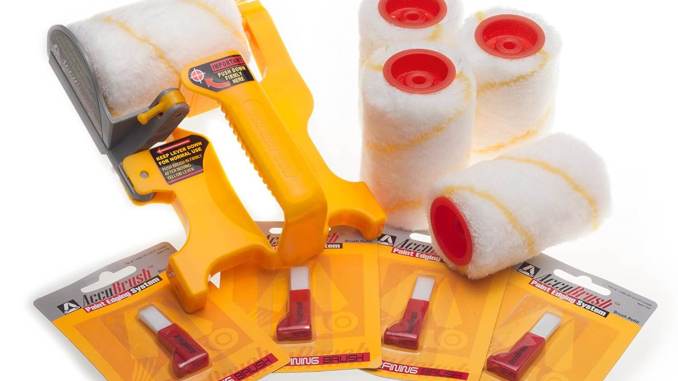
Accubrush MX Paint Edger 11-piece Jumbo Kit

When painting, one of the first steps to any paint job is to cut in along the ceilings, moldings, corners, and any other areas that require painting in a straight line. It can be one of the most frustrating and time-consuming parts of being a painter since it requires accuracy and a lot of patience.

Traditionally, painters use tape or angled brushes to cut in, but painting tool manufacturers have always been trying to find the next best thing when it comes to edgers. Many have tried to find a solution that saves people time and improves accuracy. One such tool that promises to cut in quickly and accurately is the Accubrush.

Accubrush here to save the day

No longer is painting a room a two-step process! The Accubrush is a patented roller, brush and shield that lets you cut in and paint with one tool. There is a tiny, fine line brush that fits neatly behind the roller. This brush spreads the paint to the areas where the roller cannot reach, like to the edge of the wall. Thanks to the shield, paint can’t spread onto the trim.

According to Accubrush, with their tool, you can edge eight feet with just one load of the roller. Accubrush claims that you will have a perfect line every time.

Putting it to the test

We tried out the Accubrush and there are somethings that we have noticed. When using the Accubrush, it does make a dragging and scratching noise, something that a paintbrush does not make. The little wheels that help guide the tool leave track marks on the wall. There is also a small gap that isn’t covered, which is bothersome to a perfectionist or a professional.

If you are working on a big room, you may find it frustrating that to roller runs out of paint relatively quickly. We covered 3-4 feet before the roller needed refreshing. You will have to keep putting more paint on the roller, not really saving you much time than if you were just using a regular paint brush.

Quality

When it comes to the rollers, you’ll be left wanting. Just touching them, they shed little fibers that will definitely affect the clean finish most people are looking for when they paint. Plus, they have a deep pile that is not well suited to a smooth surface.

They have plastic caps on the ends, so cleaning is problematic. The company claims they can be cleaned by immersing the entire mechanism in water, but that seems (and is in practice) terribly impractical.

Works everywhere! Or not…

We found that the Accubrush works “best” under ideal conditions. What are ideal conditions? Surfaces that are perfectly smooth, low textured, with no imperfections. For uneven surfaces, like many ceilings and walls, the Accubrush doesn’t paint in the promised straight, even line. It also doesn’t paint well in corners or around edges.

It does work pretty well on long smooth areas, but the wheels will still leave little marks that you’ll have to go back over anyway. Plus, if the ceiling is wet and you want to paint the wall, the plastic guard will smudge the paint.

Tried and true methods prevail

At the end of the day, as a professional, it’s probably easier and quicker to cut in the edges by hand. You can use your trusty regular rollers and brushes that you already have. If the area is dry, you can just use tape or an angled brush.

The Accubrush might save you some time, but the results are imperfect. You would still need to go back and fill in the areas where the wheels left marks and, depending on your standards, the gap left along the edge. This tool is only suitable for some DIYers, who don’t mind the imperfections of the cut in.