Looking for an Insurance Compliance Solution that Integrates with MRI Software?

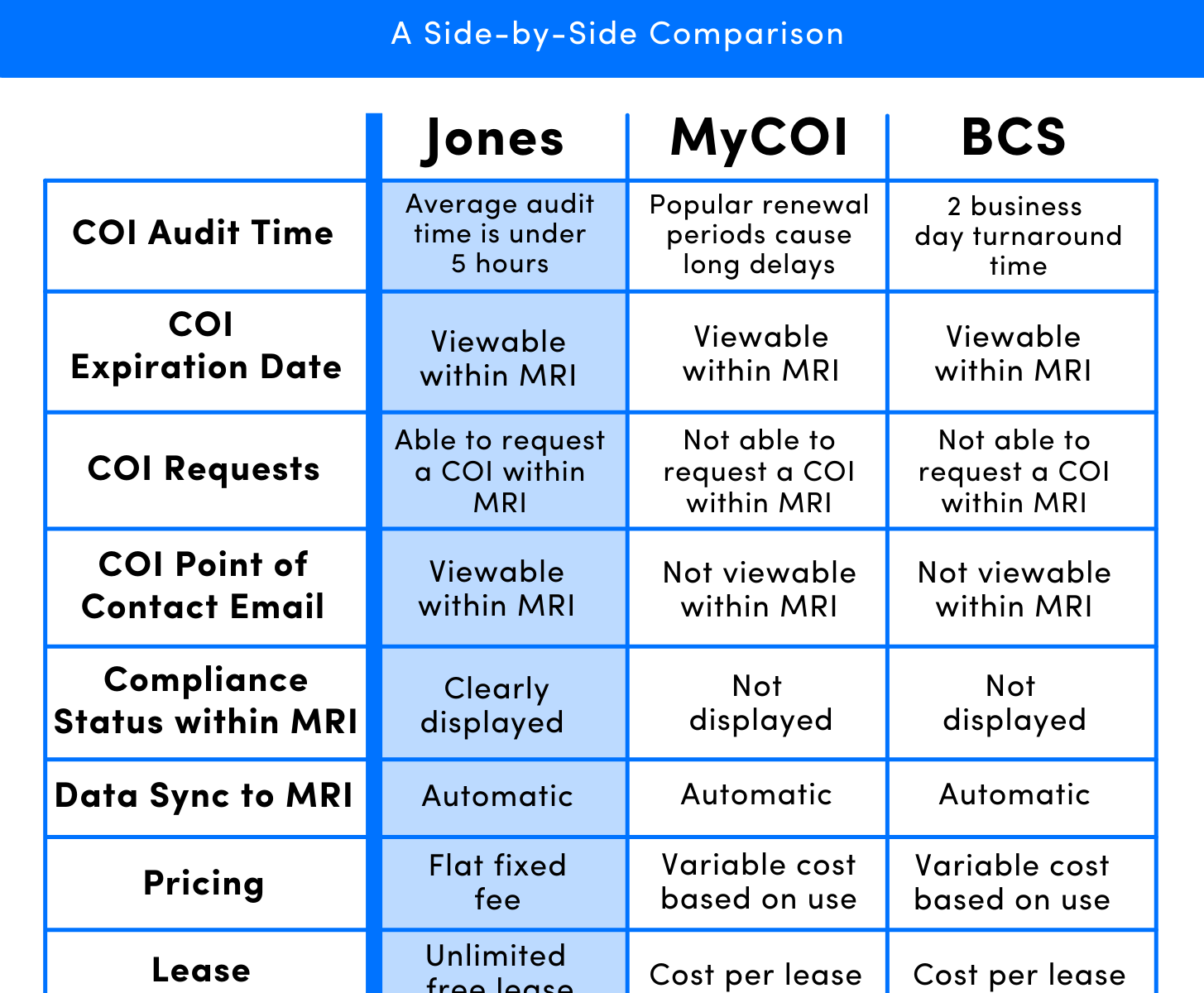
Comparison chart of MRI Software Integration Partners

Why Integrate Insurance Compliance Software with MRI?

Having an efficient insurance compliance solution is crucial. As we wrote about in an earlier blog post, COI mismanagement can lead to scary and expensive incidents.

Compliance management companies can help mitigate this risk, but their solutions are only truly effective if integrated efficiently into existing workflows. For example, the ability to view compliance information and initiate COI requests within companies’ core systems saved Jones customers hundreds of hours.

Comparison chart of MRI Software Integration Partners

COI Audit Time

Audit Time Comparison

It’s critical for your compliance management solution to audit COIs in a timely manner. Quick audits will enable transactions to occur much faster between your tenants and vendors. Jones has one of the fastest COI audit times in the industry – Under 24 hours. Even during the busy COI renewal seasons, Jones average audit time only increases by 3 to 4 hours at most.

MyCOI customers have reported significant audit time delays around the busy renewal periods, and BCS (Business Credentialing Services) offers a 48 hour turnaround time.

COI Expiration Date

COI Expiration Date

All integration partners display COI expiration dates within the MRI workflow. The Jones integration provides a compliance widget within MRI, and COI expiration dates are viewable there. Other integration partners display COI expiration dates within various tenant or vendor related tabs in MRI.

COI Requests

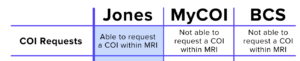
Request a COI from within MRI

Jones is the only integration partner that features the ability to request a COI from a vendor or tenant directly within the MRI workflow.

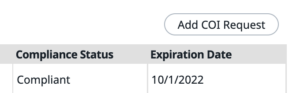
'Add COI Request' button within MRI Software through the Jones Integrations

Users need to leave MRI Software and then sign into MyCOI or BCS to request COIs.

This chart describes the bi-directional integration Jones has with MRI Software. Both databases feed data to each other in a truly seamless way.

Diagram showing the Jones + MRI Software bi-directional integration

COI Point of Contact Email

COI Point of Contact Email within MRI

Imagine opening up your MRI account and seeing a vendor who is supposed to come to your property next week but their insurance status is not-compliant. You’ll need to get in touch with that vendor quickly, and get them compliant before coming on site. You’ll need to access their contact information to make this happen.

Most integration partners will sync addresses and phone numbers into MRI, but those won’t be helpful in getting the vendor compliant in a timely manner (the vendor’s general phone number probably won’t be the best point of contact for collecting a new COI).

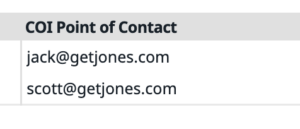
Jones is the only integration partner that can store the best COI point of contact email directly with the MRI workflow, so you can quickly know who to contact without needing to search anywhere else.

View of COI Point of Contacts within MRI Software through the Jones Integrations

Compliance Status within MRI

Compliance Status within MRI

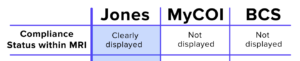
Jones is the only company that actually shows vendor and tenant compliance statuses within MRI. Other integration partners simply show an expiration date or other workarounds.

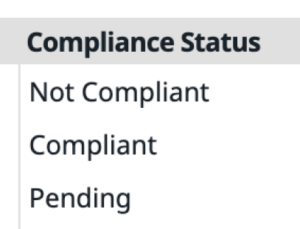
For example, MyCOI will show an expired COI as the earliest date allowed in MRI – 01/01/2008. MyCOI users will need to understand that an expiration date of 01/01/2008 on MRI means the COI is expired. Instead of workarounds like this, Jones clearly labels the status of all vendor and tenant COIs within MRI as either:

  • Pending
  • Compliant
  • Not-compliant
  • Expired
  • No COI required

Here’s an example of how this looks in MRI:

Compliance Status Jones MRI Integration

Data Sync to MRI

Data Sync to MRI

Jones, MyCOI, and BCS all automatically sync data into MRI Software. You won’t have to worry about needing to manually sync data with any of these companies.

Data flows from MRI → Jones every 30 minutes, and from Jones → MRI every night.

Pricing

Pricing of Jones compared to competitors

Both MyCOI and BCS charge variable fees based on use.

Jones is most often priced by a flat fixed fee, so you can easily budget the cost into the big picture of your overall real estate operating expenses. Paying a variable fee per tenant or vendor COI tracked is hard to predict and can significantly increase over time. Jones may price a variable fee based on usage for certain classes of real estate, so it’s best to speak with a member of our team for a quote.

Lease Extraction Cost

Lease Extraction Cost

MyCOI and BCS both charge per lease extraction. Their rates can start at $9 per lease and add up to thousands of dollars over the course of a year.

Jones offers an unlimited amount of free lease extractions.

The Bottom Line

The most robust, turnkey compliance solution within MRI’s partner connect program is Jones. While MyCOI and BCS can get the job done, Jones has the most seamless, bi-directional integration with MRI’s workflow.

How To Select COI Compliance Management Software – The Ultimate Guide

Jones COI Compliance Management Software

TL;DR:

  • COI compliance management software aims to automate and simplify the processes around collecting, validating, and maintaining data on vendors’ and tenants’ insurance coverage.
  • Many businesses have no idea how non-compliant they are, and are shocked when they discover this – along with the massive liabilities that they can be exposed to.
  • Different software packages offer different functionalities, and it’s important to assess how well you can use them to (i) drive up compliance, (ii) automate validation, (iii) handle communications, and (iv) automate other tasks.

Note: interested in exploring how Jones can help you automate your compliance management end-to-end and de-risk your building? Talk to our team of experts today!

Let’s Chat!

What Is COI Compliance Management Software?

Certificates Of Insurance – or COIs – are summaries of insurance policies, which can sometimes run across dozens or hundreds of pages.

Why are COIs so important? Because vendors and service providers are constantly entering properties to do various types of work. All these jobs involve risks that could cost the landlord or property manager serious money – unless they’re properly insured.

And COIs provide the headline details of their various insurance policies in a quick and easy-to-scan format.

When a vendor has a compliant COI, you – as the landlord, property manager, developer, etc – can be confident that they’re covered for the risks involved in their work: risks to the public; to the property; to workers, and more.

This is why COIs are a bane of any property manager’s existence – thousands of COIs need to be collected, reviewed for compliance, and updated – which is a lot.

COI compliance management software automates and simplifies a lot of the work involved in collecting, validating, and maintaining this paperwork. In many businesses, this can absorb as much as 10% of a property manager’s time when handled manually.

But all compliance management software packages are not equal. How do you make sure that you select the platform that is best for your business?

That’s what we’ll explore in the rest of this blog.

Why Is COI Compliance Such A Headache For Property Managers?

There are four central elements to this issue, and to see how compliance management software addresses them, we’ll look at each problem in turn.

Problem #1: Potentially Massive Risk Exposure

In 2020, the US property and casualty insurance sector underwrote gross premiums worth a staggering $728.7 billion. That figure is $1.6 trillion worldwide, around a third of the entire insurance market.

That’s because managing commercial property entails so many different areas of potential legal exposure. And nowhere is that more true than here in the USA.

Negligence by a vendor can set off a chain of lawsuits. For example, suppose an electrician damages a building’s power grid and injures himself while working on it:

  • Who will pay for the cost of repairs?
  • Will tenants seek compensation for time lost during the power outage?
  • Does the electrician have grounds to make a claim about dangerous conditions?
  • Could the incident lead to reputational damage? If so, who is liable?
  • Will liable parties’ insurers seek to recoup their costs via countersuits?

The types of vendors that need coverage, and the risks they pose, vary widely: from electricians and plumbers to cleaners, security staff, IT professionals, HVAC contractors, and more.

Property managers and owners run huge financial risks if their vendors are not adequately insured.

Problem #2: Property Managers Are Not Usually Insurance Experts

Most property managers and building owners are not qualified to confirm the validity or adequacy of any given vendor’s insurance coverage, even when the full policy has been boiled down to its essentials on the COI.

COIs are packed with jargon, they condense and simplify huge amounts of detailed small print in the cramped ACORD 25-S page layout, and they’re frequently accompanied by (and sometimes contradicted by) page after page of endorsements.

So it’s not surprising that:

Demands on property managers’ time are huge and reviewing COIs is rarely at the top of the list. It’s no wonder that it’s a task that often doesn’t get the attention it needs.

Problem #3: COI Compliance Confuses And Frustrates Vendors And Tenants

Demanding compliant COIs can put strains on your relationships with other businesses – because they’re often as confused about what’s being asked of them and what their policies cover as you are!

The core of the issue is as follows:

  • If the property manager doesn’t chase down fully compliant COIs when a new vendor comes on-site – by their own team or by a tenant – they’re exposing themselves to potentially devastating financial risks
  • But if they do, on the one hand (with large companies) it’s often not obvious who to get this paperwork from, and securing it can be very time consuming; while on the other hand, smaller businesses may struggle to meet all of your requirements
  • On top of that, by delaying important work, the property manager’s insistence on the proper paperwork can be a major frustration for contractors and tenants alike.

Problem #4: The Sheer Scale Of The Task

A typical large commercial building is likely to have hundreds of vendors on file, on top of partners that tenants may want to use.

Now multiply that for every building a property manager is responsible for.

The basic matter of getting hold of COIs from all those third parties is daunting.

Add to that the tasks of validating them on receipt and of making sure they’re replaced before they expire – every year – and it’s clear that compliance management is often a colossal undertaking.

What Compliance Management Software Needs To Do

With these major problem areas in mind, the priorities for assessing compliance management software should be each option’s ability to provide the following.

Solution To Problem #1: Drive Up COI Compliance Rates

The more compliant your vendors’ insurance, the lower your exposure to financial risk.

Taking COIs as a suitable proxy for insurance coverage, it’s clear that property managers need to track and improve the percentage of compliant COIs they hold.
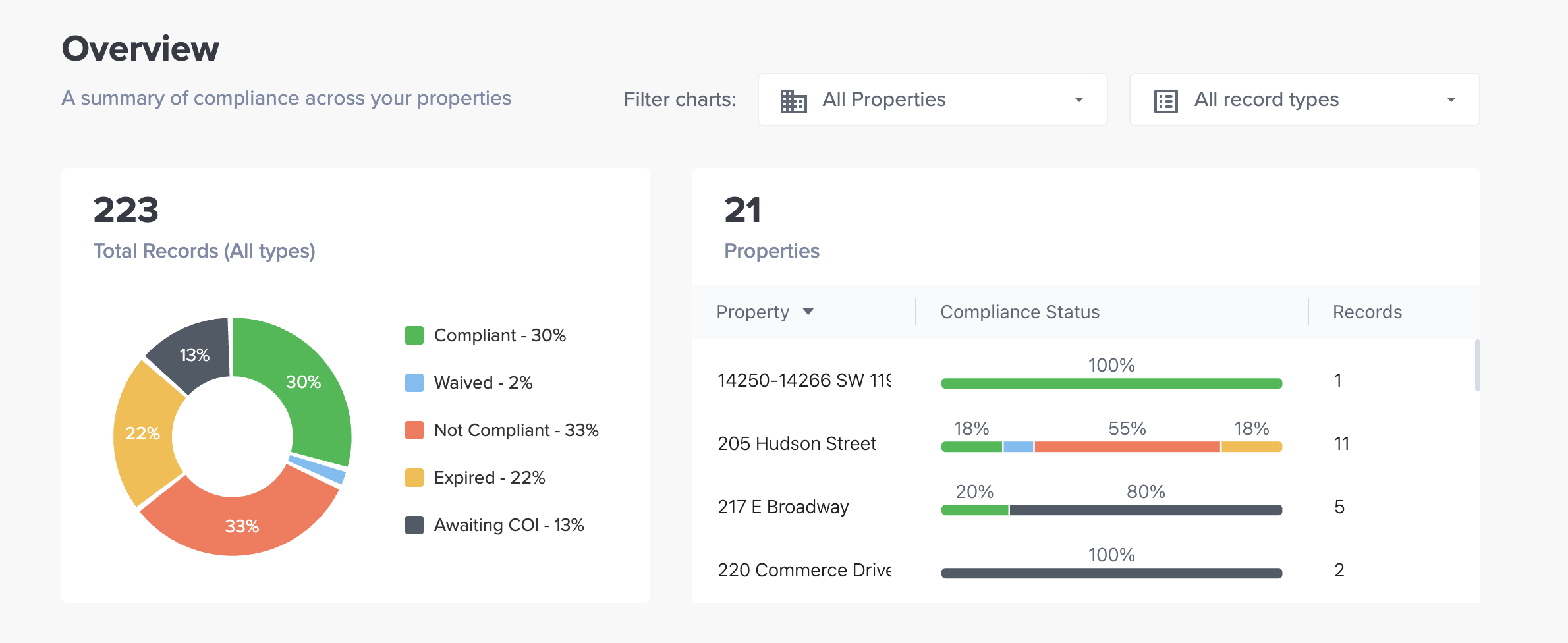
Jones Compliance Dashboard

Given the numbers of COIs involved, it’s key to look for high-quality visualization, segmentation, and dashboard capabilities.

The example from the Jones platform shown above, for example, presents the compliance rates and COI numbers across a company’s entire portfolio as well as by building. Not only that, but it also breaks down the COIs into more categories than simply “compliant” and “not compliant”.

It’s important to be able to differentiate between “expired” paperwork that needs simple replacement and inadequate cover that needs to be changed, for example.

With this kind of visibility over the different types of tasks involved, property managers can target their efforts efficiently to drive up compliance.

Solution To Problem #2: Outsource Expert Validation, Free Up Property Managers

Of course, to calculate compliance rates, it’s necessary to know which of the COIs you hold are compliant in the first place. And that’s a task that often taxes the resources of property managers, as we’ve already discussed.

In our experience, 90% of first-submission COIs are not compliant, and around 70% are still not compliant when submitted a second time.

Your compliance management software needs to run these checks, quickly and reliably.

Many platforms have begun to use AI to read and validate insurance documents against predetermined criteria. At Jones, that’s just the first step.

Once our machine learning algorithms have assessed submitted documents, they’re checked by our in-house experts. That’s why we’re able to say:

  • Our process provides 99+% accuracy in confirming COI compliance
  • Our insurance will cover any claim resulting from errors in this process

Not only does Jones remove the grueling task of assessing insurance documents from property managers. It also relieves them of the anxiety and risk that come attached to it.

Solution To Problem #3: Make COI Compliance As Easy As Possible

The burdens associated with COI compliance management are not restricted to property managers. Tenants, vendors, and others who are the subject of COI requests face challenges of their own.

Your compliance management software needs to make it as easy as possible for your partners to provide what you’re asking of them.

First off, look for a platform that allows you to personalize and brand your requests and communications. All too often, compliance management tools provide only generic message templates with boilerplate language that is liable to be overlooked, misunderstood, or sent to junk mail.
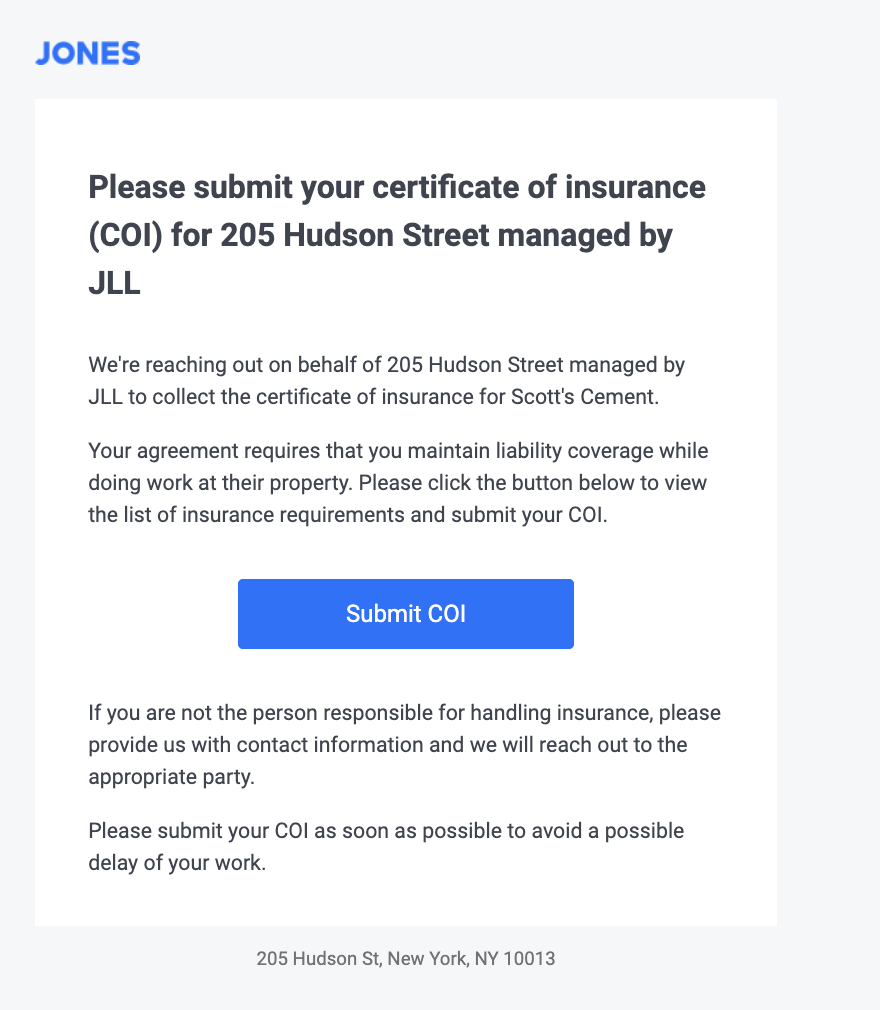
Jones branded emails

Secondly, make it clear what you’re asking for and how to provide it:

  • Avoid insurance jargon or include explanations where it’s unavoidable
  • Explain with examples what is required. For example, you may need a Waiver of Subrogation from a tenant’s vendor. So, when contacting them specify where they can find it (ACORD 25 or Additional Insured Remarks) and provide screenshots to show what these documents look like
  • Provide a clear Call-To-Action. If that involves uploading data to your system, make sure every step is explained in full

Thirdly, treat this as an opportunity to help tenants get things done more quickly. Provide them with lists of approved vendors segmented by category. This will save them time selecting contractors as well as yourself time by not having to chase down new COIs.
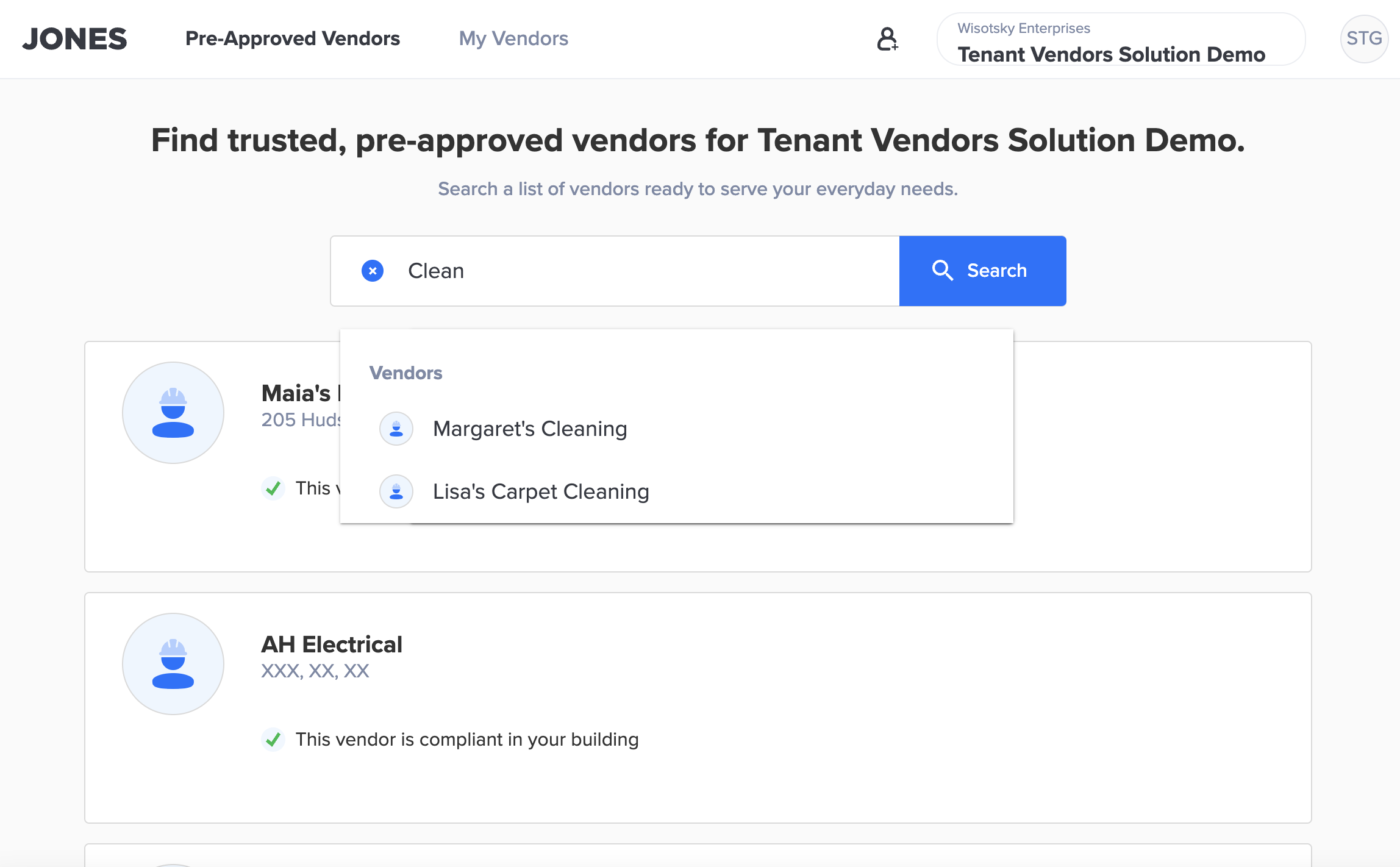
Jones whitelisted vendors

Solution To Problem #4: Track And Automate Tasks

A good compliance management software platform will automatically warn you when vendors’ coverage is expiring.

The best will send out scheduled requests for the renewal data automatically as well.

There are many tasks that can be automated around this area:

  • Logging and structuring COI data
  • Sending out scheduled communications
  • Uploading new vendors, tenants, and documentation

By automating workflows around the COI compliance project, you can ensure that nothing is missed, that partners receive a consistent experience, and that tasks are quickly completed.

With potentially hundreds of COIs to manage per property, it’s critical to choose compliance management software that provides as much automation support as possible.

What Else To Look For In COI Compliance Management Software

There are other “must-have” factors to take into consideration when making your choice.

#1 Look For SaaS

As in most fields, SaaS has superseded on-premise as the preferred software provision model.

  • SaaS tends to be cheaper
  • Maintenance is at the provider’s expense
  • Updates are typically provided on an inclusive basis
  • Sharing data across sites is easier and doesn’t rely on internal networking infrastructure

#2 Consider Pricing Structure

Is the pricing fixed or custom? Is it on a per-user or whole organization basis? What functionality can you afford to forego? And what is non-negotiable?

Remember that the headline price quoted may not be what you end up paying…

Read our deep-dive into COI compliance management solution pricing here.

#3 Review Onboarding And Training Provision

Many businesses conclude that a particular software platform “doesn’t work for them”, not because it lacks the functionality required, but because users failed to adopt it.

But that’s not on the users. That’s on the software providers for not managing the learning curve, making the “aha!” moments clear, and helping users to see enough value, fast enough, for them to advocate for the system.

Before you buy, make sure you understand how the software provider is going to support your users’ onboarding and their ongoing understanding of the platform.

#4 Range Of Integrations

It is inefficient and irritating to have to switch between lots of different software applications. And yet in 2021, the average number of SaaS applications being used by companies stood at 110!

If these are not integrated into a coherent stack, it’s more than just an annoyance. It’s a huge missed opportunity to leverage the power of data, by enabling it to flow between applications.With an API and webhooks, your developers can tailor bespoke integrations to suit your needs.
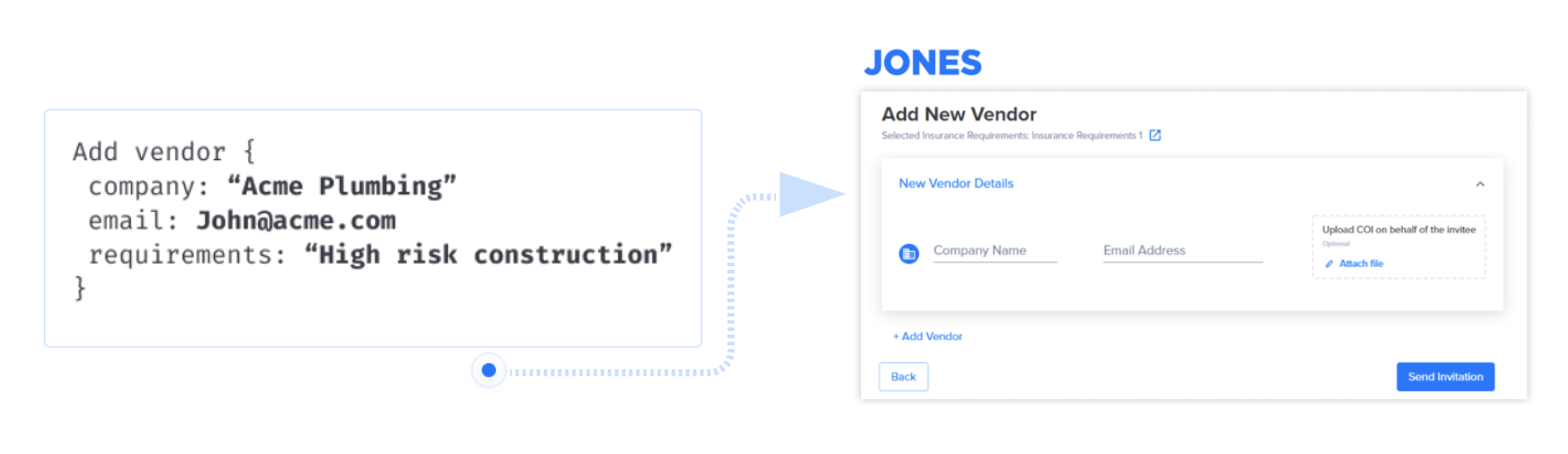
Jones Compliance API

With native integrations, such as the Jones integration on the Procore marketplace, developer time may not even be necessary.

#5 Standard Of Customer Support

A growing number of SaaS products offer exclusively self-serve or automated support services. But in the complex world of insurance, that’s rarely going to suffice.

Many platforms charge premiums for instant support options, with standard users compelled to wait in ticketing queues.

Others will refer you to a call center rather than a named, dedicated account manager.

If you operate 24/7 services, the choice of compliance management software support will be crucial.

The Bottom Line

There is one compliance management software platform that hits all of these requirements: Jones.

Whether you’re a property manager, an owner, or a tenant, Jones:

  • Gives you visibility over your liability and compliance
  • Enables you to understand your exposure and risk requirements
  • Cuts liability
  • Reduces admin tasks, freeing up time for value-adding work
  • Turns COIs into value-added metrics, through comprehensive reporting

Ready to improve your property’s performance?

Book a demo today to find out more about how Jones can save you time and money.

10 Common Mistakes Real Estate Companies Make When Approaching Insurance Compliance Management

10 mistakes in insurance compliance management

Note: interested in exploring how Jones can help you automate your compliance management end-to-end and de-risk your building? Talk to our team of experts today!

Let’s Chat!

Table of Contents

1. No adequate resources for Property Managers to inform decision making

Reviewing insurance documentation properly requires deep expertise. Checking a date on a COI (certificate of insurance) to make sure it didn’t expire is just the tip of the iceberg.

There is a lot that goes into such an audit, from understanding the anatomy of a COI to knowing multiple endorsement pages and being able to tell property insurance from the property component of general liability.

Here are some of the resources that should be available to anybody who is handling insurance documents:

  • A clear and concise overview of key compliance concepts
  • Frameworks on how to review COIs and endorsements for compliance (if your company doesn’t provide adequate training, Jones has afree video course on compliance for property managers).
  • Company’s guidelines on what gaps could be waived and in what circumstances
  • Links that explain compliance gaps and be easily shared with tenants and vendors as guidance.

2. Lack of a clear waiver strategy

In our experience, very few companies actually provide their property management teams with clear guidelines on what should and should not be waived, which is dumbfounding. In a couple of instances, we have had property managers coming to us for advice, which we can not give. As a result, two things happen:

  • The property manager waives insurance requirements gaps randomly, as they weren’t given proper guidelines on the appropriate risk tolerance for different requirements.
  • The property manager is being too strict and keeps asking vendors for coverage that is not applicable to their business (like Cyber Liability coverage, which is not applicable to any company that does not handle sensitive data in the cloud or on electronic devices).

3. Setting unrealistic compliance goals

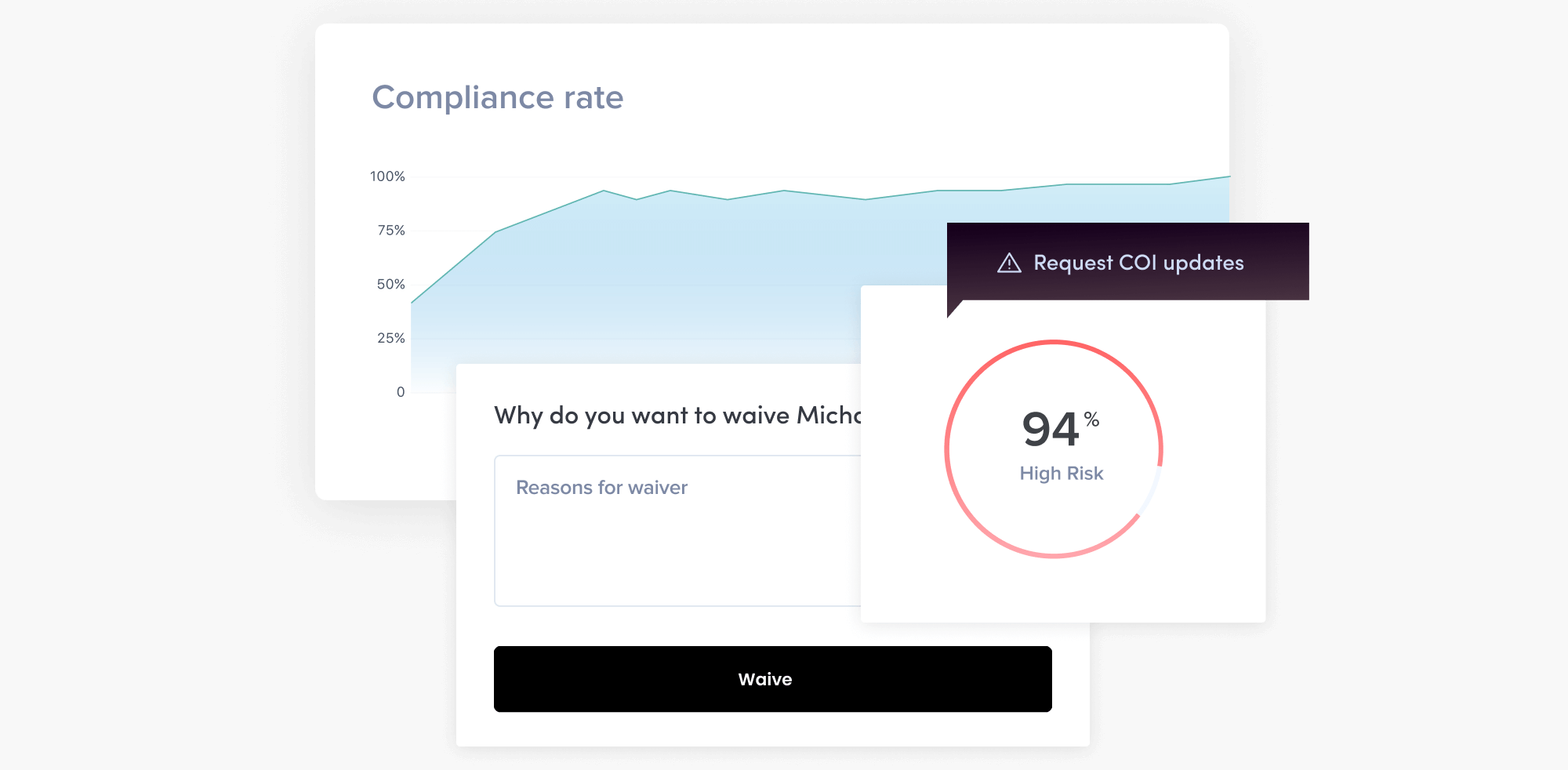
Here is a real-life example we’ve encountered several times: property management teams are tasked with the goal to achieve 100% compliance across portfolios. Here is what happens next:

  • The back-and-forth on vendor COI increases, subsequently delaying projects or
  • Property managers start waiving gaps more aggressively, basically playing Russian roulette with their buildings’ risk tolerance.

In reality,chasing 100% insurance compliance is unrealistic and unnecessary.

Our industry struggles with outdated insurance requirements that don’t really contribute much to protecting owners and managers from risk.

4. Failing to set compliance KPIs

This mistake is on the opposite side of the spectrum: one thing that is worse than having an unrealistic goal is having no goal at all for a process like compliance management, which absolutely should be quantifiable. Just as every other operational aspect, compliance management requires a clear strategy and tasks to focus on every 3 to 6 months.

Here are some examples:

Situation: High number of records with no COIs on file
Goal: Increase the number of tenants’ insurance documents by 15%

Situation: High number of non-compliant COIs
Goal: improve compliance rate for the most important requirements

Situation: High number of expired COIs on file
Goal: Send a request for updated COIs at least 1 month in advance for all records

5. No compliance data research and follow-up plan

This is the most strategic part of insurance compliance and yet, we see a lot of property management teams missing this critical part. Here at Jones, we believe that your compliance data (e.g. collection rate, overall compliance rate, % of expired COIs, and gaps per insurance policy) needs to inform what your insurance requirements should be—the same as your past quarter’s performance is what you base your future forecasts on.

Here is some of the research we recommend to our customers:

  • Review your insurance requirements and get rid of the ones that don’t serve your building.
  • Regularly check your overall compliance stats and compare your portfolio’s average numbers to individual property’s numbers to spot trends or inefficiencies. For example, one property might have a higher percentage of expired COIs or your whole portfolio might have a high ratio of waived records for a particular insurance requirement. The first case points to a potential problem. The second one calls for a requirement review—if it ends up waived a lot, do you even need it?

6. Failing to manage tenant expectations

Here are some things we recommend communicating to tenants:

  • Any changes in the process, such as new software, or new COI request emails that look differently
  • Seasonal fluctuations that might impact tenants’ experience, for example, longer vendor approval times in months when your team is dealing with a high volume of expired COIs.

7. Making the compliance process unfriendly for vendors

An easier compliance verification process for vendors means faster projects and happier tenants. Here are some of the general pointers on how to make the process easier for vendors:

  • COI submission flow
    If you require vendors to log into any kind of portal to submit documents, some of them will drop out of the process.
  • Gap resolution
    If the COI is non-compliant and you need a vendor to resolve gaps in coverage, be as specific as possible on what exactly is missing and what they need to do to resolve it. Links to resources go a long way.

8. Lack of proactive communication with your insurance broker

The ReShield team wrote the whole blog post on this subject:How to Maximize Your Relationship with Your Insurance Broker.

When it comes to insurance compliance management, being proactive in building a standing relationship with your insurance broker is key: treat your insurance broker as a partner so that your policies (both insurance and other mitigation tactics) actually fit your portfolio’s needs.

9. Manual compliance management process

Full disclosure—helping real estate companies to turn manual compliance management into a fully automated one is what Jones does for a living.

However, we are not the only solution available, and there are certainly ways to automate at least some parts of your insurance compliance management in-house if you are not ready to invest in a tool.

Here are some pointers:

  • If your team is still managing your COIs through spreadsheets and binders, you are playing with fire and assuming way more risk than you think you do.
  • You need to have a plan to get on top of COIs that are set to expire, like automated emails that get triggered by expiration dates.
  • If you prefer to review insurance documentation in-house, consider speed and accuracy. Your COI audit times should not exceed several hours and the team that is doing the audit needs to be properly trained. If you are not 100% confident in your team’s speed and insurance expertise, you need to implement compliance software.

10. Failing to integrate compliance data with your other data sources into one source of truth

This last mistake is more of a general data and housekeeping issue. However, this is something that we at Jones have observed in a number of real estate companies. They keep their compliance data siloed and separated from the main software they use.

As a result, the team spends hours every week importing and exporting data manually from one source to the other. The end result is always project and/or payment delays and, subsequently, upset tenants.

Have you detected any of the mistakes above in your insurance compliance management process? The good news is that most of them are easy to fixevenfor small property management teams. Even minor adjustments, like providing better training for property managers or being more strategic with data, can significantly improve your overall compliance rate.

Ready to improve your property’s performance?