Our analysis of subcontractor prequalification software was based on publicly available reviews on websites like G2 and Capterra, as well as testimonies and quotes from current and former customers. Our reviews analyzed the following:
–Ease of use for GCs and subs
–Ability to quickly tackle all key components of prequal, including subcontractor insurance compliance, company financial history
–Quality of integration with common construction software, like Procore and Sage 300
–Responsiveness and problem-solving skills of customer support
–Clarity and usefulness of data reporting and analytics features
Here’s the quick rundown:
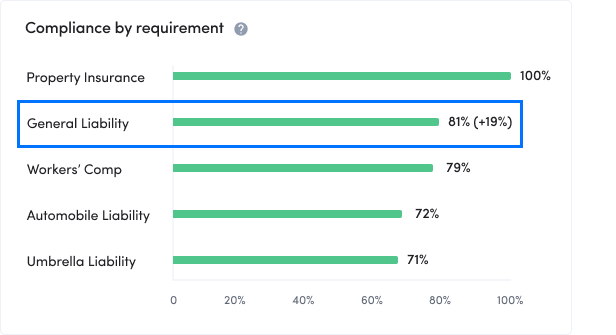
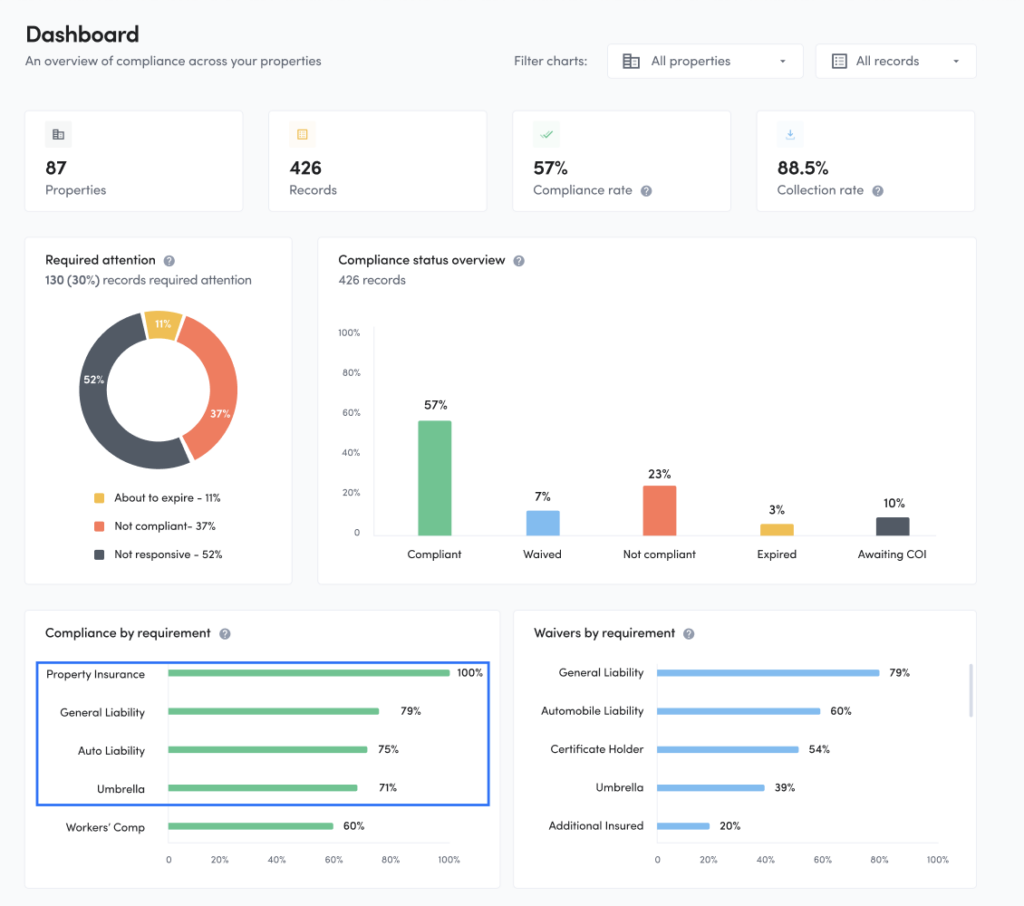
–Jones is not a subcontractor prequalification software per se. What it does is help GCs manage their subcontractor insurance compliance, including collecting and reviewing subcontractor insurance documents like COIs and endorsements. When coupled with another solution (like Bespoke COMPASS), Jones ensures you get an integral part of the prequalification process (insurance compliance) right.
–Bespoke COMPASS came out on top of our ranking of subcontractor prequalification tools because of their streamlined standardization process. When coupled with actionable reporting features, an easy to understand numerical scoring system for subcontractor risk, and integrations with solutions like Procore, it’s easy to see why COMPASS rose to the top of our list.
–Oracle Textura is a good fit for companies using Oracle for other parts of the preconstruction or construction management process, but reviews show it doesn’t play nice with other software, such as CMiC or Sage.
–Tradetapp, which was acquired by Autodesk, is a great choice for organizations already using Autodesk. With a large network of qualified subcontractors, helpful risk mitigation recommendations, and collaboration options, it is a good fit alongside other Autodesk software.
–Constrafor offers a variety of payment related services for GCs, including prequalification. Reviews have highlighted that it doesn’t accept partial submissions and can be difficult to understand and use.
In This Guide:
-Jones
-Bespoke COMPASS
-Oracle Textura
-Tradetapp
-Constrafor
Jones: Getting Subcontractor Insurance Right
Strictly speaking, Jones isn’t a dedicated subcontractor prequalification software. What Jones does is manage the collection and review of subcontractor insurance documents for GCs and construction companies, as well as sending automated COI expiration date emails and communicating insurance coverage gaps to subs to make it easier for you to manage your COI tracking.
So why are we discussing Jones alongside dedicated prequalification tools? Well, insurance compliance is a crucial part of the prequalification process. If you don’t ensure your subcontractors meet some basic insurance criteria it may expose your organization to insurance risk. And just as importantly, your team might end up wasting time allowing a sub who can’t provide suitable insurance to submit a bid.
Some elements of what Jones does are being used for prequalification purposes and can help GCs implement their insurance risk strategies. One example can be found in the Jones Procore integration. For GCs using the Jones Procore integration to manage their global-level insurance requirements, Jones allows those GCs to use one compliant COI to grant their subcontractor compliant status across their projects. This eliminates the need to collect subcontractor insurance on a project by project basis.
Jones is also continuing to develop capabilities and features that could play an integral role in the prequalification process. One example that Jones has recently rolled out for certain GCs is conducting full reviews of subcontractor insurance policies. In addition, Jones is also able to check insurance carrier information on behalf of GCs, including AM Best Ratings that evaluate the financial health of the carrier.
Let’s dive into the strengths and weaknesses of the Jones platform.
Reasons to Use Jones to Manage Subcontractor Insurance Documents
Handles Insurance Communication with Subcontractors
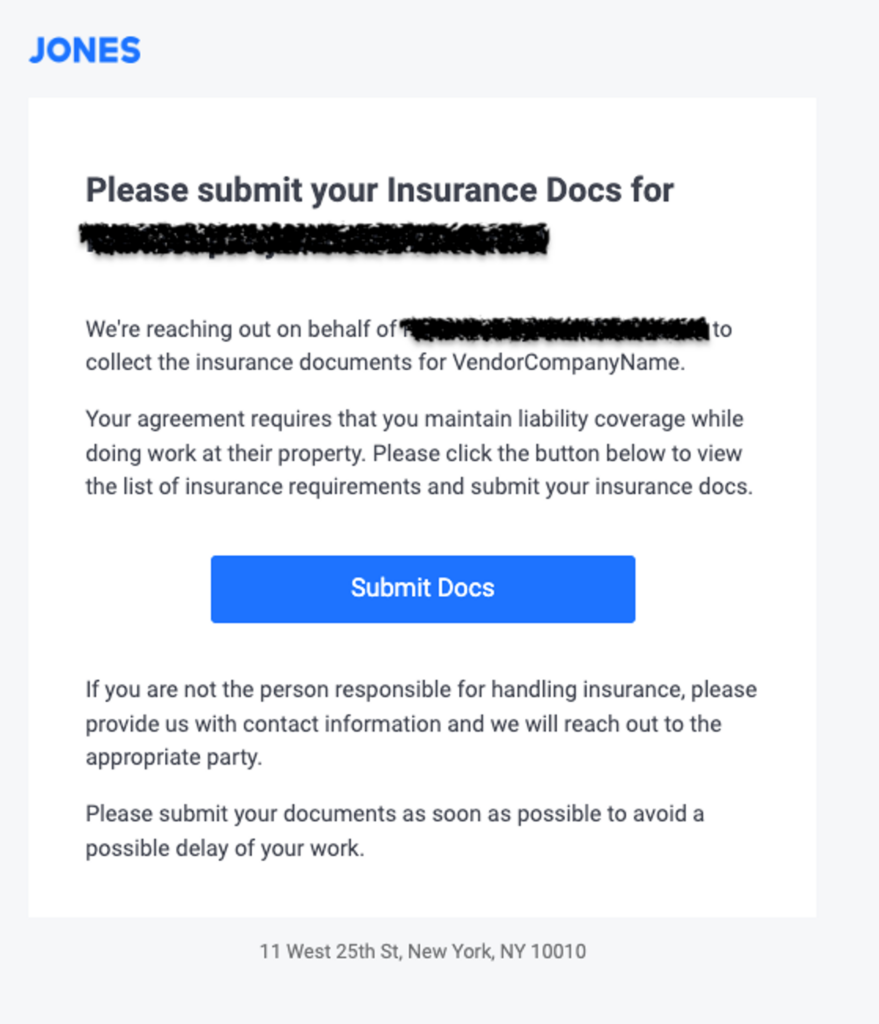
Jones handles all insurance communications with subcontractors. That means no more back and forth emails to subs about missing endorsements or COIs. But what if subcontractors are unreceptive to receiving emails from a company they don’t know? Jones’ branded email integration means these collection emails look like they’re coming directly from the GC, without your team having to do any of the legwork of collection and review.
Familiarity with Complex Construction Insurance Documents and Requirements
Worried that a software won’t be able to distinguish between a CG 20 10 and CG 20 37? Or that a software might not be able to alert you to a Workers’ Compensation gap if you receive a WC 99 03 01 B for a company located in Utah or Pennsylvania? Jones can catch all these insurance red flags, with a two-step review process consisting of AI and human insurance expert review. Read on here for more on how our team of insurance review experts check endorsements for compliance.
Integrates with Major Construction Software
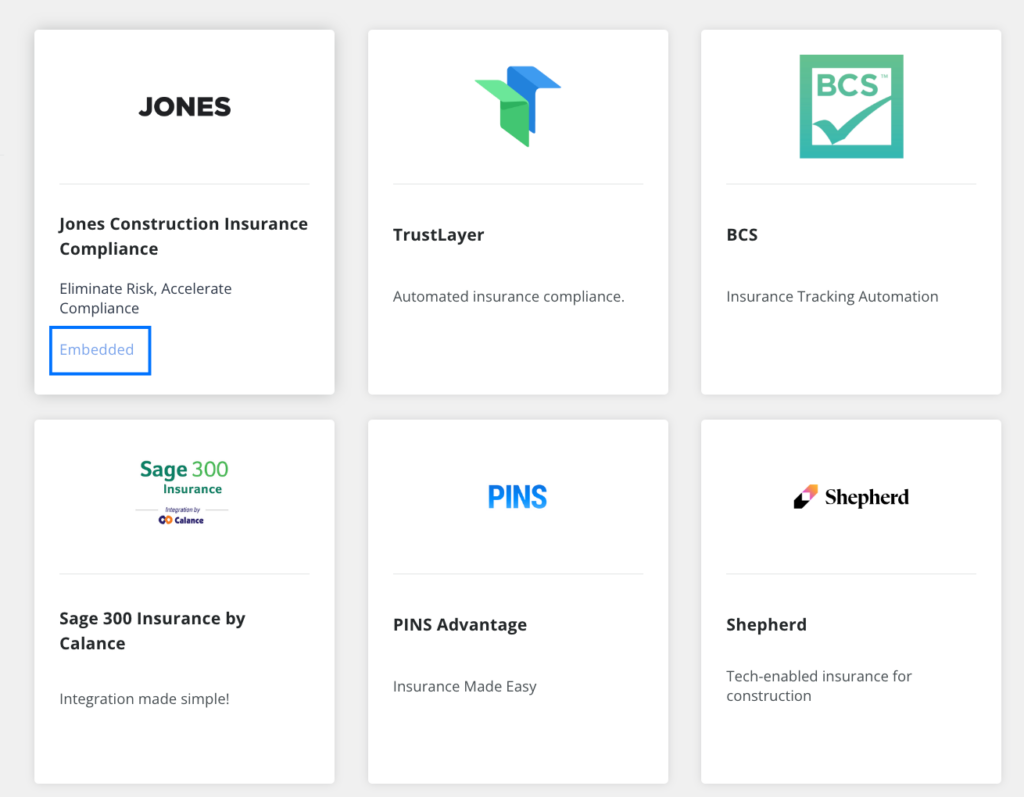
If you bring on a subcontractor prequalification software that doesn’t communicate with the software you already use, you’ll end up spending twice as long on data entry. Jones integrates with major construction software like CMiC and Sage 300, and is the only insurance compliance software with an embedded Procore integration. What’s an embedded integration? In simple terms, that means the two software communicate data back and forth, and users don’t need to switch between Procore and Jones in order to manage compliance.
Reasons Not to Choose Jones as Your Subcontractor Prequalification Software
Only Handles Subcontractor Insurance Documents
Jones only handles subcontractor insurance documentation, and does not review subcontractor financials, business records, or other forms used during the subcontractor prequalification process. In order for Jones to be effective for prequal, it needs to be deployed alongside another solution.
Quick Recap
Jones differentiates itself from other subcontractor insurance compliance solutions due to construction-specific insurance expertise and integrations that make managing insurance compliance in your chosen construction management platform easy. However, Jones only handles insurance, and won’t be able to manage all the components of subcontractor prequalification without the use of an additional solution. Fortunately, the next subcontractor prequalification software we’ll discuss has a partnership with Jones.
Bespoke COMPASS: Faster and Frictionless Subcontractor Prequalification with Better Data Collection and Analysis
Bespoke COMPASS allows GCs to more accurately analyze subcontractor risk during prequalification with their proprietary 1Form. By standardizing the data collected from subcontractors, COMPASS both allows construction management companies to have instant access to a wide pool of preapproved subs and keeps subs from having to spend hours filling out prequalification forms just for the right to apply for a job they may not get.
Reasons to Choose Bespoke COMPASS as Your Subcontractor Prequalification Software
Proprietary 1Form Simplifies Data Collection and Provides a Subcontractor Network
Subcontractors hate filling out lengthy prequalification forms just to be considered for a job. Construction companies hate chasing subcontractors down to collect information. COMPASS solves this problem with their 1Form. Subcontractors only need to fill out the COMPASS 1Form one time, which can then be provided to any GC who wants to prequalify them.
Wondering why you should ditch your proprietary form? The COMPASS 1Form has been built using data and inputs from 70+ leading construction management companies, and is accepted for 92% of surety applications. Additionally, most well-established construction companies ask very similar questions on their forms. Forcing subs to fill out multiple forms per week just for the right to bid on a job is a waste of time and goodwill. The 1Form takes care of two birds with one stone, making life easier for both subcontractors and GCs.
Client Service Team Serves as Point of Contact
COMPASS handles the back and forth with subcontractors during the data gathering process. That means less emails with subcontractor insurance brokers, faster prequalification times, and more projects completed on time and on budget.
Procore Integration Syncs Data Back and Forth Between COMPASS and Procore
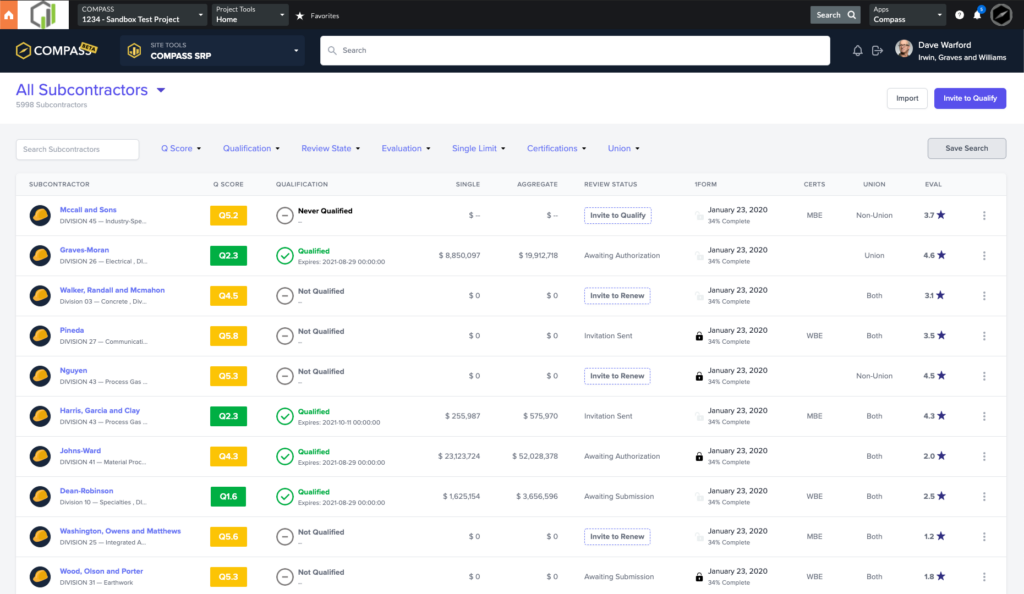
Like Jones, COMPASS has an embedded Procore integration. Subcontractor prequalification information is automatically pushed from COMPASS to Procore, and you can view your COMPASS app directly within Procore.
Reasons Not to Choose COMPASS as Your Subcontractor Prequalification Software
Quantity of Data Can Be Overwhelming Initially
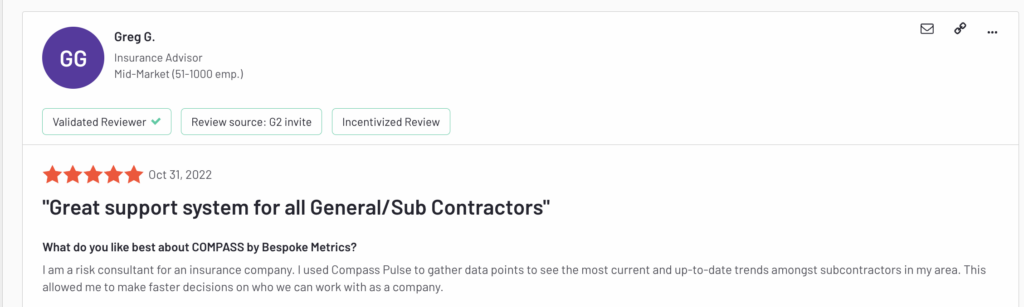
Online reviews mentioned that the initial influx of data can be overwhelming initially as teams get a level of visibility into their processes they’ve never had before. Fortunately, the COMPASS support team can help resolve any initial issues.
Quick Recap
Bespoke COMPASS is a great choice for GCs looking to expand their subcontractor network and simplify the data collection process of subcontractor prequalification. By standardizing all prequalification information in a form that’s accepted for 92% of surety applications, COMPASS makes getting high quality subs on your projects simpler than ever. They’re also an even better choice for Procore customers. Plus, COMPASS is planning on boosting their insurance compliance capabilities via a partnership with Jones (read the press release here.)
Oracle Textura: Subcontractor Prequalification Software Amongst Many Other Offerings
Oracle is the world’s third-largest software company, and offers products for all types of businesses. One of these is their subcontractor prequalification software, which benefits from the resources of the Oracle organization but still falls flat in some areas.
Reasons to Choose Oracle Textura as Your Subcontractor Prequalification Software
Well Known and Massive Organization
Oracle has been around since 1977, and is a publicly traded company. You can be sure that if you sign up for Textura today that Oracle will still be around to help you manage your subcontractor prequalification years down the road.
Payment Management Functionality
Reviews online list simplified payment management and ACH capabilities as helpful features of the Textura platform.
Reasons Not to Choose Oracle Textura as Your Subcontractor Prequalification Software
Extended Application Downtime
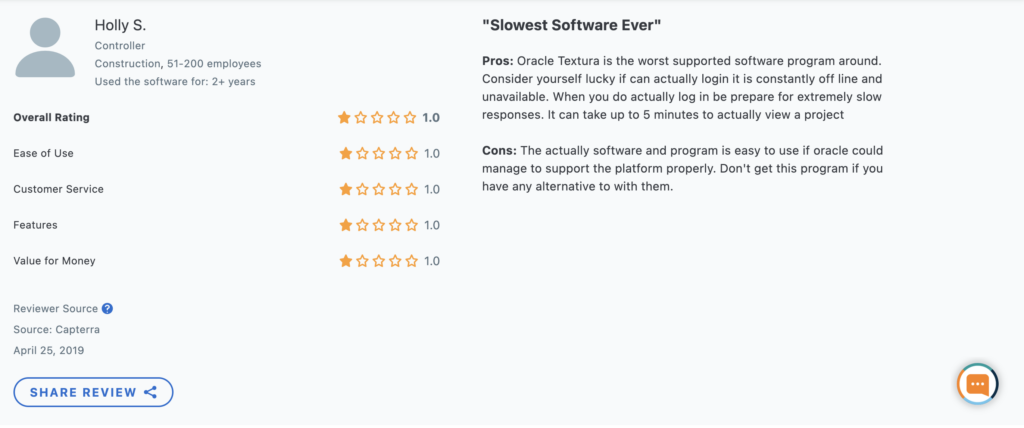
Online reviews indicate downtime is a major red flag for Oracle Textura. It doesn’t matter how easy it makes subcontractor prequalification if the cloud server it runs on regularly crashes.
Subpar Reporting Features
Minimal reporting capabilities make it hard to analyze subcontractor risk. Unfortunately, online reviews also indicate these reports are not customizable or editable.
Formatting Issues with Construction Accounting Software
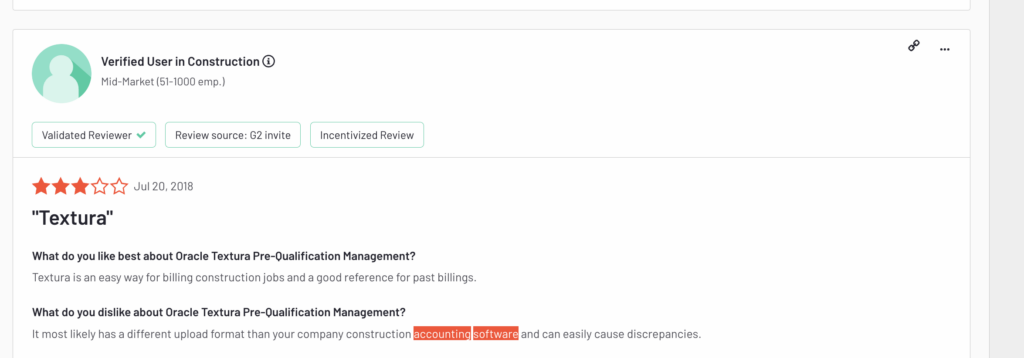
One online review stated that the outputs from Textura were not compatible with their accounting software. Unlike Jones, which integrates with CMiC and Sage 300, Textura does not appear to integrate with any common construction accounting software.
Quick Recap:
Oracle Textura is a decent choice for construction companies looking to mitigate risk during the subcontractor prequalification process. Oracle is one of the world’s largest software companies, so you can count on Textura being around for the long haul. However, its extended downtime, minimalistic reporting options, and formatting issues with accounting software hold the platform back.
Tradetapp: Autodesk’s Entry in the Subcontractor Prequalification Software Race
Tradetapp is a former startup that was acquired by Building Connected, which was subsequently bought by Autodesk. Now, Tradetapp is being offered as Autodesk’s entry into the subcontractor prequalification software space.
Reasons to Choose Tradetapp for Your Subcontractor Prequalification Software
Part of the Autodesk Construction Cloud
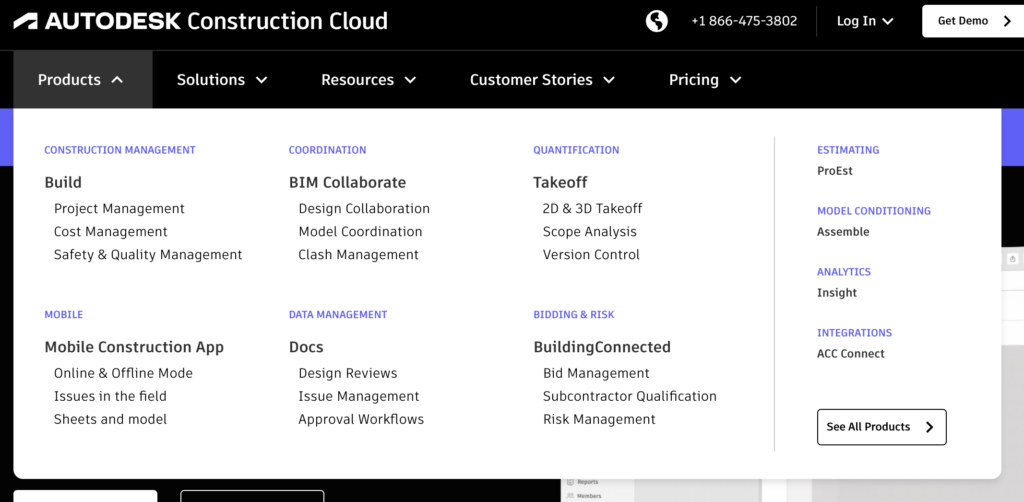
The Autodesk Construction Cloud consists of a wide variety of construction management solutions. If you’re already an Autodesk customer, Tradetapp is an easy addition to your existing tech stack and integrates nicely alongside their other offerings.
Easy to Use on Both PCs and Mobile Devices
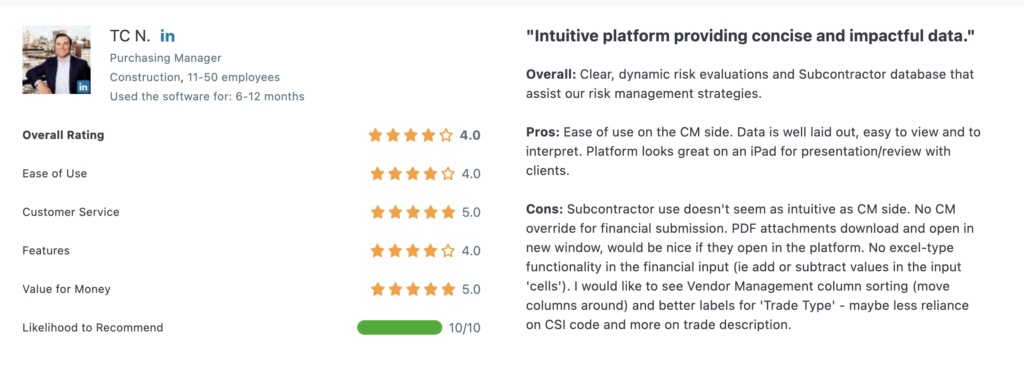
Multiple reviews mentioned that Tradetapp works very well on iOS devices. For teams looking to check in on the status of subcontractor prequalification while they’re on the move, Tradetapp is a good choice.
Large Pool of Prequalified Subcontractors
Autodesk has a network of over 250,000 subcontractors, with prequalification information readily available to construction companies that use their software. Whether these all have up-to-date information or are just registered with Autodesk isn’t clear. Regardless, this large pool of subs can make finding and prequalifying the right trade easy.
Reasons Not to Choose Tradetapp as Your Subcontractor Prequalification Software
Not Using Other Solutions in the Autodesk Construction Cloud
If you’re not already an Autodesk customer, or using one of their competitors, you might not want to start using a software from the Autodesk Construction Cloud. Tradetapp doesn’t integrate with Procore, or other large construction management software.
Lack of Override and Approval Capabilities
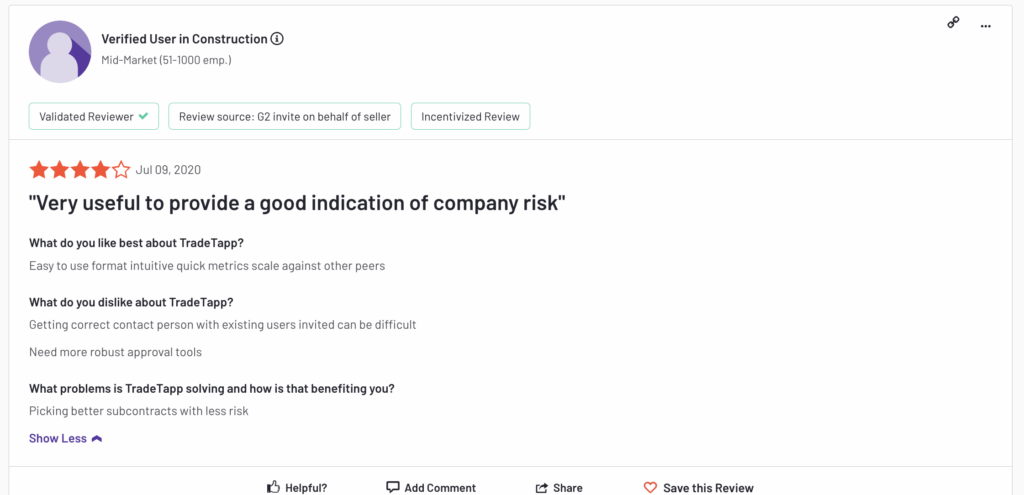
Multiple reviews complained about it being difficult to approve or override missing or insufficient submissions. This makes it hard to effectively implement your insurance risk strategy and make exceptions when business needs outweigh risks.
Not as Intuitive for Subcontractors as Construction Managers
Online reviews have mentioned that the Tradetapp is much harder to use for subcontractors than GCs. While it might not seem like a huge issue for a GC, minimizing headaches for your subcontractors goes a long way during a potentially cumbersome process like prequal.
Quick Recap:
Tradetapp should be the top prequalification software choice for existing Autodesk customers, as it seamlessly fits with their other offerings. However, drawbacks cited in reviews like override tools falling short of requirements mean teams that don’t use Autodesk for their construction management might be better off finding another option.
Constrafor: Subcontractor Prequalification Software from a Startup with a Wide Variety of Products
Constrafor is a newer entrant into the subcontractor prequalification software industry, offering a prequal tool alongside a variety of other construction technology offerings.
Reasons to Choose Constrafor as Your Subcontractor Prequalification Software
Helpful and Engaged Support Team

Constrafor’s helpful support team is cited in a variety of reviews as a strong point of the software. Having a well-trained team to help resolve complicated technical issues takes the anxiety out of onboarding a new piece of software.
Intuitive and Easy Use
Constrafor’s subcontractor prequalification software is easy to use and has received positive feedback from construction managers on the platform. As a startup that places a premium on user interface and experience, it makes sense that people find it more intuitive and understandable when compared to clunkier solutions like Textura.
Reasons Not to Choose Constrafor as Your Subcontractor Prequalification Software
Lack of Focus on Prequalification
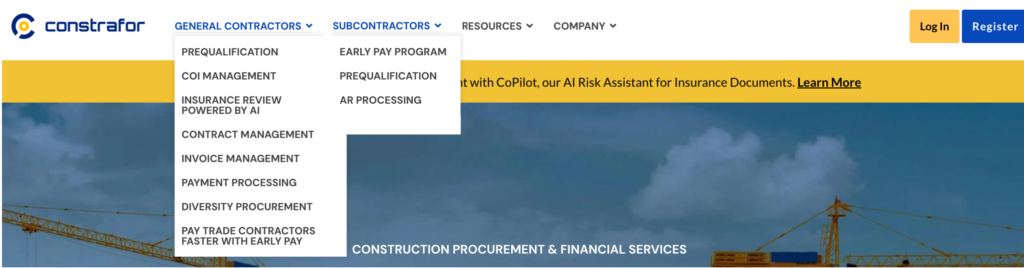
Constrafor offers a very wide range of different construction technology products. There’s nothing inherently wrong with a company branching out, but as a relatively new organization trying to solve so many complex problems in the construction industry is an ambitious goal. Diluting focus rather than focusing on one product could have an impact on product quality.
Inconsistent Communication with Subcontractors
Reviews have negatively highlighted Constrafor’s quality of communication and easy of use for subcontractors. One mentioned glitches in the program requiring subs to submit their documentation multiple times, whereas another said that emails fail to be delivered when documents are being requested.
No Embedded Procore Integration
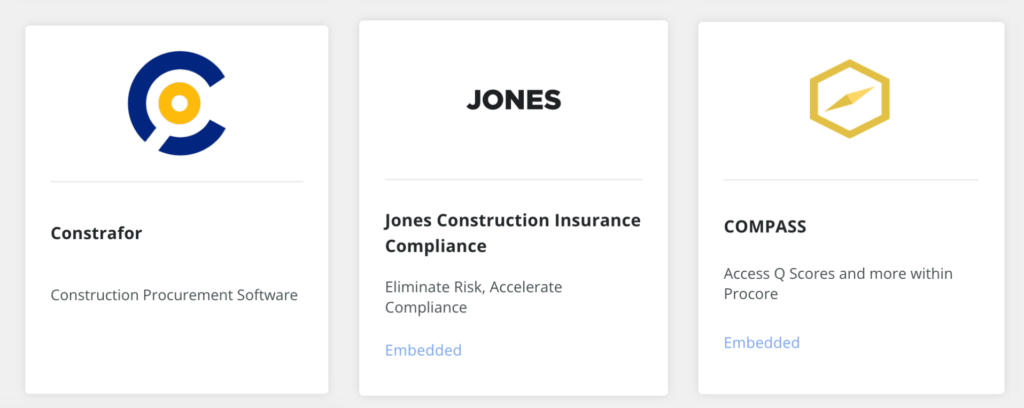
Unlike Jones and Bespoke COMPASS, Constrafor does not offer an embedded Procore integration. That means you cannot use Constrafor within the Procore app, and have to switch back and forth between them to handle subcontractor prequalification.
Quick Recap:
Constrafor is a fast-growing ConTech startup that offers an easy-to-use prequalification tool. However, their lack of specific focus on prequal and shortcomings of their Procore integration are red flags for Constrafor.
Picking the Right Subcontractor Prequalification Solution for Your Company
Here’s a quick rundown of why you should chose each one of these tools for your subcontractor prequalification needs:
Jones:
- Dedicated focus on subcontractor insurance compliance
- Construction-specific insurance expertise
- Embedded Procore integration
Bespoke COMPASS:
- Growing network of subcontractor prequalification data
- 1Form makes data collection simple and reduces friction with subs
- Supportive and capable client services team
- Customizable and actionable reporting features
Oracle:
- Integrates with other Oracle software
- Extra payment management capabilities
- Well-established company
Tradetapp:
- Part of the Autodesk Construction Cloud
- Displays well on mobile devices
Constrafor:
- Focus on innovation
- High-quality support team
Frequently Asked Questions (FAQs)
Q: What is subcontractor prequalification software?
A: Subcontractor prequalification software helps general contractors evaluate subcontractors based on financial health, insurance compliance, past project experience, and risk factors before awarding work.
Q: How do you choose the best subcontractor prequalification tool?
A: Look for ease of use, insurance compliance features, integration with construction management platforms like Procore, and strong customer support.
Q: Can subcontractor prequalification software automate insurance tracking?
A: Some platforms, like Jones, specialize in automating subcontractor insurance compliance as part of the prequalification process, helping teams reduce risk and save time.
Get In Touch With Us
Fill out the form below to have a conversation with us about how Jones can help improve your subcontractor insurance compliance process.