How One Owner-Operator Cut Their Insurance Noncompliance in Half with Three Requirement Changes

The owner-operator’s insurance compliance process after onboarding Jones was well developed. They were collecting third-party insurance documents, everything was being reviewed for compliance by Jones within 24 hours, and coverage gaps were being highlighted and explained to third-parties in emails. This process helped them almost double their insurance compliance percentage…but then it plateaued at around 40 percent.

It became clear that in order to boost insurance compliance rates further, the company needed to make changes to their insurance risk strategy. 

In situations like this, Jones Risk and Compliance team is available for strategy calls, where they conduct deep dives into portfolio insurance compliance data, make best practice recommendations, and suggest alterations to insurance risk strategy. Some recommendations may include adding/removing requirements, or implementing a more lenient waiver plan. 

The company booked a call with Jessica Lopes, Director of Risk and Compliance at Jones, to understand why their portfolio’s insurance compliance percentage had stopped moving upwards. 

Note: interested in exploring how Jones can help you automate your compliance management end-to-end and de-risk your buildings? Talk to our team of experts today!

Let’s Chat!

How Their Initial Portfolio Compliance Looked
compliance report dashboard
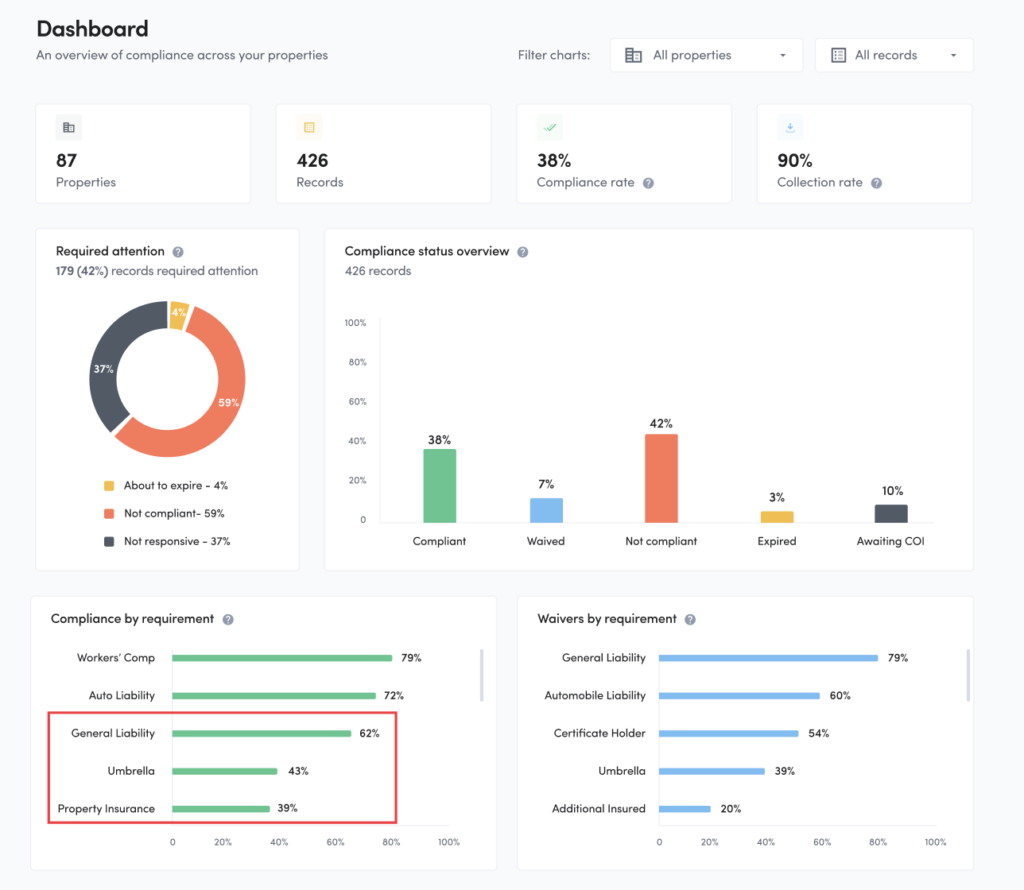
From the company’s analytics dashboard, Jessica quickly identified three main culprits for the lower than hoped compliance stats:

  • Property Insurance and Umbrella Liability: Compliance rates below 50 percent.
  • Commercial General Liability: Compliance rate was also lower than ideal at only 62 percent.

From there, she dove deeper into the breakdown of reasons for noncompliance per requirement to make her recommendations for improvement. Here’s what she found out.

Suggestion #1: Remove Property Insurance Requirements

Jessica started with Property Insurance, which had the highest percentage of gaps. When Jessica dove into the causes for noncompliance she saw a variety of common gaps. However, the most glaring issue gap was the first one–almost half of the vendors were missing Property Insurance entirely. 

gap analysis (property insurance)

Impact on Compliance:

46 percent of vendors and tenants are missing Property Insurance

Jessica’s (Director of Risk and Compliance) Suggestion:

Consider removing the Property Insurance requirement entirely.

“In some cases, real estate companies shouldn’t be that too concerned with Property Insurance for vendors because vendors are insuring their own personal property. This is exactly the case with this customer. A provision within their indemnity agreement with vendors already prevents them from subrogating the owner-operator. This makes Property Insurance unnecessary.”

—Jessica Lopes, Director of Risk and Compliance at Jones 

Decision:

The compliance impact of requiring Property Insurance for vendors insurance outweighed the insurance risk it prevented, and the owner-operator’s indemnity agreement covers subrogation by vendors. With that in mind, this requirement was removed

Results:

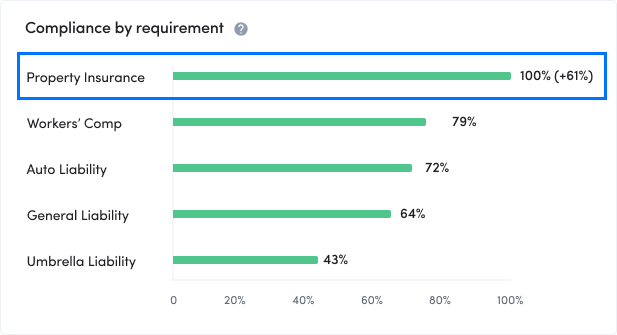
As soon as the Property Insurance requirement was removed, the compliance rate automatically went up to 100 percent. 
Compliance-by-Requirement-After-PI

Feel like this recommendation might make sense for your company? Consult with your risk team, because each real estate company has their own insurance risk tolerance. But if you are considering making a change, here’s the questions Jessica asked to help diagnose the Property Insurance issue:

  • Is Property Insurance a gap for over 30 percent of your vendors? 
  • What insurance risk are you trying to mitigate with this coverage?
  • Do you have an indemnity agreement in place with vendors? 
  • Does it have verbiage that prevents them from subrogating against you?

You may want to consider dropping your Property Insurance requirement if you answered yes to all these questions, but check with your risk team first.

Suggestion #2: Remove Waiver of Subrogation and Primary & Noncontributory Endorsements for Umbrella Liability

Jessica turned her attention to the requirement with the second highest noncompliance rate, Umbrella Liability. She noticed two requirements with high noncompliance rates–missing Waiver of Subrogation and Primary & Noncontributory. She also noticed that inadequate aggregate limit was another frequent gap.

gap analysis screenshot

Impact on Compliance: 

Over 50 percent of vendors and tenants missing either a Waiver of Subrogation, Primary and Noncontributory, or both for Umbrella Liability

Jessica’s Recommendation:

Retain existing Umbrella Liability limits, but remove WoS and PNC endorsement requirements.

“We typically find that Umbrella Liability is on a follow-form basis, meaning it takes on the coverage and endorsements of the policy it’s supplementing. As this company required WoS and PNC coverages for General Liability (which we highly recommend), the Umbrella Liability would take on those provisions in the event of a claim. We recommended against lowering the aggregate limit as it’s important to ensure Umbrella Liability can adequately supplement CGL and auto liability.”

-Jessica Lopes Director of Risk and Compliance at Jones

Decision:

Follow form coverage made the owner-operator drop their Waiver of Subrogation and Primary and Noncontributory requirements for Umbrella Liability.

Results:

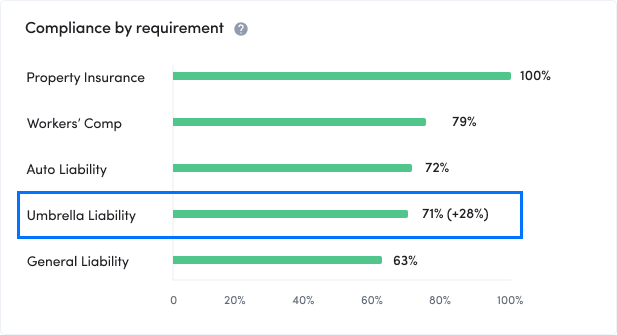
Removing these provisions caused Umbrella Liability compliance to go up by 28 percent.
Compliance by Requirement umbrella

Trying to understand if a similar change could benefit your organization? Discuss these questions with your risk team:

  • Do more than 50 percent of vendors not fulfill a WoS and PNC for Umbrella Liability?
  • Do we require follow-form coverage for Umbrella Liability?
  • Do we require WoS and PNC for general liability?

These are all factors to take into consideration when examining what you require for Umbrella Liability coverage.

Suggestion #3: Remove 30 Days Notice of Cancellation Requirement for Commercial General Liability

When Jessica started to review common gaps for Commercial General Liability, one immediately jumped out at her—Missing 30 Days Notice of Cancellation.

Gap Analysis (CGL)

Impact on Compliance:

Roughly 30 percent of vendors were missing the 30 Days Notice of Cancellation requirement for Commercial General Liability.

Jessica’s Recommendation:

Retain all other requirements, remove 30 Days Notice of Cancellation.

“30 Days Notice of Cancellation is the insurance coverage gap we see most frequently at Jones. While the purpose of this provision is to protect landlords by ensuring they’re alerted about vendor or tenant insurance policies being canceled, we see that insurers regularly fail to send out notices of cancellation. Verbiage in the cancellation endorsements often labels this service as a ‘courtesy’ and states an insurer will not be held liable should the notice not go out. With this in mind, the effort of trying to get a 30 Days Notice is often not worth it, as our coverage gap waived demonstrates.”

-Jessica Lopes, Director of Risk and Compliance at Jones

Decision:

30 Days Notice of Cancellation is rarely provided and has a high percentage of gaps, so the real estate company removed it from their requirements.

Results:

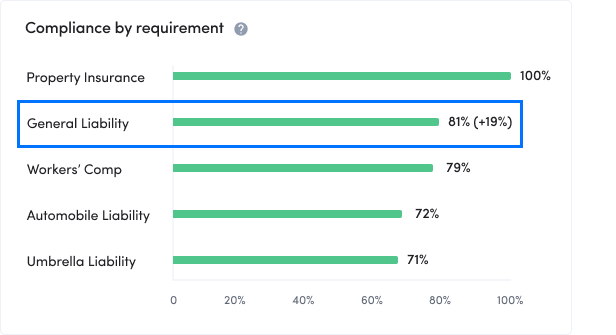
Commercial General Liability compliance went up by 18 percent. 
Compliance-by-Requirement-After-CGL

Here’s the questions Jessica asked when diagnosing this coverage gap:=

  • How frequently is the 30 Days Notice of Cancellation requirement waived?
  • Is this the only coverage gap for most of your Commercial General Liability coverages?

If 30 Days Notice of Cancellation is lowering your compliance rate, dive into your data with these questions in mind.

How Their Portfolio Compliance Looked After Three Changes
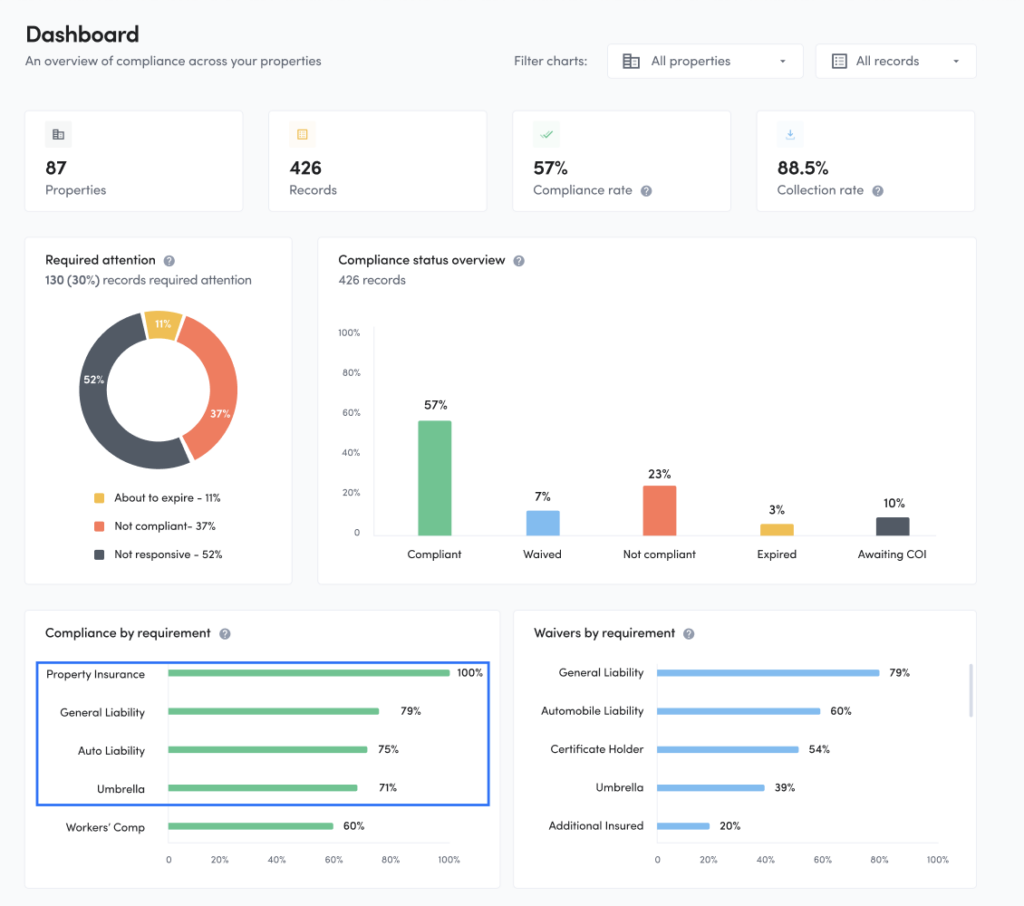
final compliance overview

By eliminating three requirements that were negatively impacting their insurance compliance rates, this real estate company reduced their noncompliance by 20%. Through examining their data, and consulting with both Jones and their internal risk team, they made smart changes that reduced friction with vendors and tenants. 

Interested in learning more about how Jones can help you boost compliance rates and reduce insurance risk for your portfolio? Get in touch with us via the form below to find out more.
How One Third Party Manager Boosted Compliance by Changing Their Additional Insured Strategy

One Midwest-based 3rd party property management company found themselves in this exact scenario after Jones came on to manage their COIs and endorsements. Collection and compliance rates went up since they started working with Jones, but they were still having an issue securing all the right Additional Insureds on vendor and tenant COIs.

Fortunately, the Jones Risk and Compliance team is available for strategy calls in situations like this. They help property management teams improve compliance rates with suggestions for improving their insurance risk strategy based on data from portfolios across the US. The property management team went ahead and booked a call with Jessica Lopes, Director of Risk and Compliance at Jones, to see if she could help come up with a solution for their AI issue.

How Their Initial Portfolio Compliance Looked

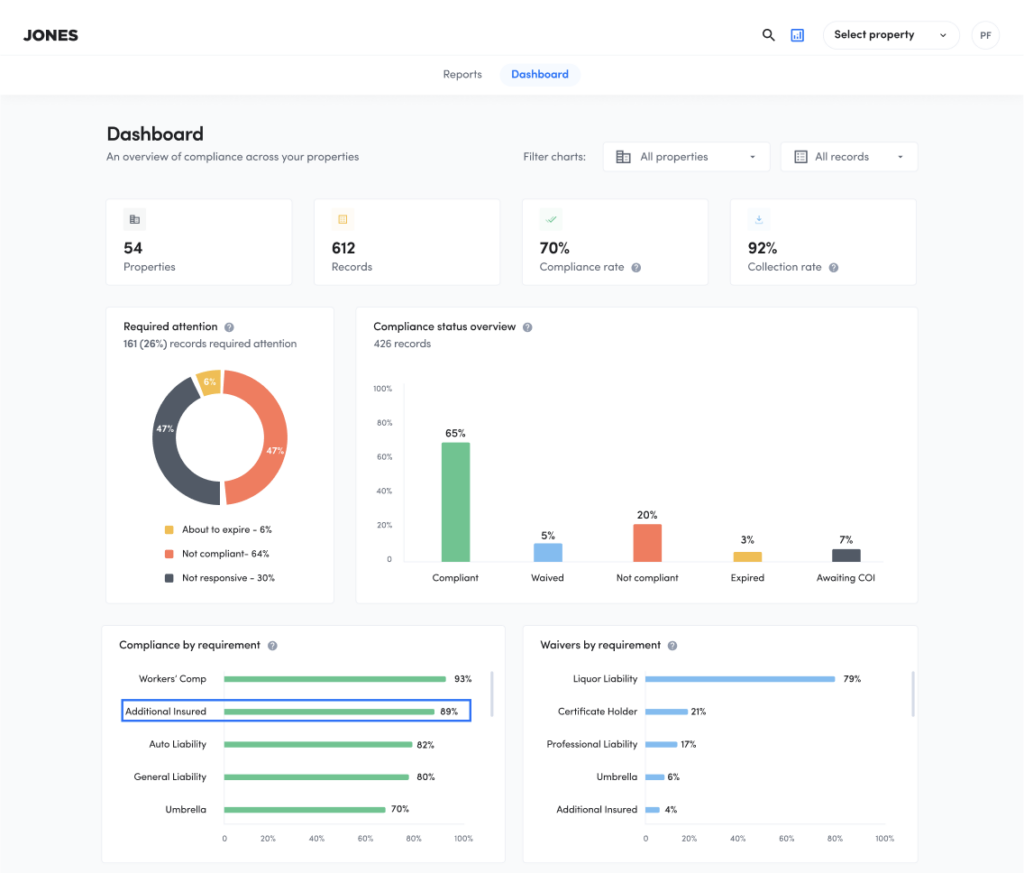
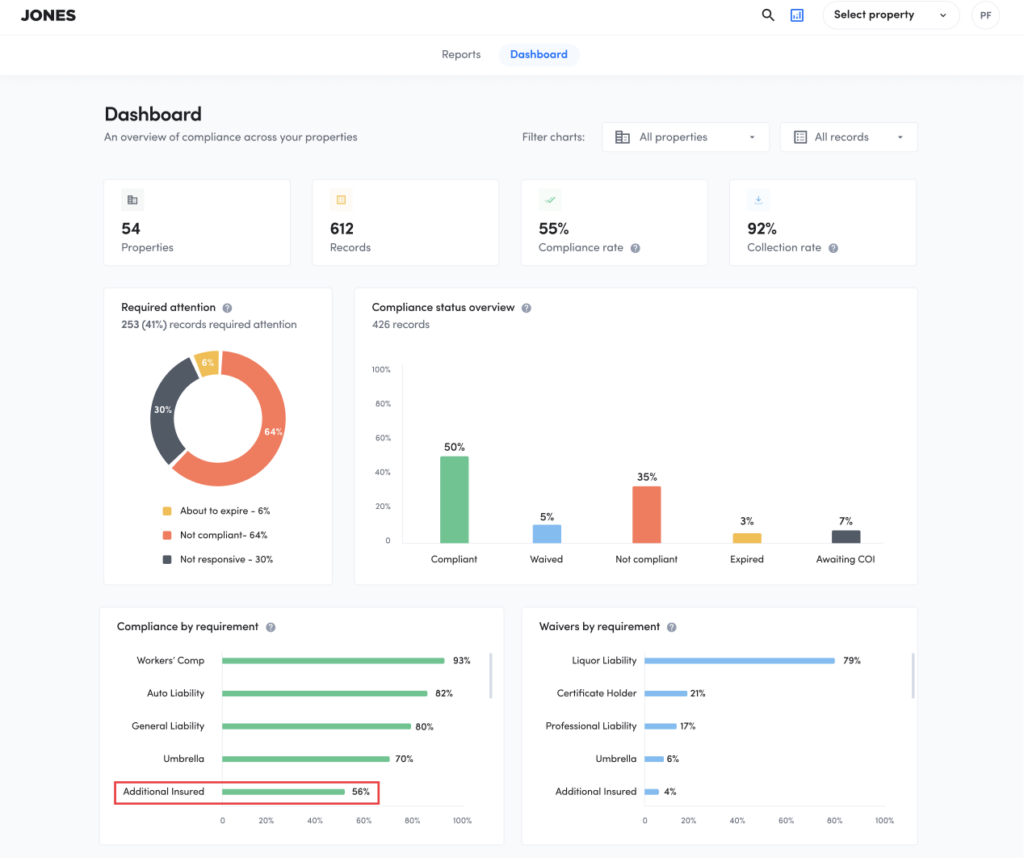
screenshot of Jones analytics dashboard showing low compliance rates

Jessica went and dove deeper into causes for Additional Insured noncompliance to better understand what was holding this third party manager’s compliance rates back.

Coverage Gap Analysis

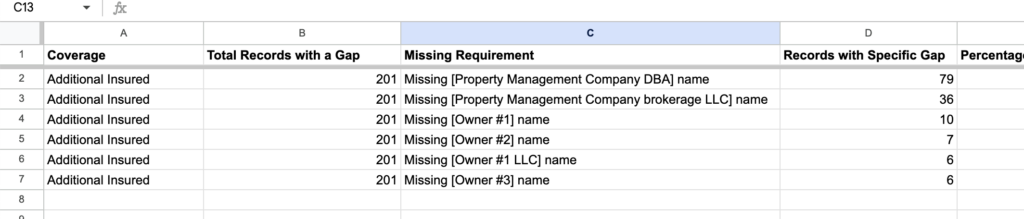
gap analysis in spreadsheet

Jessica quickly noticed that one major reason this company was struggling with AI compliance was the huge amount of different Additional Insured names that were required. One primary reason for this was the corporate structure of the 3rd party manager. They had different entities conducting business in different states, plus a brokerage wing that they required indemnification for. 

The 3rd party manager also required vendors to list building owners as AIs. However, as many of their buildings were owned by different LLCs or REITs they ran into the issue of requiring a wide variety of Additional Insured names. This also meant that a vendor with a compliant COI for one property couldn’t go work on a property with a different owner without producing a COI with a different set of Additional Insureds. 

Finally, there was human error involved in the listing of AIs as well. Jessica shared that her team often sees “misspellings of Additional Insured entity names caused by broker involvement, which creates back and forth when trying to obtain a compliant COI,” which was also a factor for this property management company. 

Jessica’s diagnosis of the situation was that too many different Additional Insured names being required was causing confusion and negatively impacting portfolio wide compliance, alongside human error. With this in mind, she recommended a solution Jones has seen many customers successfully utilize: encouraging the use of Blanket Additional Insured language.

Solution: Accept and Encourage Blanket Additional Insured Language

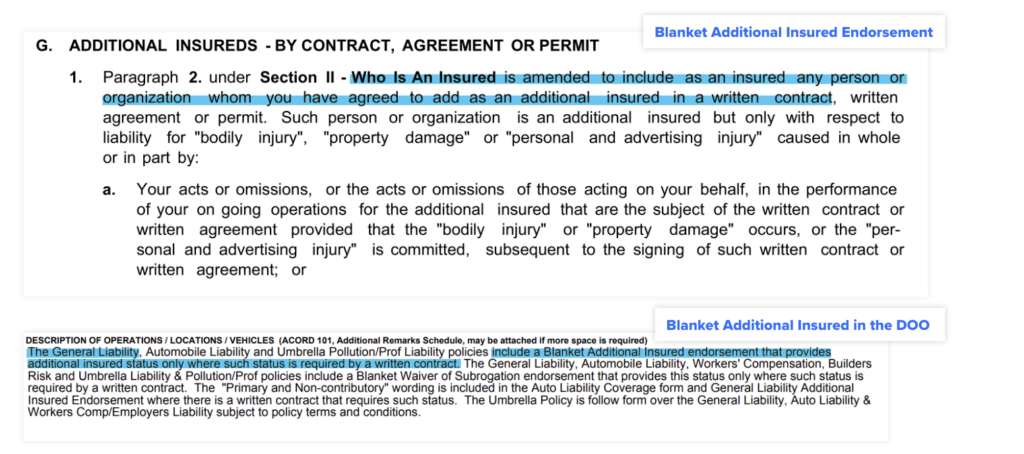
In general, the Jones Risk and Compliance team feels that accepting Blanket Additional Insured language is the best way to address Additional Insured status if contracts are in place with tenants and vendors. Blanket Additional Insured endorsements grant Additional Insured status to all parties as required in a written contract. Let’s look at some examples of Blanket Additional Insured verbiage.

blanket additional insured verbiage in certificate of insurance

As Jessica told us, “The key to risk transfer lies in clear contractual language. By referencing the contract wording with the Blanket Additional Insured clause, the vendor/tenant’s coverage aligns with the agreed-upon risk transfer terms defined by you.”

Seeing as this 3rd party manager had contracts and indemnity agreements in place with their vendors and tenants, Jessica felt they’d be a good fit for Blanket AI. 

How Their Portfolio Compliance Looked After the Change

jones analytics dashboard after improvements

After adopting Jessica’s recommendation that they start encouraging the usage of Blanket Additional Insured endorsements, overall portfolio compliance went up by 15%. By making the process of conferring Additional Insured status easier, the 3rd party property management company managed to improve compliance rates by reducing friction for vendors and tenants.

Want to learn more about how Jones Strategy Sessions have helped property management companies boost compliance rates? Get in touch with us via the form below.

The Jones Insurance Insider #10: Boosting compliance by busting COI myths

We’ve found that it’s because a lot of PMs don’t understand the reason for certain insurance requirements. In this edition of the Jones Insurance Insider, we’ll bust a few myths so you can understand what your insurance requirements are (and aren’t) doing for your company. 

One West Coast based full-service real estate company enhanced their insurance compliance program by bringing Jones on to manage the collection and review of their vendor and tenant insurance documents. Collection rates were up, compliance data was available for review in one centralized platform, and members of the property management team were spending far less time managing insurance documentation. However, three items were still being flagged as non-compliant on more than 40 percent of total vendor and tenant COIs: Certificate Holder name, 30 Days’ Notice of Cancellation, and Additional Insured status.

Luckily, the Jones Risk and Compliance team is available in situations like this for insurance risk strategy sessions, where they offer suggestions for improving compliance rates based on Jones data and best practices. Let’s follow Jessica Lopes, Director of the Risk and Compliance team, as she diagnoses the issues facing this portfolio.

How Their Initial Portfolio Compliance Looked

After reviewing their overall compliance numbers, Jessica next drilled down into the specific causes for noncompliance for Certificate Holder, 30 Days’ Notice, and AI. Here’s what she found.

Issue #1: Lots of Errors in Certificate Holder Name

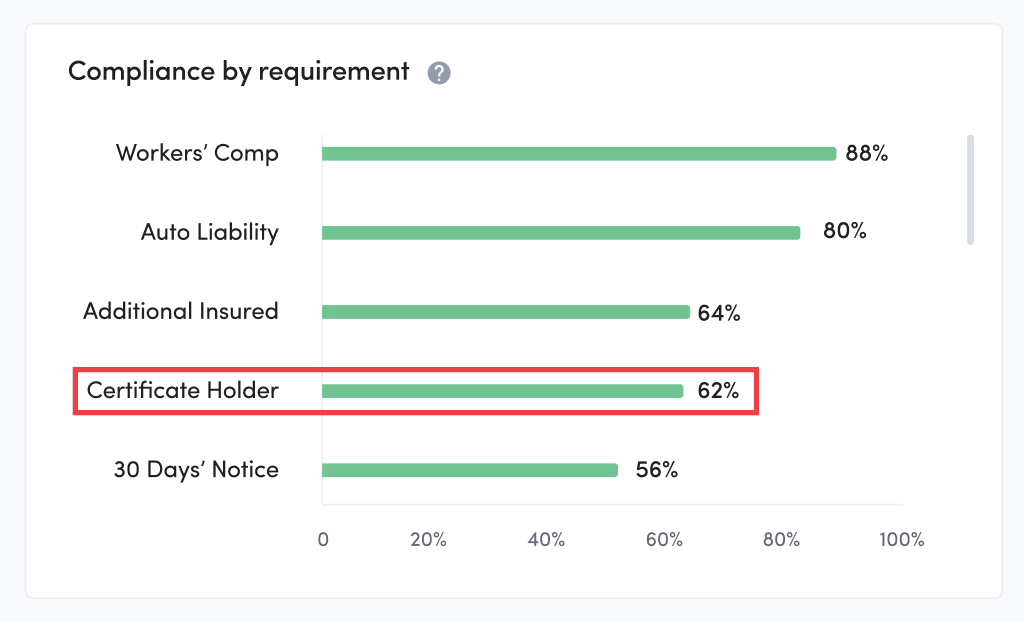
Certificate holder before stats

Jessica noticed that most of the Certificate Holder gaps were small typographical errors or omissions. Some of the Certificate Holder names were missing the “LLC” at the end of the property management company’s name, while others were missing a floor number or suite number. Others listed the name of an individual property manager rather than the management company itself. The property management team was very strict when it came to marking these mistakes, thinking Certificate Holder status was very important to protect them from risk.

Myth Busted: Having Certificate Holder status does NOT protect you

Many property managers are under the impression that being listed as a Certificate Holder in some way helps them transfer risk, or grants them coverage under the policies on the COI. This is not the case. Listing a Certificate Holder is an administrative formality without legal implications. It even says so right on top of the standard ACORD 25 form! 

certificate holder disclaimer text

Suggestion: Change CH Name to Jones

Jessica suggested changing the Certificate Holder name to Jones. 

By switching the Certificate Holder to Jones (who were already collecting and reviewing their COIs) the property management company removed the unnecessary administrative burden of chasing down incorrect Certificate Holder names, eliminating another barrier to insurance compliance. Now, vendors and tenants, regardless of what property they are in from the portfolio, only have to list the same Jones name and address for all their COIs.

Impact on compliance:

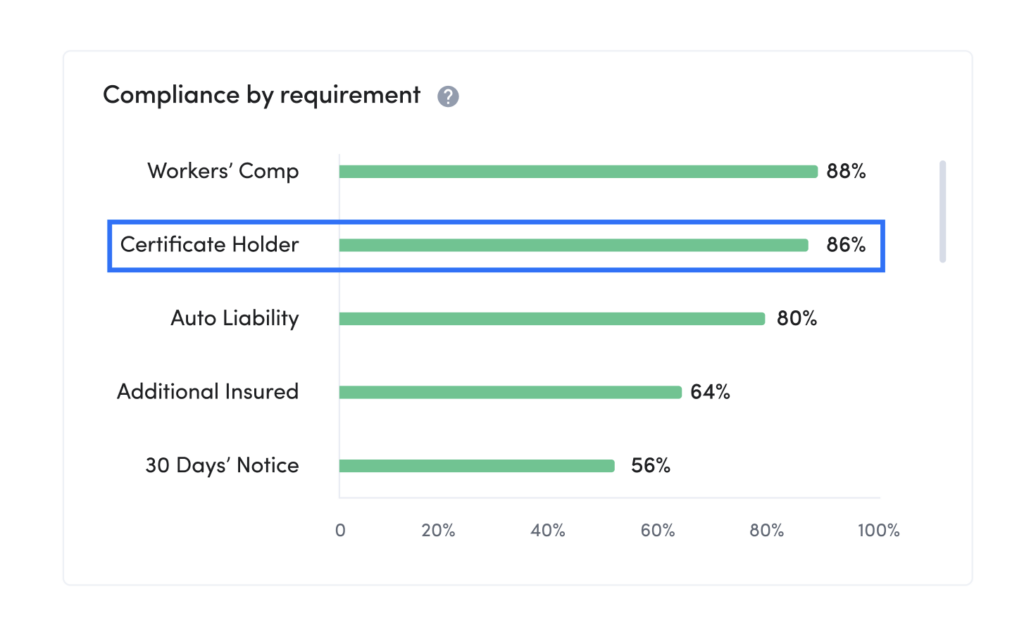
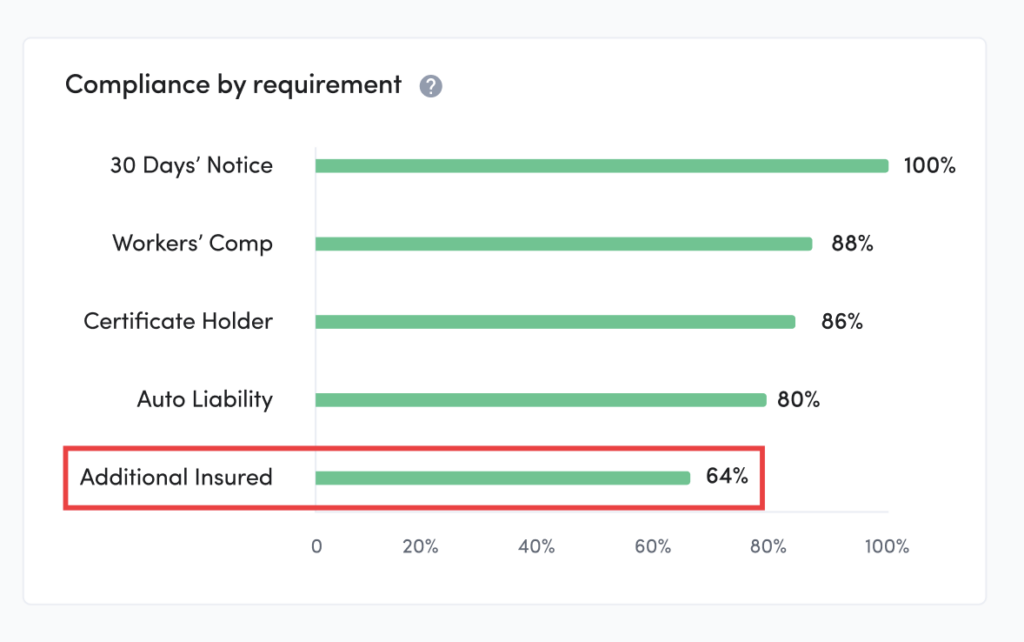
certificate holder after

Certificate Holder compliance rates went up from 62 percent to 86 percent.

Issue #2: Missing 30 Days’ Notice of Cancellation

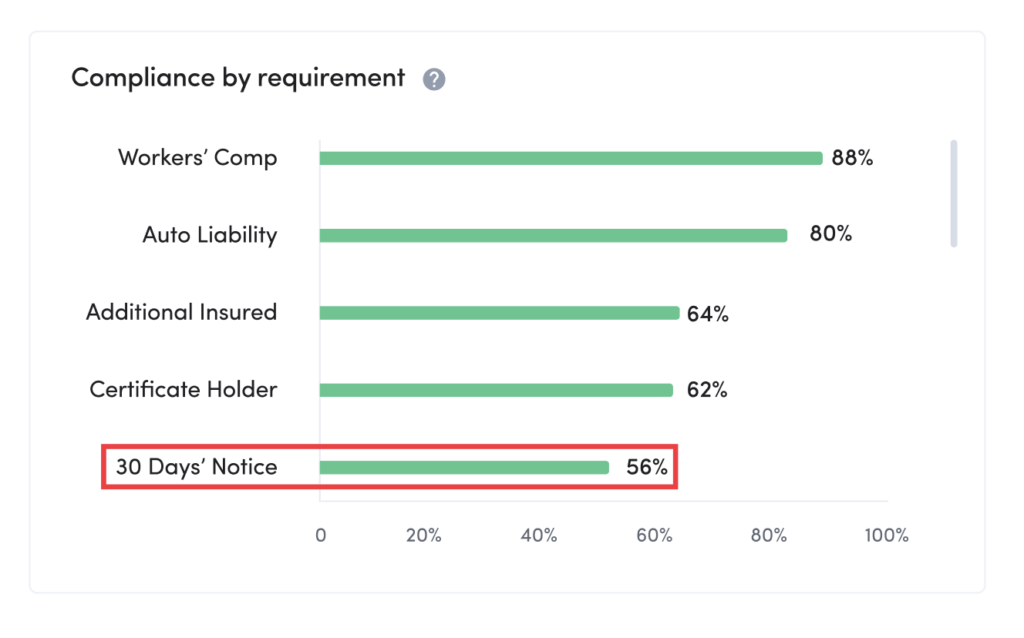
30 Days' Notice Before

Jessica noticed that the largest gap for 30 Days’ Notice of Cancellation was that it was completely missing. Many vendors and tenants weren’t providing this endorsement to the property management company.

Myth Busted: Insurance companies have no legal obligation to send a 30 Days’ Notice

Why would a property management company feel comfortable dropping an endorsement requirement that protects them from a vendor or tenant promptly canceling a policy that was evidenced on a COI? Well, there’s a good chance a notice of cancellation wouldn’t be sent in the event a policy is canceled. If you look at the fine text of many common notice of cancellation endorsements, verbiage like “failure to mail such notice shall impose no obligation or liability of any kind upon the company” demonstrates that they are low priority and difficult to enforce in most cases.

30 days' notice disclaimer text

Suggestion: Drop 30 Days’ Notice of Cancellation requirement

With that in mind, Jessica and the Jones Risk and Compliance team recommended this requirement be dropped entirely.

Impact on compliance:

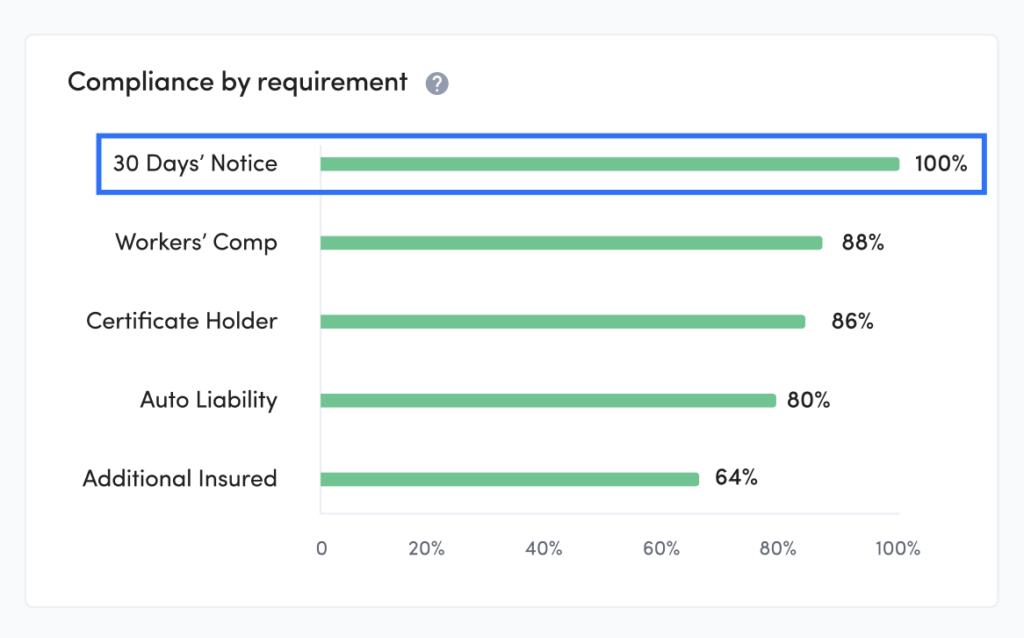
30 Days' Notice after

30 Days’ Notice of Cancellation compliance rate went from 59 percent to 100 percent.

Issue #3: Incorrect Additional Insured Names

Additional insured before stats

Due to the organizational structure of this property manager, with different owners for different properties requiring coverage, they required a wide variety of Additional Insured names. This led to confusion about who needed to be listed, spelling and abbreviation mistakes, and more.

Myth Busted: There are other ways to grant Additional Insured status than listing entity names on a COI

Many property management teams assume that the COI needs to specifically list them as AIs to get coverage. However, tenants’ and vendors’ brokers don’t typically amend the policy by scheduling the owner’s and PM entity names. Instead, they list the entity names on the COI in blanket language (aka “any person is an additional insured as per written contract”). That’s why it’s always important to have contracts in place with every one of your vendors and tenants. When you have contracts in place, there’s a better way to transfer risk than listing AIs—Blanket Additional Insured language.

Suggestion: Adopt Blanket Additional Insured

The existence of contracts with vendors and tenants made this portfolio a great candidate for accepting Blanket Additional Insured language. This topic is enough for a newsletter all by itself, so check out our last issue for a full deep dive into the topic.

Impact on Compliance:

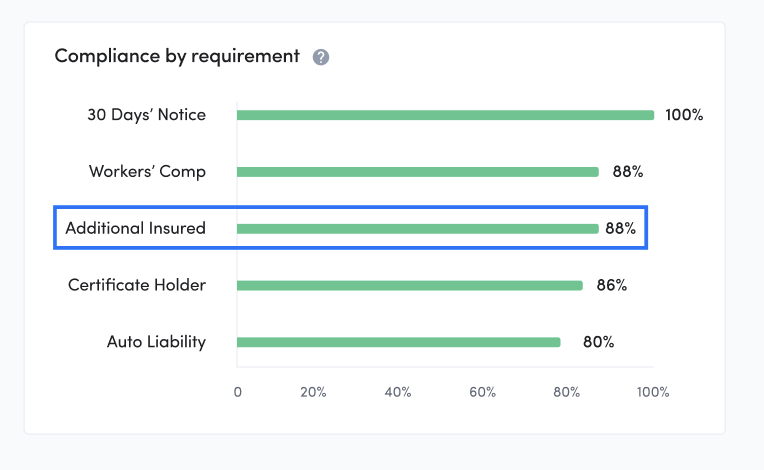
additional insured after chart

Additional insured compliance went up by 24%.

How Their Portfolio Compliance Looked After the Changes

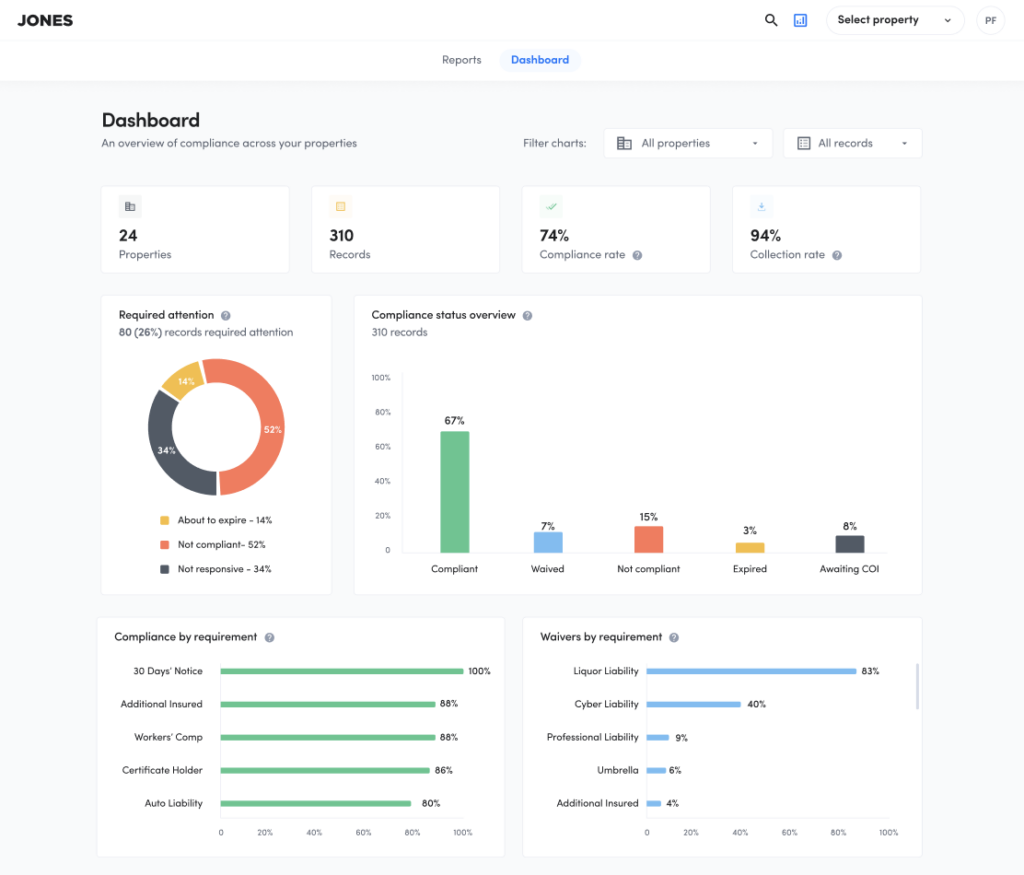
jones graph after

After making these changes, the risk management team saw increases to insurance compliance rates across the board. By removing obstacles to compliance that provided limited to no extra protection for the property management company, they managed to improve the vendor and tenant experience while ensuring that they were still protected from insurance risk. Jones customers have also come to similar conclusions about the usefulness of these requirements. For example, we see them waive Certificate Holder gaps at a rate of over 50 percent. In this case, this property manager saved themselves unnecessary time chasing compliance that didn’t commensurately protect them from risk.

Want to learn more about how Jones can help you improve your insurance compliance rates with strategy sessions and better document review? Get in touch with us to learn more.

How One Property Manager Boosted Compliance by Busting COI Myths

We’ve found that it’s because a lot of PMs don’t understand the reason for certain insurance requirements. Today, we’ll dive into how one property management company busted the myths behind several of their requirements in order to boost their insurance compliance.

This West Coast based full-service real estate company had enhanced their insurance compliance program by bringing Jones on to manage the collection and review of their vendor and tenant insurance documents. Collection rates were up, compliance data was available for review in one centralized platform, and members of the property management team were spending far less time managing insurance documentation. However, three items were still being flagged as non-compliant on more than 40 percent of total vendor and tenant COIs: Certificate Holder name, 30 Days’ Notice of Cancellation, and Additional Insured status.

Luckily, the Jones Risk and Compliance team is available in situations like this for insurance risk strategy sessions, where they offer suggestions for improving compliance rates based on Jones data and best practices. Let’s follow Jessica Lopes, Director of the Risk and Compliance team, as she diagnoses the issues facing this portfolio.

How Their Initial Portfolio Compliance Looked

After reviewing their overall compliance numbers, Jessica next drilled down into the specific causes for noncompliance for Certificate Holder, 30 Days’ Notice, and AI. Here’s what she found.

Issue #1: Lots of Errors in Certificate Holder Name

Certificate holder before stats

Jessica noticed that most of the Certificate Holder gaps were small typographical errors or omissions. Some of the Certificate Holder names were missing the “LLC” at the end of the property management company’s name, while others were missing a floor number or suite number. Others listed the name of an individual property manager rather than the management company itself. The property management team was very strict when it came to marking these mistakes, thinking Certificate Holder status was very important to protect them from risk.

Myth Busted: Having Certificate Holder status does NOT protect you

Many property managers are under the impression that being listed as a Certificate Holder in some way helps them transfer risk, or grants them coverage under the policies on the COI. This is not the case. Listing a Certificate Holder is an administrative formality without legal implications. It even says so right on top of the standard ACORD 25 form! 

certificate holder disclaimer text

Suggestion: Change CH Name to Jones

Jessica suggested changing the Certificate Holder name to Jones. 

By switching the Certificate Holder to Jones (who were already collecting and reviewing their COIs) the property management company removed the unnecessary administrative burden of chasing down incorrect Certificate Holder names, eliminating another barrier to insurance compliance. Now, vendors and tenants, regardless of what property they are in from the portfolio, only have to list the same Jones name and address for all their COIs.

Impact on compliance:

certificate holder after

Certificate Holder compliance rates went up from 62 percent to 86 percent.

Issue #2: Missing 30 Days’ Notice of Cancellation

30 Days' Notice Before

Jessica noticed that the largest gap for 30 Days’ Notice of Cancellation was that it was completely missing. Many vendors and tenants weren’t providing this endorsement to the property management company.

Myth Busted: Insurance companies have no legal obligation to send a 30 Days’ Notice

Why would a property management company feel comfortable dropping an endorsement requirement that protects them from a vendor or tenant promptly canceling a policy that was evidenced on a COI? Well, there’s a good chance a notice of cancellation wouldn’t be sent in the event a policy is canceled. If you look at the fine text of many common notice of cancellation endorsements, verbiage like “failure to mail such notice shall impose no obligation or liability of any kind upon the company” demonstrates that they are low priority and difficult to enforce in most cases.

30 days' notice disclaimer text

Suggestion: Drop 30 Days’ Notice of Cancellation requirement

With that in mind, Jessica and the Jones Risk and Compliance team recommended this requirement be dropped entirely.

Impact on compliance:

30 Days' Notice after

30 Days’ Notice of Cancellation compliance rate went from 59 percent to 100 percent.

Issue #3: Incorrect Additional Insured Names

Additional insured before stats

Due to the organizational structure of this property manager, with different owners for different properties requiring coverage, they required a wide variety of Additional Insured names. This led to confusion about who needed to be listed, spelling and abbreviation mistakes, and more.

Myth Busted: There are other ways to grant Additional Insured status than listing entity names on a COI

Many property management teams assume that the COI needs to specifically list them as AIs to get coverage. However, tenants’ and vendors’ brokers don’t typically amend the policy by scheduling the owner’s and PM entity names. Instead, they list the entity names on the COI in blanket language (aka “any person is an additional insured as per written contract”). That’s why it’s always important to have contracts in place with every one of your vendors and tenants. When you have contracts in place, there’s a better way to transfer risk than listing AIs—Blanket Additional Insured language.

Suggestion: Adopt Blanket Additional Insured

The existence of contracts with vendors and tenants made this portfolio a great candidate for accepting Blanket Additional Insured language. Check out our last this article for full deep dive into the topic.

Impact on Compliance:

additional insured after chart

Additional insured compliance went up by 24%.

How Their Portfolio Compliance Looked After the Changes

jones graph after

After making these changes, the risk management team saw increases to insurance compliance rates across the board. By removing obstacles to compliance that provided limited to no extra protection for the property management company, they managed to improve the vendor and tenant experience while ensuring that they were still protected from insurance risk. Jones customers have also come to similar conclusions about the usefulness of these requirements. For example, we see them waive Certificate Holder gaps at a rate of over 50 percent. In this case, this property manager saved themselves unnecessary time chasing compliance that didn’t commensurately protect them from risk.

Want to learn more about how Jones can help you improve your insurance compliance rates with strategy sessions and better document review? Get in touch with us to learn more.

Have You Heard of Procore’s New Side Panel Apps? Starting Now, Jones Offers Subcontractor Insurance Compliance in a Procore Side Panel Experience

Jones side panel app cover

Quick summary:

You can access detailed subcontractor insurance data and risk management tools from within the Project Directory and Commitments tool with the new Jones Procore Side Panel app (more options might be available within the next months—stay tuned). Our customers say that managing insurance compliance in a side panel is:

—“game changing for contracts and AP teams” (find out why)

“really beneficial to project teams because it’ll allow them to do their jobs more efficiently” (read more)

—will free up risk managers from answering basic insurance questions, freeing up more of their time to do other tasks (hear it in their own words)

See it in action by booking a demo with us:

Let’s Chat!

If you haven’t yet made a note of Procore announcing its side panel, you should definitely keep an eye on it, and all the new possibilities it opens for your team.

Basically, some tools that already integrate with Procore can now appear as a side panel in your Procore account when you click the dock icon. One such tool is Jones.

We’ve already been offering insurance compliance management through our bi-directional, embedded integration with Procore. Now, all your subcontractor insurance data, (including compliance status and coverage gaps), and risk management tools are also available as a side panel inside your Procore account. As of May 2, 2024, Jones is the only subcontractor insurance tool that offers a Procore Side Panel experience.

What’s so special about managing insurance compliance from a side panel?

It’s a whole different experience. Imagine Siri exists inside your Procore account, available to answer any question you have.

Not only is the Jones Side Panel app available in the Procore account (versus some other software that you have to access in a different tab)—it appears exactly when and where you need it.

In the words of the release posted by the Procore team, “When a user opens an integrated app from within the side panel, it appears right next to the Procore tool they use.”

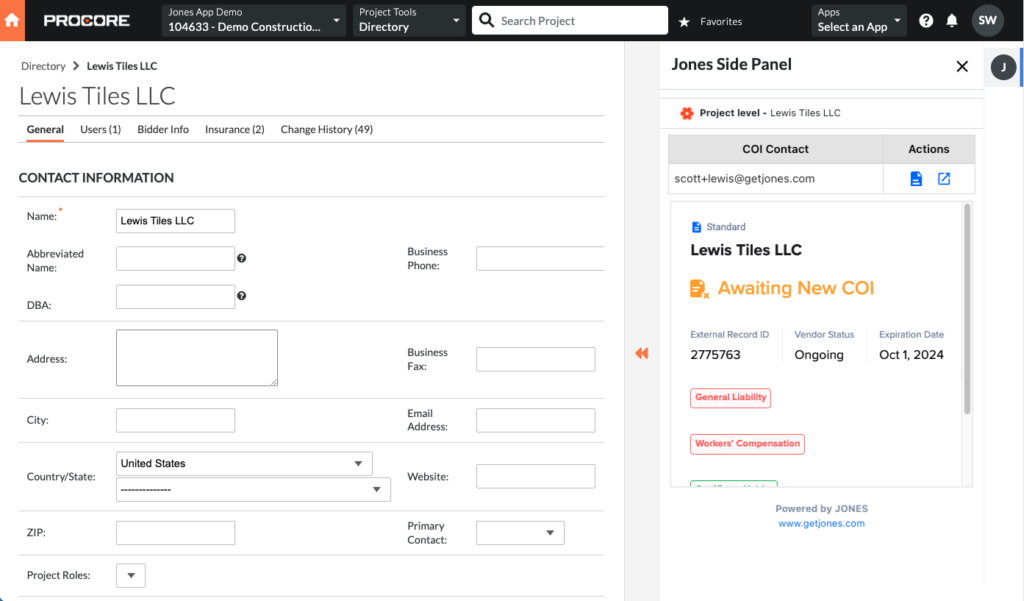
For example, if you are a contract manager, and you need to double check that you have a signed contract and a compliant COI before getting a subcontractor paid, you are probably working on this task in the Procore Commitments tool. If you are also a customer of Jones, all you need to do is click the dock button, and the side panel will show you all the subcontractor insurance data you need, including the compliance status and coverage gaps, if any. 

Here’s how it looks:

Jones Side Panel Procore screenshot

Without leaving the Commitments tool, you have access to the following data:

  • Subcontractor name
  • COI contact (email)
  • Insurance requirements applied
  • COI status (for example, Compliant, Not Compliant, and more)
  • Vendor Status (e.g. Ongoing)
  • COI expiration date
  • Compliance status for every requirement (plus the detailed reasons for non-compliance)

You can also perform certain COI management tasks right inside the side panel:

  • Request new insurance documents
  • Override an insurance coverage gap by marking it as compliant or waived
  • Mention coworkers in team notes
  • Upload new insurance documents on behalf of subcontractors
  • And much more

Where in Procore can you access the Jones Side Panel?

Currently, you can access the Jones Side Panel in two Procore areas:

  • Commitments tool (for customers who have Procore Project Financials)
  • Project Directory

In the future, the Jones Side Panel app may be accessible in other areas in Procore—stay tuned!

How is managing insurance with a side panel different from other setups?

Let’s compare managing subcontractor insurance compliance via a Jones side panel app with other options. If you are a general contractor with a Procore account, you have three options available to you:

  • Use Jones. We offer an embedded integration with Procore and now a side panel experience, too.
  • Use another COI tracking/management tool that integrates with Procore (anything listed on a Procore marketplace). It won’t be embedded and you won’t have access to a side panel experience.
  • Use a tool that doesn’t offer a Procore integration. For anything related to subcontractor insurance, you’d need to head to a separate application tool or a spreadsheet.

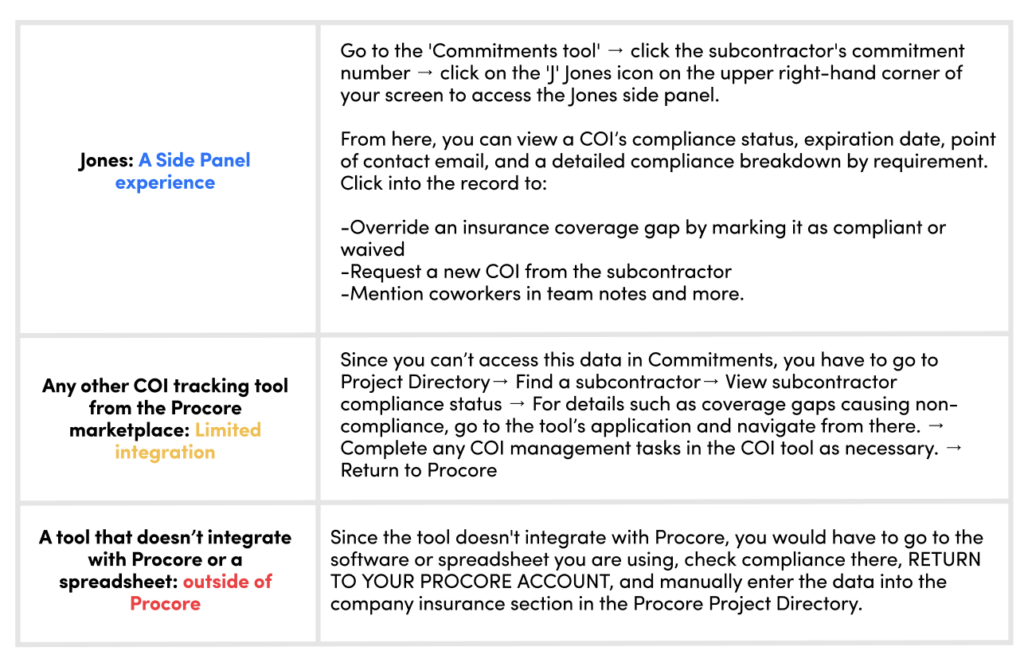
Going back to our contract manager example, let’s see how checking if a subcontractor has a complaint COI will look like in each of these scenarios:

Jones side panel comparison matrix

Why other Procore users are excited about managing insurance compliance with the Jones Side Panel:

We asked two of our existing customers what they think about the Jones Side Panel experience, and how different teams at their organizations might use it. Here is what they had to say. 

Contract management and AP teams: obtaining more information, faster

“The Jones Side Panel app is definitely game changing for Contracts and AP teams. It makes obtaining information a lot faster: I can view whether a sub is compliant and what’s missing with one click. Before the side panel became available, I’d have to click on several screens to get the insurance information.”
— Sarah Michels, Contract Manager at Bogard Construction

Project management teams: task efficiency

“The Jones Side Panel experience is really beneficial to our project teams because it’ll allow them to do their jobs more efficiently rather than spending time navigating and logging into different websites and figuring out new software.”
— Jessica Maxwell, Risk Management Specialist at Harvey Cleary

Risk teams: less emails about basics of COIs and ability to focus on strategic items

“The Jones Side Panel will keep project managers more informed about subcontractors’ insurance, which means no more emailing the risk management department every time a subcontractor is non-compliant. Instead, I can focus on helping them with other tasks.”
— Jessica Maxwell, Risk Management Specialist at Harvey Cleary

Already a customer of Jones and Procore? Here’s how to get started with the Procore Side Panel:

Reach out to your customer success manager to help you set up the Jones Side Panel.