How to Maximize Your Insurance Broker Relationship And Make Them an Asset to Tenants

How to maximize your relationship with your insurance broker

Understand the Role of a Commercial Insurance Broker

Briefly, a commercial insurance broker is an intermediary between you (the buyer) and the insurer. Their job is to make the buying experience as seamless as possible by identifying risks and mitigating them with the appropriate coverage. In short, they are your personal policy shopper, not to be confused with insurance agents. Brokers represent the buyer, while agents represent the insurer — an essential distinction.

Insurance brokers often provide continuing education and support in benchmarking tools, market analyses, and other valuable resources. They also assist with claims, update you on noteworthy market trends, and provide policy renewal guidance.

5 Tips to Get the Most Out of Your Insurance Broker Relationship

Knowing what an insurance broker potentially offers, how do you maximize the partnership? Perks don’t typically fall in your lap, after all — few great things do. We have a few tips for getting the most out of this relationship.

1. Empower Your Insurance Broker With Information

Regardless of how savvy a commercial insurance broker is to your industry, they fly blind without essential information about your organization. Brokers aim to build customized insurance plans with your budget in mind. However, missing details about your operations, financial stability (or history), and risk management plans could derail their efforts.

Instead, empower your broker with crucial information to help them help you. Provide your broker with comprehensive data, such as:

  • Financial statements
  • Loss runs
  • Property list
  • Employees information
  • Building details (i.e., dimensions)

For example, certain multifamily buildings have Federal Pacific Electric Panel Breakers aka FPE Stab Lok Panels. When that is the case, without empowering your broker with this knowledge, you may learn that your policy has a clause excluding buildings with Stab Lok panels upon either inspection or at closing.

Avoid that last-minute scenario by providing your broker with comprehensive information upfront. Equipped with this information, your broker can better find the most competitive pricing for you and the coverage you genuinely need.

2. Keep the Lines of Communication Open with Your Insurance Broker

Gone are the days when talking with your insurance broker once per year was the epitome of the relationship. Brokers take a multi-channel approach nowadays, connecting with clients on various platforms. Whether it’s an automated reminder or a quick app login to shoot a random question toward your broker, facilitate open communication.

On that note, do your part in understanding the process of buying and maintaining insurance. Sure, much of the jargon might seem foreign initially, but you don’t have to become an insurance expert to get on the same page as your broker.

Consider learning how to navigate insurance with the Jones Insurance Guide. No longer will you be googling terms or asking Siri what something means. With a greater understanding of the insurance processes, you can amp up communication with your broker and stay more connected year-round.

3. Tap Into Your Insurance Broker’s Resources

The insurance industry is transforming from archaic operations to user-friendly digital processes. For example, artificial intelligence (AI) and machine learning in the underwriting process now streamline the entire insurance buying experience. And that’s just for starters.

Insurance brokers can now provide customized quotes much faster, giving clients access to coverage with less hassle within hours. Tap into those resources. Additionally, take advantage of your broker’s other risk management tools, from downloadable checklists to free whitepapers to easy-to-use apps.

4. Unify Your Core Goals

Effective communication goes a long way in establishing a solid working relationship with your broker, not to mention how you benefit from your broker’s well-suited policies. Although your broker might champion policy placement, remember that you are ever-growing and changing. So, your insurance needs will change, as well.

An excellent approach is to make your core values and goals well-known to your broker. For example, a prospective client had five different property insurance policies and renewal dates across their Texas multifamily real estate portfolio, and their main concern was efficiency. We brought this client to ReShield by wrapping their portfolio under a master policy with a single effective date. As a result, the renewal process was once per year, and a more efficient risk management process was in place.

Remember, brokers will base their strategy around your mission. But this endeavor must be a two-way street, and here’s why.

Many people assume that they must work with several brokers to get the most competitive rates. However, market blocking will ruin that particular strategy. This archaic tradition allows an insurance proposal to only a single broker, preventing all others from accessing that market. Engaging with more than one broker roadblocks them and prevents you from getting the best deal.

5. Trust Your Insurance Broker’s Expertise

As mentioned earlier, successful relationships are built on trust and respect. If, after your due diligence shopping for a broker, you landed on your current one, trust that you made the best decision. Also, trust them.

Second-guessing your broker’s guidance will likely cause a rift in the relationship. You might notice less engagement and a spiral down in communication. So, talk candidly about your business, and ask thoughtful questions. Of course, you want to be sure your bases are covered.

However, your broker is also invested in your business now. They will likely bend over backward to ensure your company is protected. If they don’t, it’s time to draft a broker of record letter and end the professional relationship. But while you’re on the same team, extend your trust to them.

Show Tenants Your Insurance Broker Is an Asset

It’s not uncommon for people to consider insurance folks as the “bad guys,” per se. It’s an understandable mindset since insurance is only used during times of loss. So, those negative feelings tend to trickle down onto the insurance world, including brokers.

Despite the fundamental purpose of insurance — protection from financial loss — you can shine a brighter light on your broker for tenants to see. In other words, you can show tenants how much of an asset your broker genuinely is.

For example, your broker can tailor insurance policies specifically designed to benefit you and your tenants, protecting you from financial loss. Without this innovative customization, a one-size-fits-all approach might have left you high and dry. Understanding the relationship from this angle helps tenants realize that brokers are in their corner.

Additionally, a broker’s available resources are often designed for tenants to use. Staying updated on current regulations, market trends, or weather patterns can make a risk management trifecta out of you three: client, broker, and tenants.

We encourage you to follow these tips to maximize your insurance broker relationship. Also, spotlight a broker’s helping hands. This approach encourages tenants to see them as assets and valuable strong points instead of merely the person called when something bad happens.
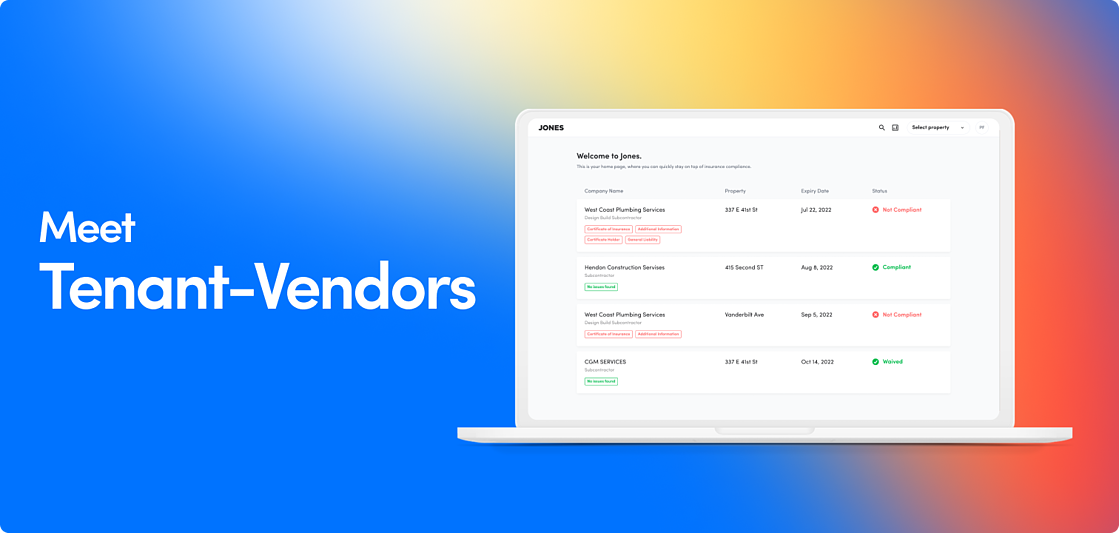
Introducing Tenant-Vendors from Jones

Introducing Tenant-Vendors From Jones

For Property Managers:

Gone are the days of vendor requests from tenants becoming massive email chains in your inbox.

With Tenant-Vendors you can now have the peace of mind knowing that tenants are bringing compliant vendors into your property.

Now you can improve tenant experience by empowering all office managers to seamlessly make vendor requests themselves. As a property manager, you’ll have complete visibility over this but won’t need to be the middleman between your tenants and their vendors.

Additionally, property managers have the ability to set insurance requirements that all of the tenant-vendors can be audited against. The requirements for specific vendors can be changed by property managers as needed.

Both the tenant and the property manager will receive a notification once the vendor is approved.

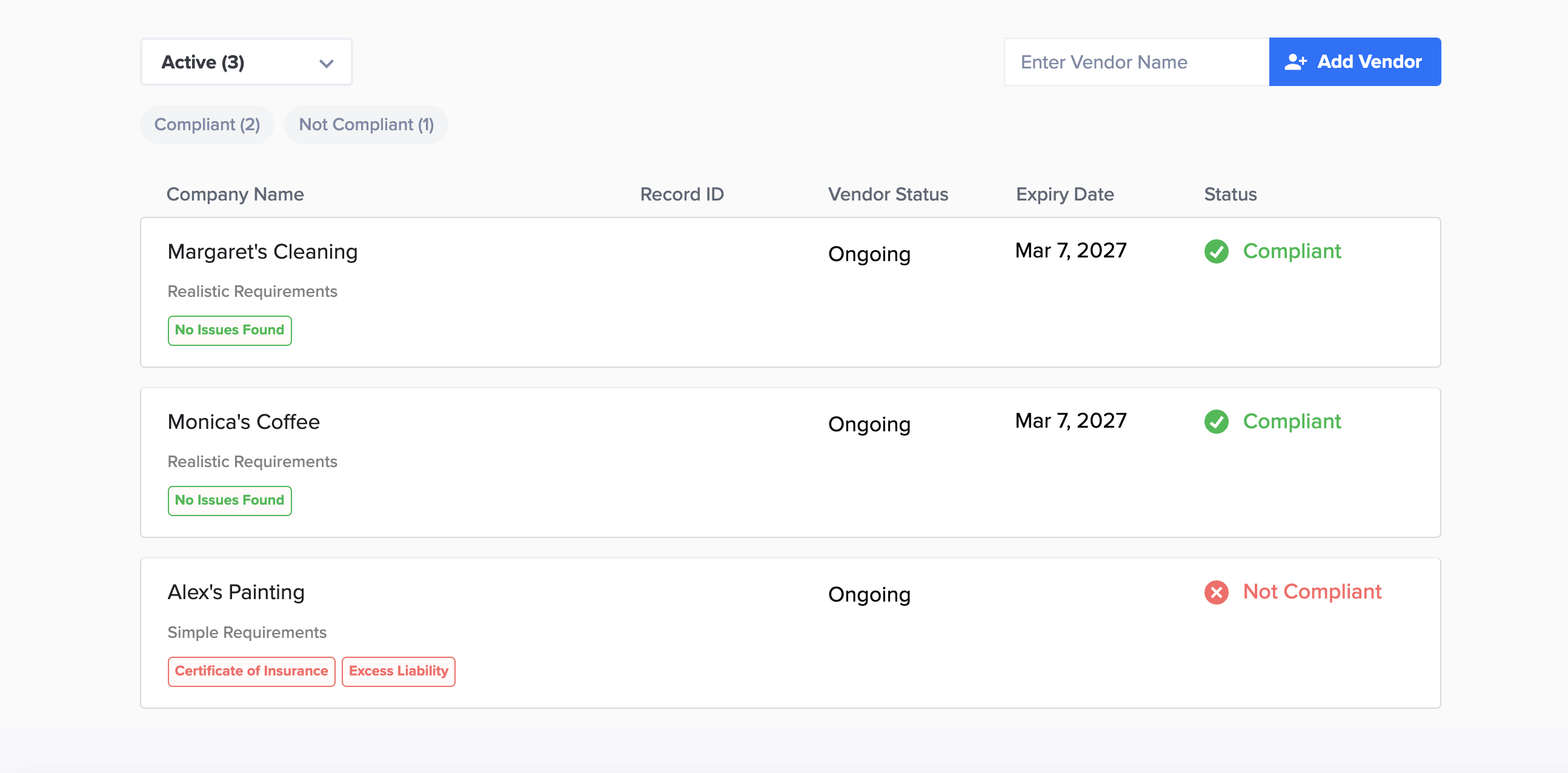
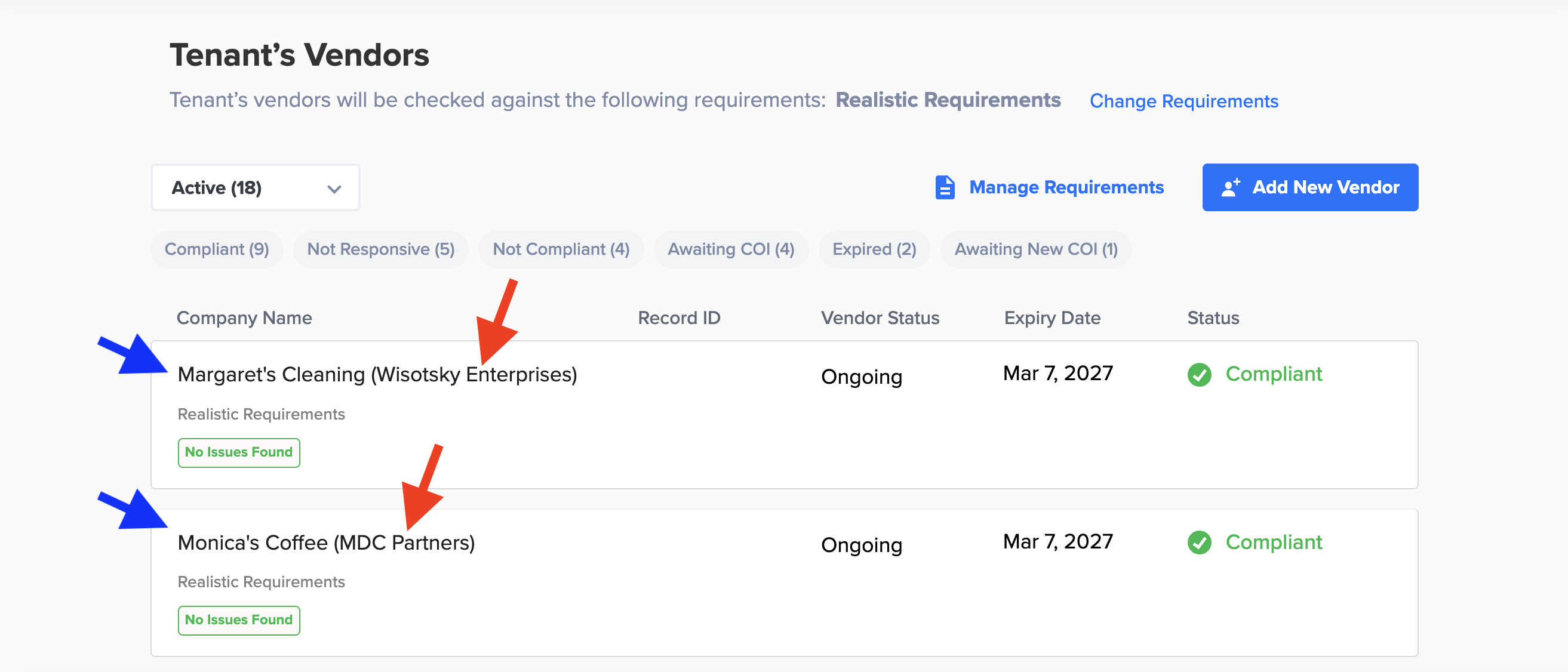
Example of Tenant-Vendor page from a tenant's point of view

The blue arrow indicates the name of your tenant’s vendor. The red arrow indicates the name of your tenant. For example, you can see in this image above that “Margaret’s Cleaning” is a compliant vendor for the tenant called “Wisotsky Enterprises”.

For Tenants:

The job of an office manager is to give their employees the best possible workplace experience, not to analyze COIs under a microscope all day!

Tenant-Vendors enables office managers to quickly complete all of the projects their office needs, without having to check with building management to see if a vendor’s insurance is compliant.

An office manager can seamlessly login to their account on Jones and invite a vendor to submit a COI for approval.

Speed is crucial for tenants, and Tenant-Vendors can help office managers in your property thrive. Both property and office managers will be notified within 24 hours once the vendor’s COI is approved.

In addition, an office manager can see if a vendor is already compliant within their building and then seamlessly work with them without needing to request another COI.

It’s as simple as that!

Tenant-Vendor from the point of view of an office manager

An office manager’s view of Tenant-Vendors.

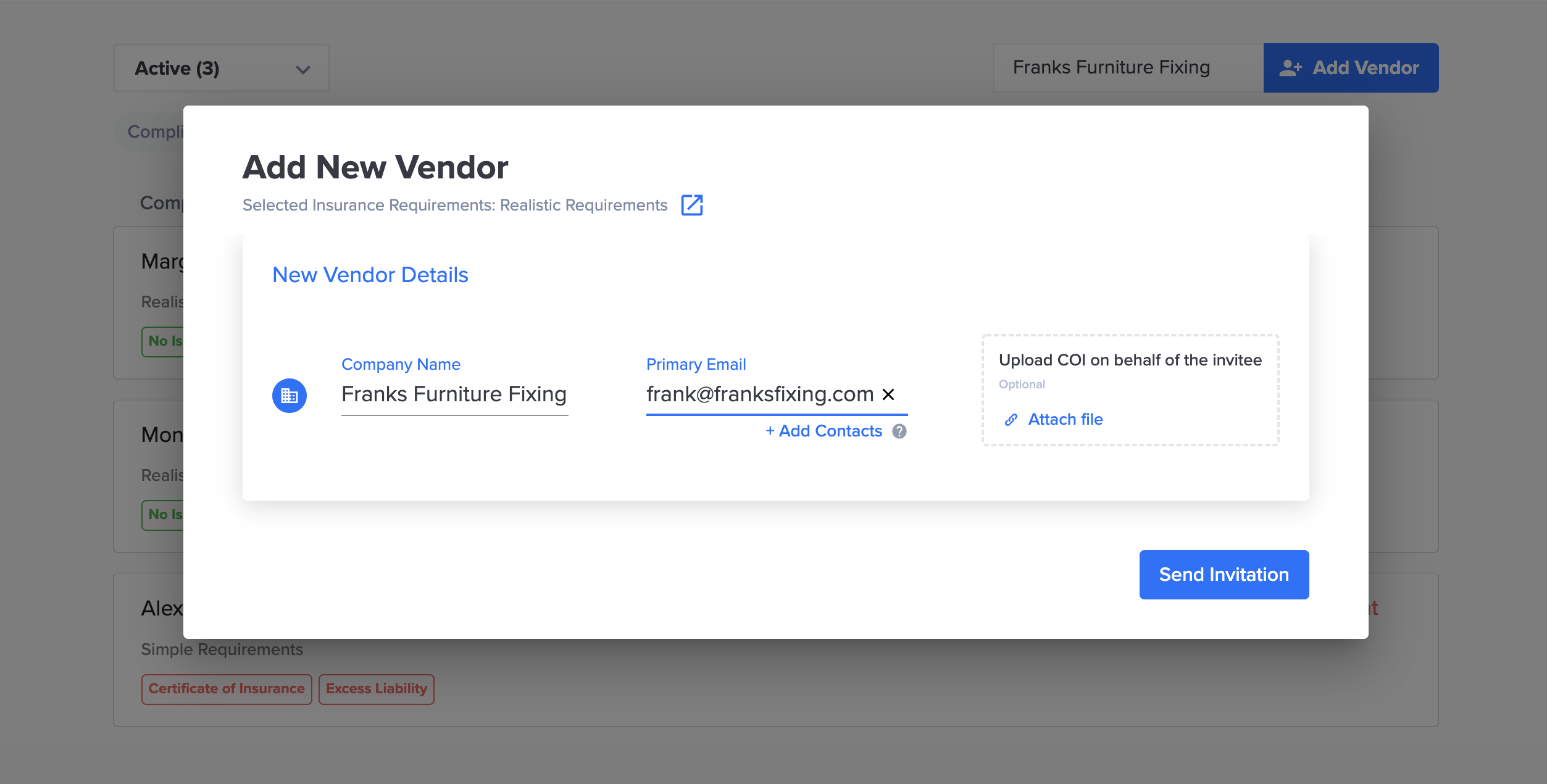
Workflow of an office manager requesting a vendor

Office managers can request a COI from a new vendor by simply the click of a button! The team at Jones will review the vendor’s COI within 24 hours (5 hours on average).

Here’s what our customers are saying:

“Tenant-Vendors is the best thing since sliced bread. Everyone I have dealt with at Jones has been professional, pleasant, responsive, and have been extremely helpful with this new tenant experience.”
-Raymond Mosley, Insurance & Compliance Manager @ ABS Partners

“Tenant-Vendors is amazing. Before Jones, it used to take us forever to wrangle vendors. Now, it’s just a few clicks – and poof, the request goes out and it’s all sorted. I can’t thank you enough!”
-Brad, National Urban League @ 80 Pine Street

Want to learn more about Tenant-Vendors? We’d love to show you a demo!

6 Benefits of the Jones and Procore Integration for Managing Risk and Compliance

6 Benefits of the Jones and Procore Integration for Managing Risk and Compliance

Note: interested in exploring how Jones can help you automate your compliance management end-to-end? Need a compliance solution that integrates with your Procore account? Talk to our team of experts today!

#1. Automate your compliance workflow from within Procore

Gone are the days of manually auditing, tracking, and reporting on insurance compliance. If Procore is where all of your operational data lives, it’s where your up-to-date vendor insurance data should be as well. Through Jones, all compliance information for your vendors can seamlessly sync and live within Procore. By pushing data to common accounting software, the Jones Procore integration also helps improve construction accounts payable.

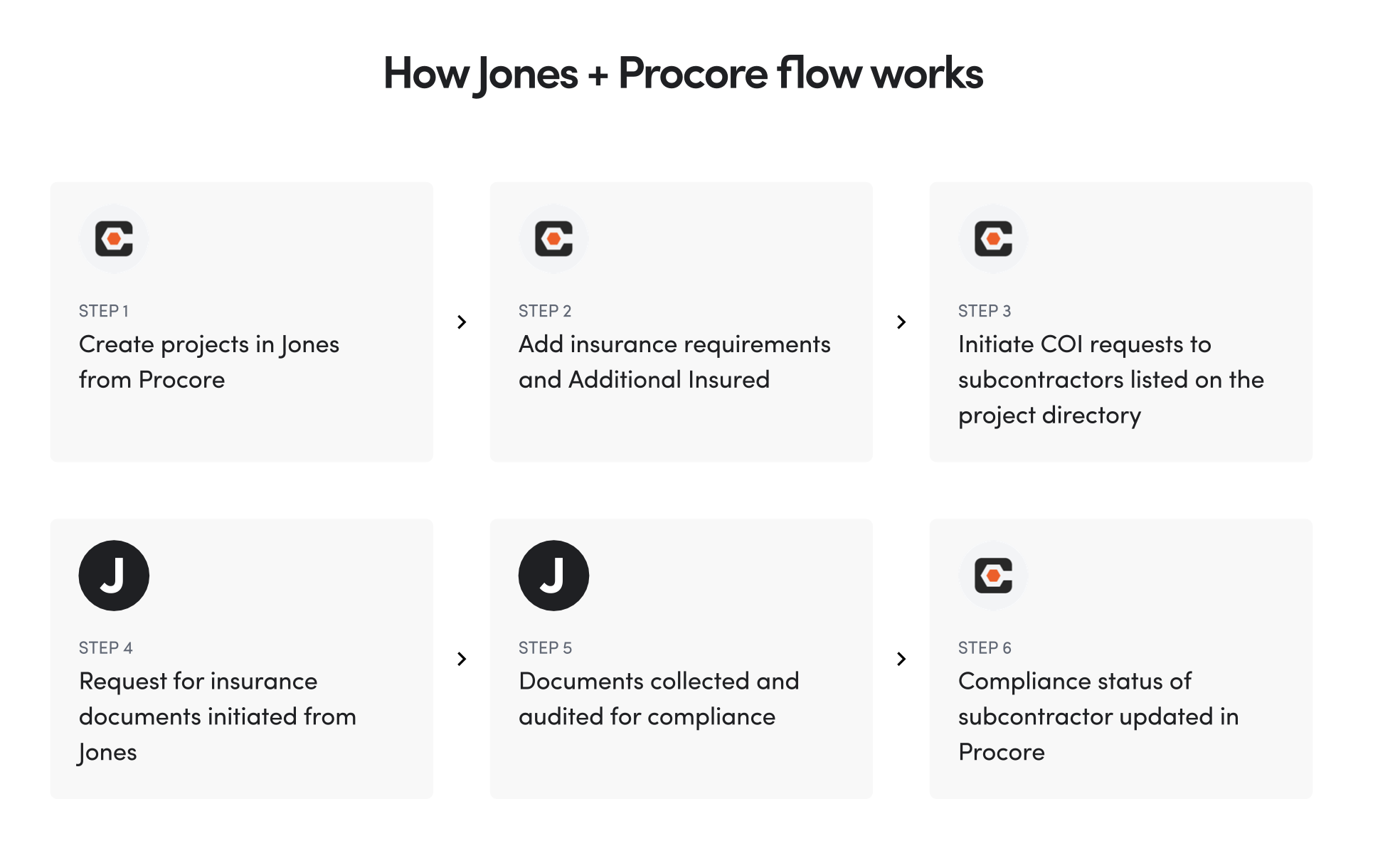
Description of the Procore and Jones Integration | Flow of compliance data between both platforms

#2. Using Procore already? It’s easy to get started with Jones

Getting started with Jones is quick, seamless, and simple. After speaking with a member of our sales team, the Jones team can help you get all set up in a matter of weeks, not months.

Firstly, Jones will collect your insurance requirements in order to understand the exact specifics to audit against. Secondly, Jones will do an initial audit of all your vendors that are currently on Procore. Lastly, you’ll be guided through the Jones platform by a dedicated customer success representative.

Related: Here’s how one Chicago-based construction company saved hundreds of hours by switching to the Jones compliance solution and integrating it with their Procore account. Read More.

#3. Single source of truth for all compliance data, accessible within Procore

Anyone on your team can kick off the COI collection process directly within Procore at any time in a project’s lifecycle. Project managers will never need to leave the Procore workflow to see their vendor’s compliance information. Everyone in your company (risk managers, accounting, contract team, project managers) will have true visibility and access into vendor compliance.

Ultimately, having a single source of truth for all compliance data will enable your team to save a tremendous amount of time and reduce the number of delayed vendor payments.

#4. Save a significant amount of time

Jones’ construction customers report time savings of hundreds of hours a month through the Procore integration. All COIs reviewed by Jones are audited in under 24 hours (5 hours on average) so you can get your vendors compliant and working on projects in a matter of days instead of weeks or months.Driven by domain and process specific micro-workflows, Jones automates data extraction, COI validation, interpretation and resolution 10 times faster than individual human risk managers.

#5. Simplified experience for vendors

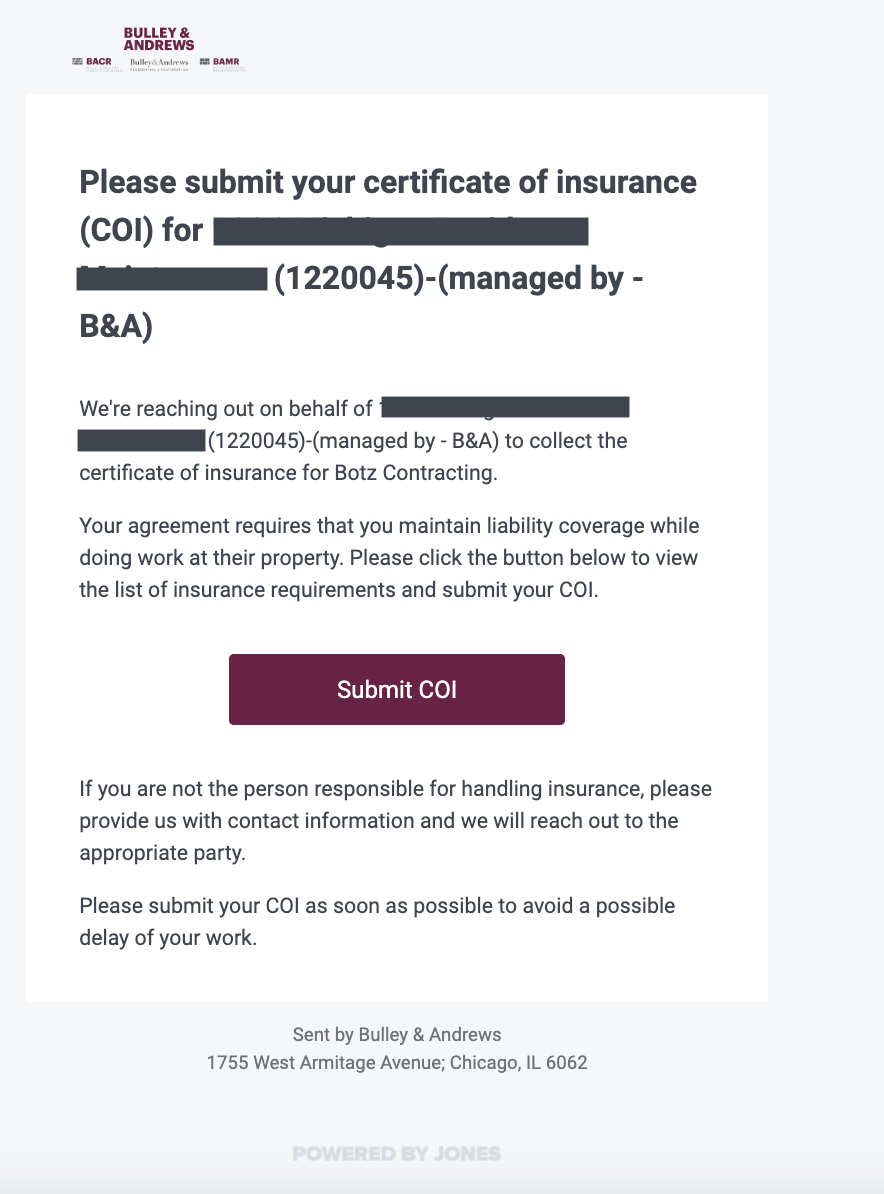
The simplicity of uploading a COI as a vendor is one of the fundamental aspects that customers love most about Jones. Put yourself in the shoes of a subcontractor… would you be more likely to respond to a COI request email from a company you haven’t heard of, or from the construction company you are working with? The answer is clear. With Jones, all emails can be branded to make it look and feel like the correspondence is coming directly from your company.

Example branded email that a vendor will receive through the Procore and Jones Integration for Compliance

Additionally, there’s no login required for vendors to upload their COIs. This creates very little barrier to entry and a truly seamless experience for vendors. Chances are, many vendors will simply be forwarding these emails to their insurance brokers. The easy upload process makes it simple for all parties involved.

#6. Liability protection through Jones

There’s a high chance that whoever is currently auditing COIs at your company is not an insurance expert. As a result, a project manager at your company could make an honest mistake or misread a vendor’s COI. If an incident arises and there is a claim, your company has no recourse. The vendor’s insufficient insurance could mean that your construction company will need to pay out the claim.

Even though Jones has a 99.99% accuracy in audits performed, they carry their own liability insurance. This means that in the very unlikely event of Jones mis-performing an audit and a claim arising, they have insurance in place so you will not be held liable for the claim. In a nutshell, in the extremely rare chance that Jones mis-performs an audit and there’s a claim, you’re still protected by Jones!

Ready to improve your compliance management process with Jones?

Fill out the form below to get started.

How to Nail Implementation for COI Management Software

First things first. Compliance solutions might differ, but the implementation process is supposed to follow the best practices of project management.

In this post, we will describe the process at Jones, but you can follow along and apply the rules we describe for any insurance compliance tool—or any software.

Here is one key thing we learned after implementing Jones at dozens of companies. Things can get off track pretty fast if certain mistakes are made.

Here are 7 rules you should follow to make sure that your compliance software becomes a worthwhile investment:

Rule 1: Assign a dedicated person to manage the implementation process from your side.

Before the kickoff call, your company needs to agree on who is going to own the project on your end. This seems to be a self-explanatory rule, and yet, we see miscalculations being made all the time.

Here are some basic rules:

  • Your project manager should have access to all the necessary information, like insurance and lease requirements, or at least know how to obtain it fast. We’ve seen delays happening because the person who was initially the primary point of contact for us didn’t have sufficient knowledge or authority to get the project off the ground.
  • Your project manager should have enough time to spearhead the implementation process and keep it on track for 1-2 months. Most likely, some of their day-to-day tasks will have to be temporarily delegated to other folks or they will end up dropping the ball and the implementation will be delayed. No, they can’t lead the project implementation and do their old job full-time.
  • Finally, your project manager should be responsible for all internal communication about the software.

Rule 2: Define ONE clear goal and communicate it to the implementation manager. Hint – it can’t be “to save time”.

Example of a great goal for implementing a compliance tool: “Get from 20% to at least 40% compliance rate across the portfolio in six months.”

What should the increase in compliance rate be based on? Well, that depends on the results of the initial COI review. More often than not, the overall compliance rate is way lower than you expect it to be. This is what happens when the insurance auditing experts put a magnifying glass to your compliance.

What’s a healthy compliance rate to strive for? That depends on your policies and risk tolerance, but on average, we see that a 60-70% compliance rate is a healthy spot to be in.

Example of a poorly defined goal: “We’d like to save time with Jones.”

Time savings as the end goal is a horrible way to approach a compliance tool implementation. Here is why. Time savings is a by-product of the coordinated effort to improve the compliance management process. In the beginning, the focus should be on fixing the process, not accelerating bad habits.

Here at Jones we clearly see that time spent on COI management directly correlates with the compliance rate. Real-time savings kick in and start accruing after the compliance rate gets to 60 percent.

In other words, it takes time to start saving time with Jones, and we know exactly when it happens – once the 60% compliance rate milestone is achieved.

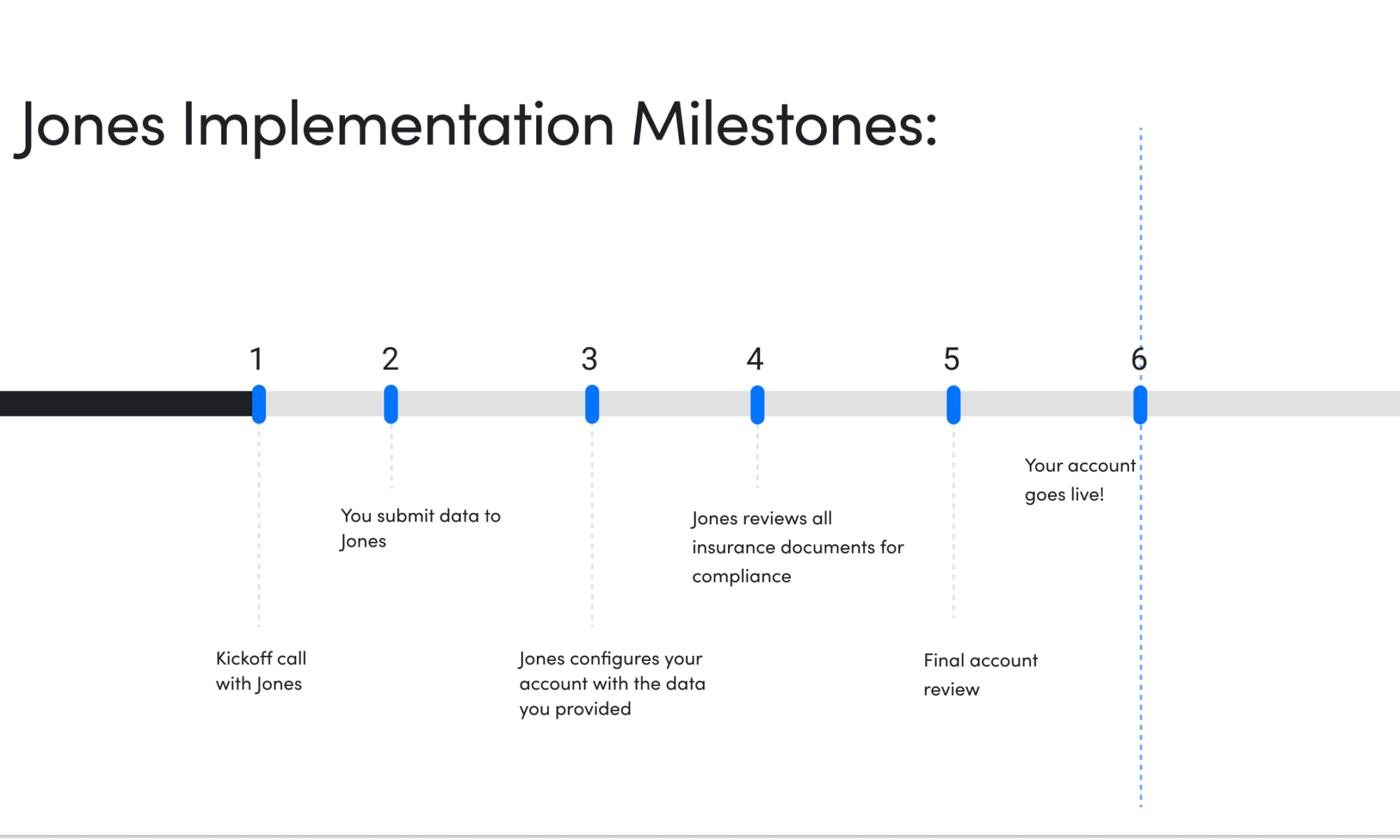
Rule 3: Follow the data submission protocols. They are there to streamline data collection and onboarding.

Some of our customers have ensured that their implementation process stayed on track by adopting a phased approach. First, they tackled tenants, which involved collecting and reviewing building requirements, leases, and tenant COIs.

After nailing the tenant portion of compliance, they repeated the same process for vendors.

Does the phased approach make sense to your company?

It depends on how many square feet you have, your asset type (office or industrial), and on your bandwidth. This is something you should discuss during the kickoff call with the implementation manager or right after that before you move on to the next phase and begin to collect and send over data.

Some of our customers ensured that their implementation process stayed on track by adopting a phased approach. First, they tackled tenants, which involved collecting and reviewing building requirements, leases, and tenant COIs.

Rule 4: Be proactive in providing accurate documentation such as insurance requirements, or they will hunt you for months.

When you submit data to your implementation manager, it is a huge data dump. For larger accounts, we are talking thousands of data points: leases for tenants, all the building requirements for vendors, the list goes on. With the volume of data that big, it’s unavoidable that inaccurate records sneak in.

The key here is to catch the errors before we start conducting reviews of COIs. If that happens, the audit results will obviously be inaccurate, non-compliant COIs will subject your building to risk, and the process to re-audit will take forever.

Here is what we do at Jones to avoid such situations. During our implementation process, we conduct a review of insurance requirements together with our clients so that we can catch mistakes. It is very important that our customers actually do pay attention and review all the documents we present to them.

✅ Example of a “disciplined” customer: Reviews everything we present, marks up everything they are not sure about, and provides updates in writing.

❌ Example of a customer who is slacking off: Sits on the call, acknowledges receipt of the documents, never actually reviews them, fails to catch errors, is genuinely surprised that the audit results are inaccurate, and delays the launch date.

Rule 5: Consider a “phased” approach – for example, focus on tenants first and then move on to vendors.

Some of our customers have ensured that their implementation process stayed on track by adopting a phased approach. First, they tackled tenants, which involved collecting and reviewing building requirements, leases, and tenant COIs.

After nailing the tenant portion of compliance, they repeated the same process for vendors.

Does the phased approach make sense to your company?

It depends on how many square feet you have, your asset type (office or industrial), and on your bandwidth. This is something you should discuss during the kickoff call with the implementation manager or right after that before you move on to the next phase and begin to collect and send over data.

Even the best compliance tool in the world can’t help you move the needle forward if tenants and vendors fail to submit COIs and to resolve gaps. This, in turn, requires commitment from property managers to work on engagement in their building.

Rule 6: Introduce compliance-related OKRs and assign the enforcement squad.

Here is what we recommend to our customers: 👏 Make 👏 Every 👏 Property 👏 Manager 👏 Responsible 👏 For 👏The 👏 Compliance 👏 Rate 👏 In 👏 Their 👏 Building.

If you use OKRs (Objective & Key Results) system, assign every property manager an OKR to improve the compliance rate by X percent.

One caveat: If you are going to follow this advice, make sure you have a solid company policy around what gets waived and in what cases. Ideally, the right to waive a requirement should only be given to compliance managers in charge.

Finally, we highly recommend assigning a “software squad” who will be responsible for enforcing the usage of the tool and making sure all of your end-users manage the compliance through the new software – no exceptions.

Rule 7: Explain the “why” and manage expectations for end-users, tenants, and/or vendors preventatively.

Here is the top reason why best efforts to increase compliance, at times, fail. If your tenants don’t want to cooperate, you have no leverage. What are you going to do – evict them?

Here is what we at Jones see work: strategic communication with tenants which consists of two parts:

Strategic communication: the “why” behind the effort.
Examples: “average compliance rate in the building is low, we would love to get it to at least 60 percent to protect everybody from liability.” Or – “We will make it easier for you to get your vendors approved to get into the building with the new compliance tool.”

Tactical communication: what to expect in the short term, what the emails from Jones (or your new compliance tool) would look like, and how often they will arrive.

Above, we’ve outlined the seven rules we recommend following during the implementation. We are at the finish line – your tool is up and running and (hopefully) collecting and auditing COIs.

The fun part, however, is just about to start. There are lots of tips and tricks that amplify your ROI on any software, compliance tool no exception. We will continue publishing posts on the best practices and training for anybody who has to handle COIs and manage compliance for the buildings.

Vendor’s Guide to Insurance Verification for Commercial Properties

How we help manage Vendor COIs

We are going to send A LOT of emails. Here is why:

  1. We need to keep everybody on the same page: you, the property manager, and your client.
  2. The volume of emails will subside after we get through the initial slump. Promise.

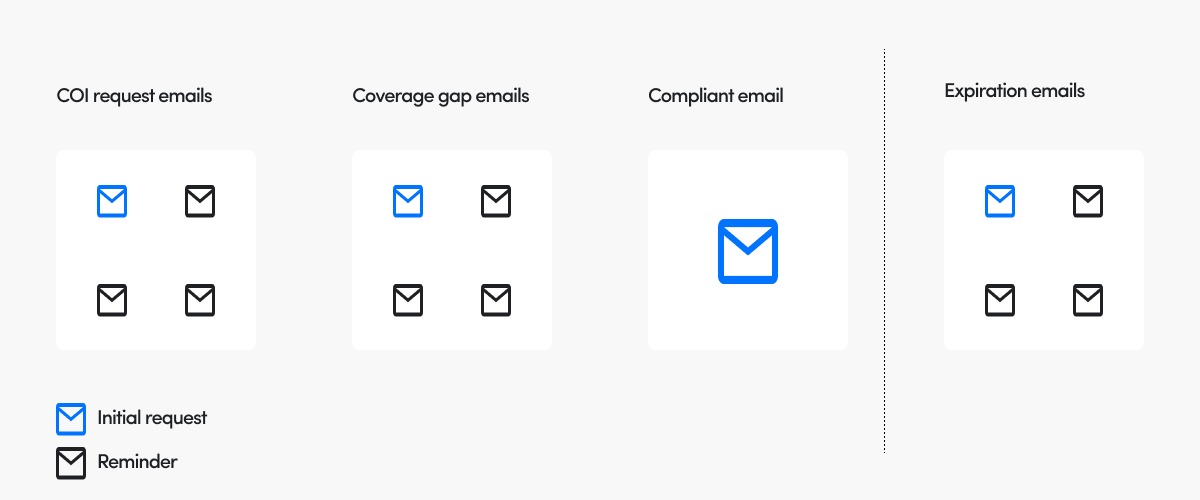
Here’s all the emails that we will send you:

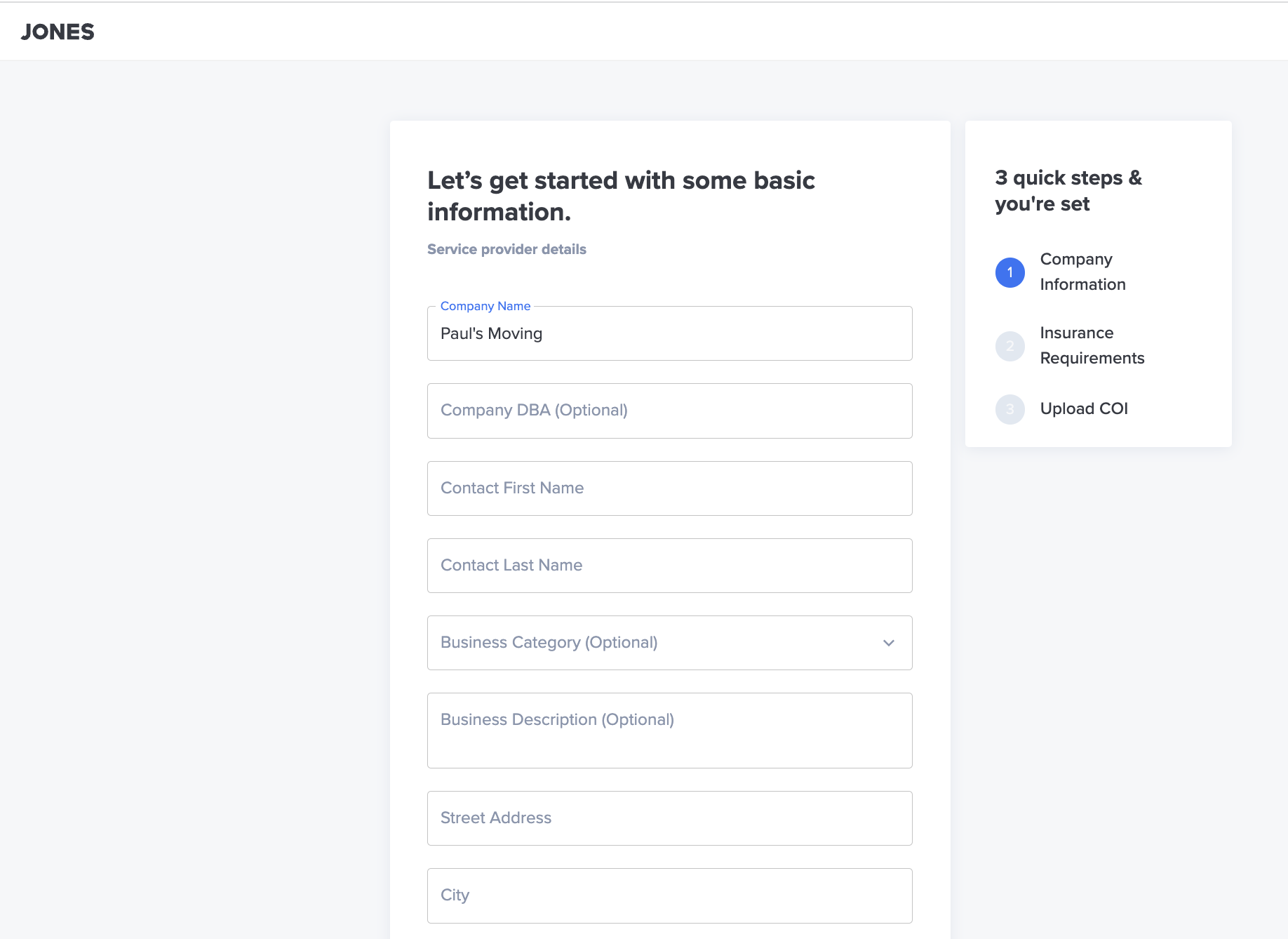
All Jones emails

Insurance documentation collection

If the building doesn’t have all of your documents on file, we will send you an email to obtain them.

If you don’t respond to this first email, we will send 3 more reminders. The sooner you provide the documents, the faster we will review and verify your insurance coverage!

One great thing about working with Jones is that you DO NOT have to create an account to submit documents. Simply click on the link in the body of the email request and attach your documents.

Jones emails - no login access

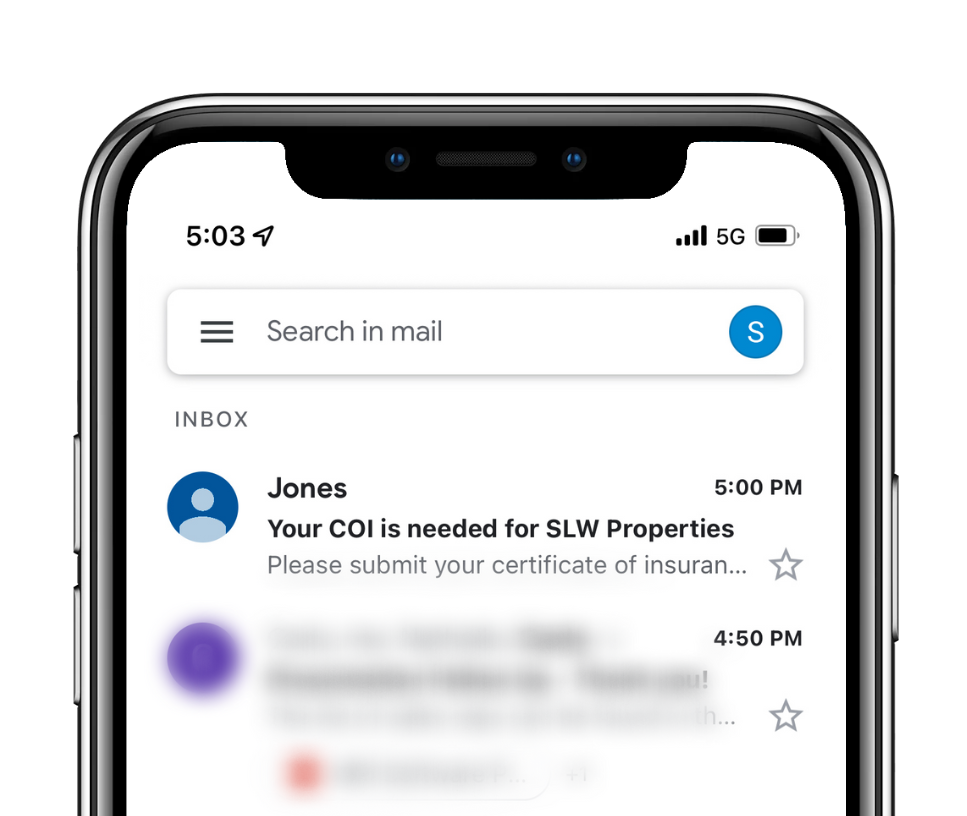
‼️ Look out for emails with the subject line “Your COI is needed for [building’s address]”. Also, you might want to check your promotions tab.

COI request email example

‼️ If you don’t know who in your company handles insurance documents, still respond and provide the contact information for your insurance broker. We will take it from there.

Insurance documentation review

As soon as you provide your insurance documents, we notify the property manager and add the documents into a review queue.

Our review process is very, very thorough.

Oftentimes, we uncover coverage gaps in COIs that property managers thought were compliant (they weren’t).

What can be missing:

  • Correct Additional Insured and Certificate Holder
  • Expiration dates are in the past
  • Insufficient Limits
  • Particular policies missing or have insufficient limits
  • Other items (e.g. endorsements)

Your insurance documents will probably contain gaps, too – more than other buildings’ teams ever flagged. This isn’t because the standards are too high. This happens because the Jones team really puts a magnifying glass on documents.

The good news is that we are fast. We commit to reviewing insurance documents within 24 hours, but in reality, our audit times are 5 hours on average.

Gap resolution

Once we finish with the audit, we notify the property manager. They see where you stand in terms of your insurance coverage and do one of the following:

  1. Waive the requirements in order to get you approved faster
  2. Ask for you to make changes to your coverage and provide updated documents.

The choice is entirely theirs. It depends on how much risk they are ready to tolerate, and for liability reasons, this isn’t something Jones has a say in. We can only relay their decisions!

If the property manager chooses option 1 and waives whatever coverage you are missing, we will notify you immediately. Congratulations – you are done with insurance compliance. We will talk to you again when your COI expires.

If the property manager chooses option 2, we have work to do.

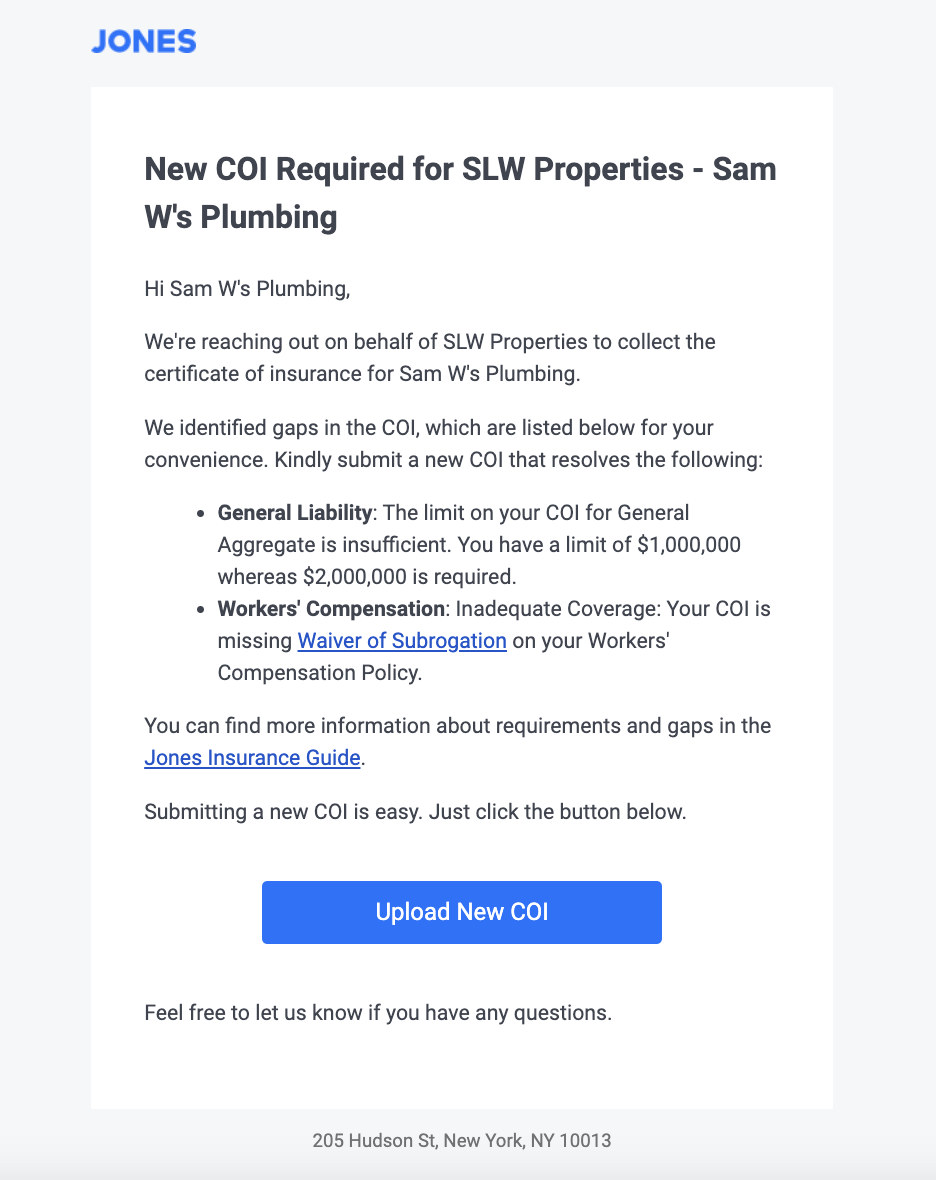
Jones will send you an email detailing what it is exactly that is missing. The email will look something like this:

Vendor Insurance Verification example

Here are some things you can do to help us help you:

Read the email and use the links we have included in the body. They will take you to a relevant section in the Jones Insurance Guide, a resource we’ve created to help you resolve gaps faster.

Respond to the email promptly. If you are confused, that’s OK. Just put us in touch with your insurance broker. They will know what to do.

Oftentimes, one email exchange doesn’t get us there. For example, you might fix one gap but not the other. Insurance is confusing! Keep responding and don’t hesitate to ask questions.

Once we complete the gap resolution process and mark your insurance documents as compliant, the hardest part is over.

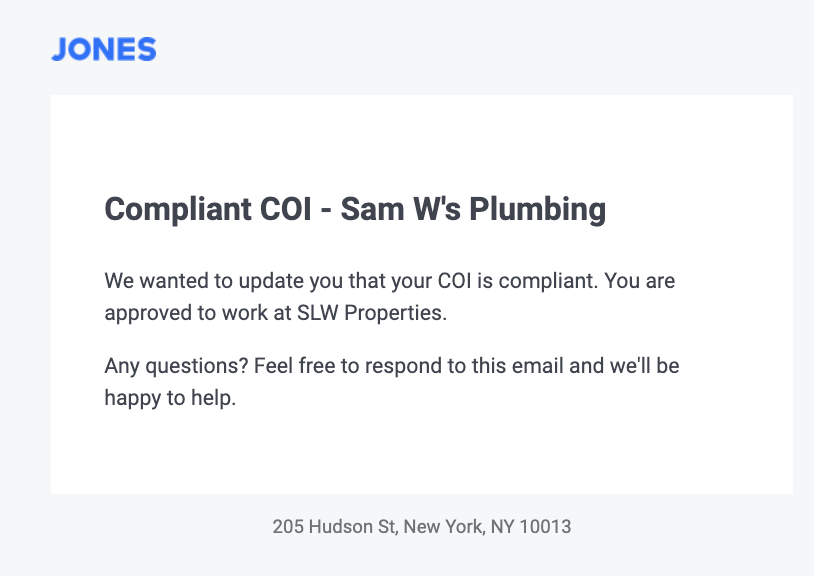
Here’s what victory looks like:

Compliant email example

What happens next:

  • We notify the property team that you are fully compliant and ready to start the project.
  • We’ll keep your insurance documents on file and will reach out before they expire.
  • This will be a piece of cake – you will just need to provide the updated version.

What’s in it for you?

For starters, insurance compliance is not really a matter of choice. The building needs it to avoid claims. However, there are other perks in working with Jones:

Access to The Jones Network of 8K+ commercial buildings.

Core information about your compliance will be accessible to ALL buildings and property managers in your area. We are letting them search by service provided (e.g. “plumbers”) on Jones and decide which vendor to contact based on compliance status. If your COI has just been approved at Building A, Buildings B and C might want to hire you to save time.

Tenant’s Guide to Insurance Verification for Commercial Properties

How we help manage tenant COIs

So, your building has implemented Jones to manage tenant insurance compliance.

This is good news for you.

First, we will help you be fully compliant with the insurance requirements in your lease.

Second, you will experience a much better experience with all things COI management in the long run. Specifically, once we collect, review, and help you resolve any coverage gaps once, your COI renewal process will be on auto-pilot.

Before we all get there, we have work to do – together. This is why –

– We are going to send A LOT of emails at first.

The volume of emails will subside after we get through the initial slump. Promise.

Here’s all the emails that we will send you:

All Jones emails

Insurance documentation collection

If the building doesn’t have all of your documents on file, we will send you an email to obtain them.

If you don’t respond to this first email, we will send 3 more reminders. The sooner you provide the documents, the faster we will review and verify your insurance coverage!

One great thing about working with Jones is that you DON’T have to create an account to submit documents. Simply click on the link in the body of the email request and attach your documents.

! Look out for emails with the subject line “YYY” (you might want to check your promotions tab).

! If you don’t know who in your company is supposed to be handling insurance documents, still respond and provide the contact information for your insurance broker. We will take it from there.

Jones emails - no login access

‼️ Look out for emails with the subject line “Your COI is needed for [building’s address]”. Also, you might want to check your promotions tab.

COI request email example

‼️ If you don’t know who in your company handles insurance documents, still respond and provide the contact information for your insurance broker. We will take it from there.

Insurance documentation review

As soon as you provide your insurance documents, we notify the property manager and add the documents into a review queue.

Our review process is very, very thorough.

Oftentimes, we uncover some coverage gaps in COIs that property managers thought were compliant (they weren’t).

What can be missing:

  • Correct Additional Insured and Certificate Holder
  • Expiration dates are in the past
  • Insufficient Limits
  • Particular policies missing or have insufficient limits
  • Other items (e.g. endorsements)

Your insurance documents may be missing a few things – possibly more than have been flagged to you in the past. Any gaps in coverage that Jones flags are requirements in your lease. If some of these are new to you, it’s just because we are putting a magnifying glass on your documents.

The good news is that we are fast. We commit to reviewing insurance documents within 24 hours, but in reality, our audit times are 5 hours on average.

Gap resolution

Once the audit results are back, we notify the property manager. They will see where you stand in terms of your insurance coverage and do one of the following:

  1. Waive the requirements in order to get you approved faster
  2. Ask for you to make changes to your coverage and provide updated documents.

The choice is entirely theirs. It depends on how much risk they are ready to tolerate, and for liability reasons, this isn’t something Jones has a say in. We can only relay their decisions.

If the property manager chooses option 1 and waives whatever coverage you are missing, you will be notified immediately. Congratulations – you are done with insurance compliance. We will talk to you again when your COI expires.

If the property manager chooses option 2, we have work to do.

Jones will send you an email detailing what it is exactly that is missing. The email will look something like this:

Vendor Insurance Verification example

Here are some things you can do to help us help you:

Read the email and use the links we have included in the body. They will take you to a relevant section in the Jones Insurance Guide, a resource we’ve created to help you resolve gaps faster.

Respond to the email promptly. If you are confused, that’s OK. Just put us in touch with your insurance broker. They will know what to do.

Oftentimes, one email exchange doesn’t get us there. For example, you might fix one gap but not the other. Insurance is confusing! Keep responding and don’t hesitate to ask questions.

Once we complete the gap resolution process and mark your insurance documents as compliant, the hardest part is over.

Here’s what victory looks like:

Compliant email example

What happens next:

  • We notify the property team that you are now fully compliant.
  • Your insurance documents are kept on file; we will reach out before they are set to expire. (Here is what the email will look like).
  • Renewal will be a piece of cake – you will just need to provide the updated version.